The Nordics and the Baltic · Volume 23, The North Atlantic under the Danish Crown
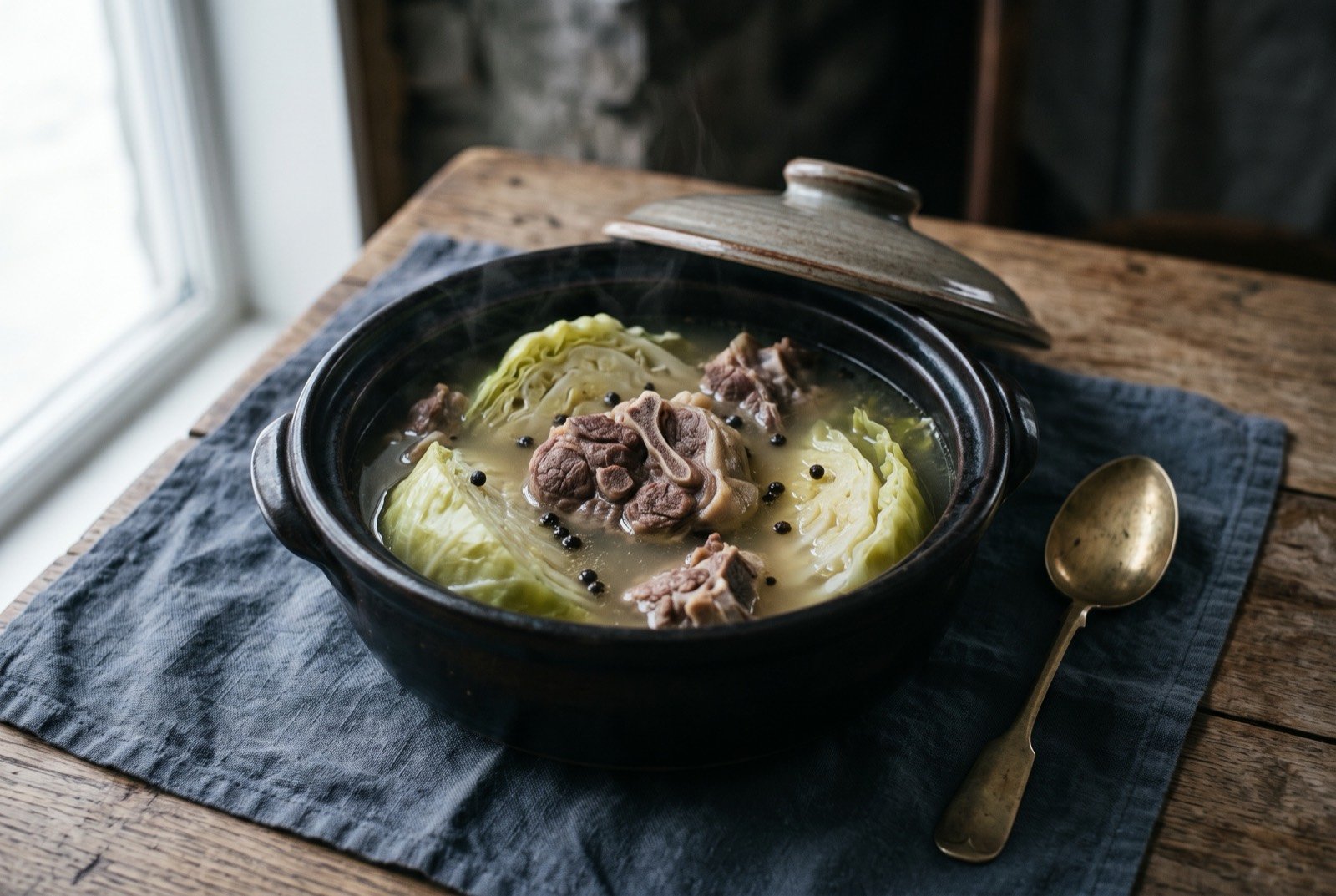
Fårikål
Norway
Illustration
- Time
- 3 hours
- Researched
- 5 sources cited
The earliest recognisable recipe is Danish, adapted in a Norwegian cookbook of 1835 from an older dish of preserved goose in white cabbage, and it did not reach rural Norway in any real numbers until well into the twentieth century, once cabbage became a reliably traded crop. This chapter treats fårikål as a genuinely beloved, twice publicly voted national dish, and as a dish whose specific documented origin is Danish, both at once, since neither fact cancels the other.
As tradition built it
Serves 4 to 6. 2 to 3 hours.
Ingredients
- 1.5 kg mutton or lamb, bog, rygg or nakke cuts, bone in, cut into pieces
- 1 white cabbage, cut into thick wedges
- 2 tbsp whole black peppercorns
- to taste salt
- to cover water, to cover
Method
- Layer the meat and cabbage wedges in a large pot, scattering salt and whole peppercorns between each layer.
- Add water to just cover.
- Bring to a simmer, cover, and cook 2 to 3 hours, until the meat is falling from the bone.
- Serve straight from the pot, with boiled potatoes alongside, the whole peppercorns left in and eaten as they come.
What a modern chef changes
The same broth, built with more control over how evenly the meat cooks
Rung 2, applied to a long braise rather than a raw ferment.
Method
- Braise the mutton sous vide, around 82°C for 10 to 12 hours, then finish the pieces briefly in the reduced, strained cooking liquor with the cabbage added fresh, for evenly tender meat without the risk of a rolling boil toughening it unevenly across different cuts in one pot.
- Crack the peppercorns coarsely in a dedicated spice grinder rather than leaving them whole, releasing more of their oil into the broth while keeping enough texture that the dish's own insistence on eating the pepper, not straining it out, still holds.
- Reduce the strained braising liquor hard before returning the meat to it, concentrating a broth that, cooked the traditional way, is often thinner than the dish deserves.