The Nordics and the Baltic · Volume 23, The North Atlantic under the Danish Crown
Gravad Laks
Shared across the whole North Atlantic crown
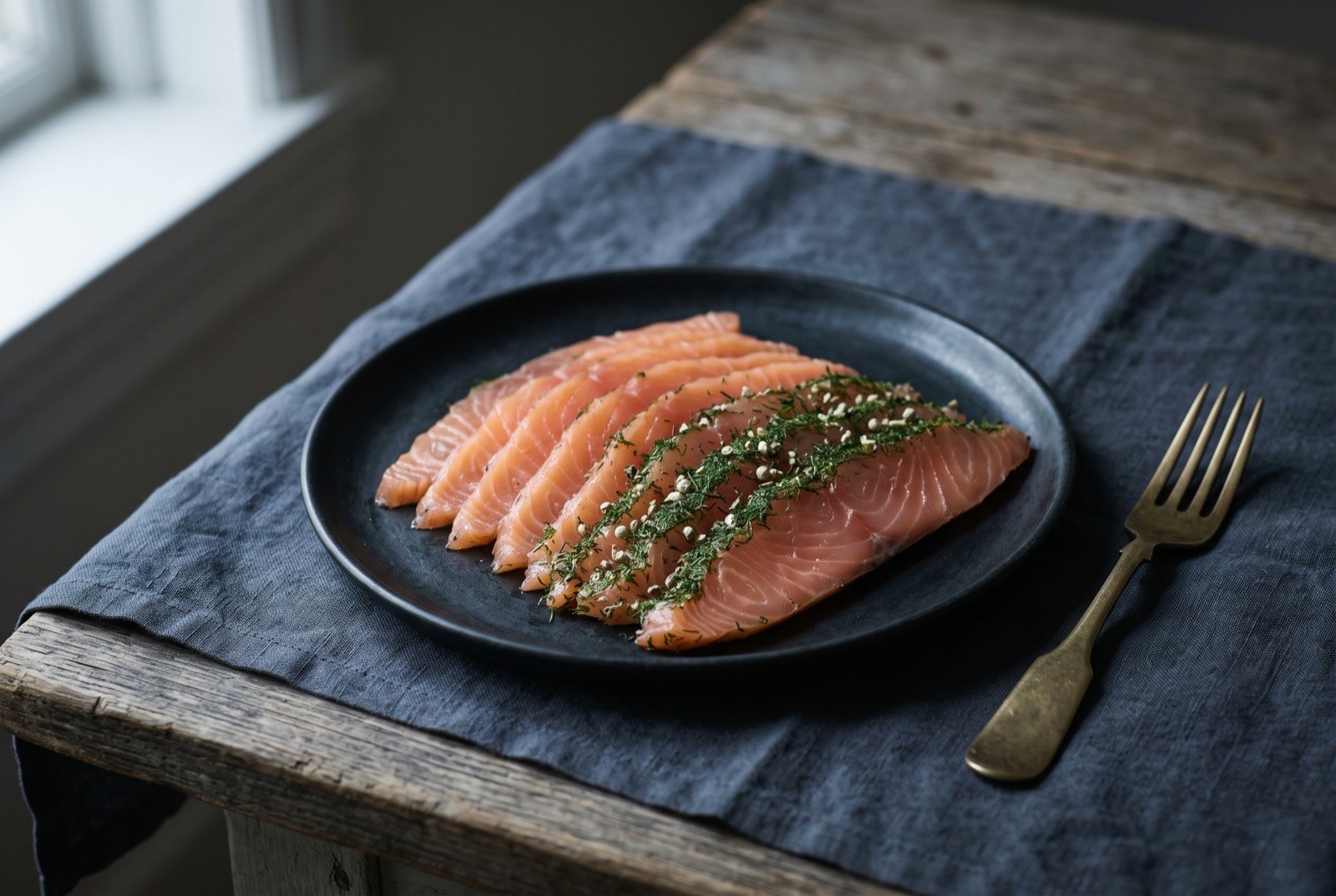
Illustration
- Researched
- 5 sources cited
The name itself preserves an older method than the one now practised: "gravad" derives from the verb to dig or bury, and the traditional method really did bury salted fish in barrels in the ground for a slow, weeks-long fermentation. What almost every Danish or Norwegian table calls gravad laks today is not that at all: a dry cure of salt, sugar and dill, refrigerated rather than buried, ready in days rather than weeks. No source behind this chapter could establish when, or even roughly in which century, one method gave way to the other, and this chapter states that gap plainly rather than inventing a tidy transition it cannot support.
As tradition built it
Serves 6 to 8 as a starter. 2 to 3 days curing.
Ingredients
- 1 kg salmon fillet, skin on, pin-boned, previously frozen
- 75 g coarse salt
- 75 g sugar
- 1 tbsp white peppercorns, coarsely crushed
- 1 large bunch dill, roughly chopped
Method
- Mix the salt, sugar and crushed pepper.
- Rub the mixture over the flesh side of the fish, then pack a thick, even layer of chopped dill on top.
- Wrap tightly in cling film, place skin down in a dish, and weight lightly.
- Cure in the fridge 2 to 3 days, turning once a day to redistribute the marinade.
- Unwrap, scrape off the cure and dill, and slice thinly on the diagonal, away from the skin.
What a modern chef changes
The one technique this dish genuinely still owes to its buried, fermented ancestor
Rung 2, applied by analogy from a months-long fermentation to a days-long cure.
Method
- Judge the cure by touch and smell each day rather than by a fixed clock, since fish size and fat content vary enough that a rigid schedule under or over-cures as often as it succeeds, exactly the discipline rakfisk's own fermentation rewards at a far longer timescale.
- Hold the cure at a genuinely consistent fridge temperature throughout, since an uneven temperature is the most common reason a home cure turns out patchy, some parts firm and translucent, others still raw at the centre.
- Reserve a small taste of the curing liquor that collects in the dish, and use it, reduced, to dress the finished slices, rather than discarding it: it carries real flavour the finished fish alone does not.