The Nordics and the Baltic · Volume 23, The North Atlantic under the Danish Crown
Skyr
Iceland
Illustration
- Time
- 3 hours
- Researched
- 5 sources cited
Skyr genuinely appears by name in Egils saga, Njáls saga and several others, a real, textual, settlement-era continuity rather than an assumed one. The honest caveat this chapter owes that continuity: settlement-era skyr was almost certainly thinner and more sour than the modern product, and industrial-scale production for sale in trading towns dates only to around 1930, a genuine break from farm-by-farm home production.
As tradition built it
Makes about 1 litre. Several hours active fermentation, then straining.
Ingredients
- 2 litres whole milk
- 2 to 3 tbsp live skyr, as a starter culture
- a drop a drop of rennet, if needed
Method
- Heat the milk to 85 to 100°C for at least 5 minutes, then cool to around 40°C.
- Whisk in the starter skyr, and a drop of rennet if using.
- Cover and leave to ferment, undisturbed, 4 to 5 hours, then cool further to 18 to 20°C and hold up to 18 hours, until firmly set.
- Cut the curd, and strain through muslin or a chinois set over a bowl, until thick and spoonable, reserving the whey.
- Keep back 2 to 3 tablespoons of the finished skyr, unstrained, as the starter for your next batch.
What a modern chef changes
The heirloom principle taken seriously, and the whey put to work rather than poured away
Rung 5.
Method
- Maintain your own culture batch to batch, exactly as an Icelandic farmhouse tradition does, rather than buying fresh starter each time: a culture kept going for months develops a genuinely different depth than a freshly bought one, the same principle this chapter applies to rugbrød's own starter.
- Hold the fermentation temperature with real precision, ideally in a sous vide bath set to the target rather than judging by a warm spot in the kitchen, since skyr's distinctive character depends on yeasts that specifically favour its comparatively low fermentation temperature.
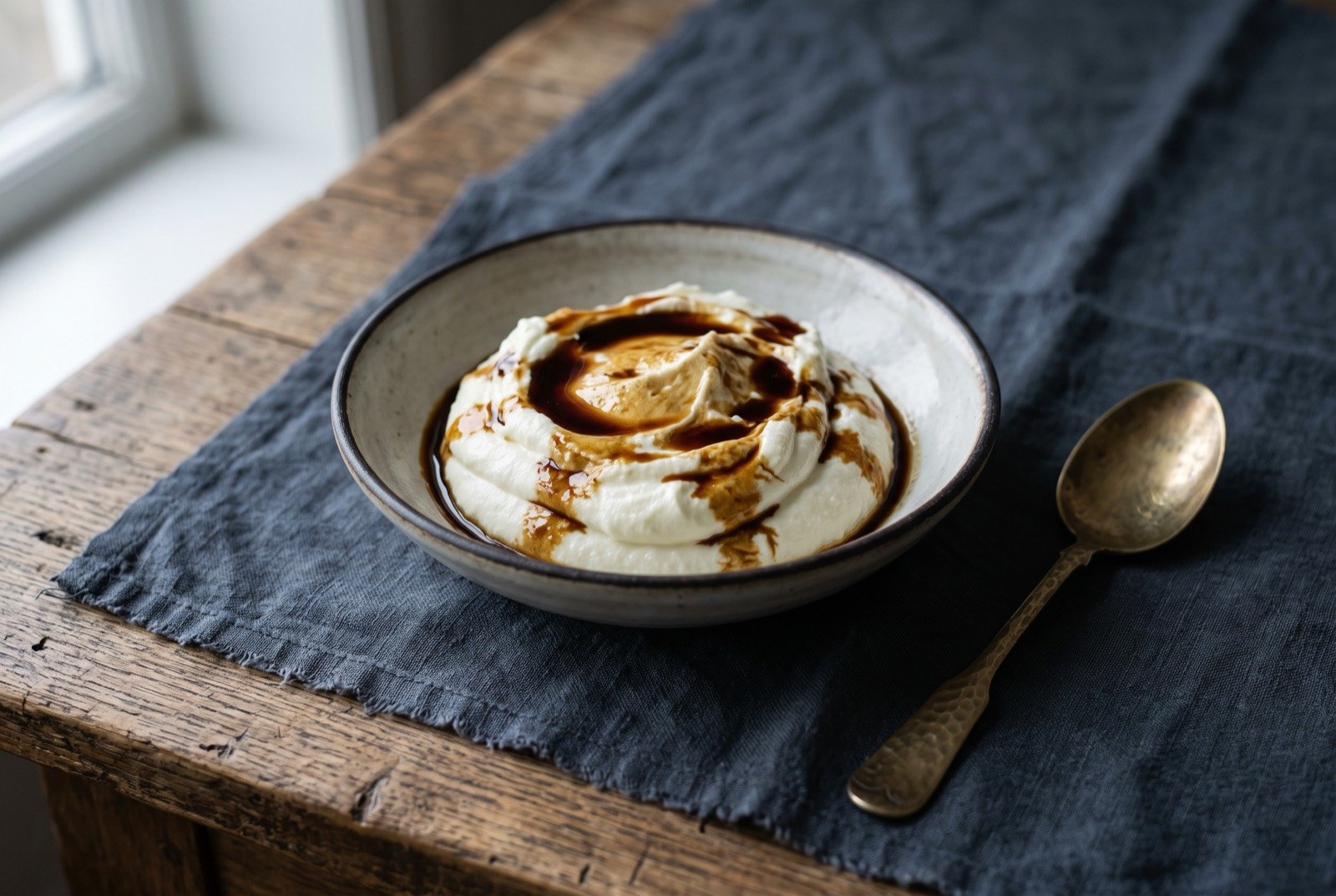
- Reduce the reserved whey down slowly, the same principle behind brunost, into a caramelised syrup, and use it to sweeten the finished skyr instead of shop sugar, a genuine use for what this process would otherwise waste.