The Nordics and the Baltic · Volume 23, The North Atlantic under the Danish Crown
Rakfisk
Norway, above all Valdres
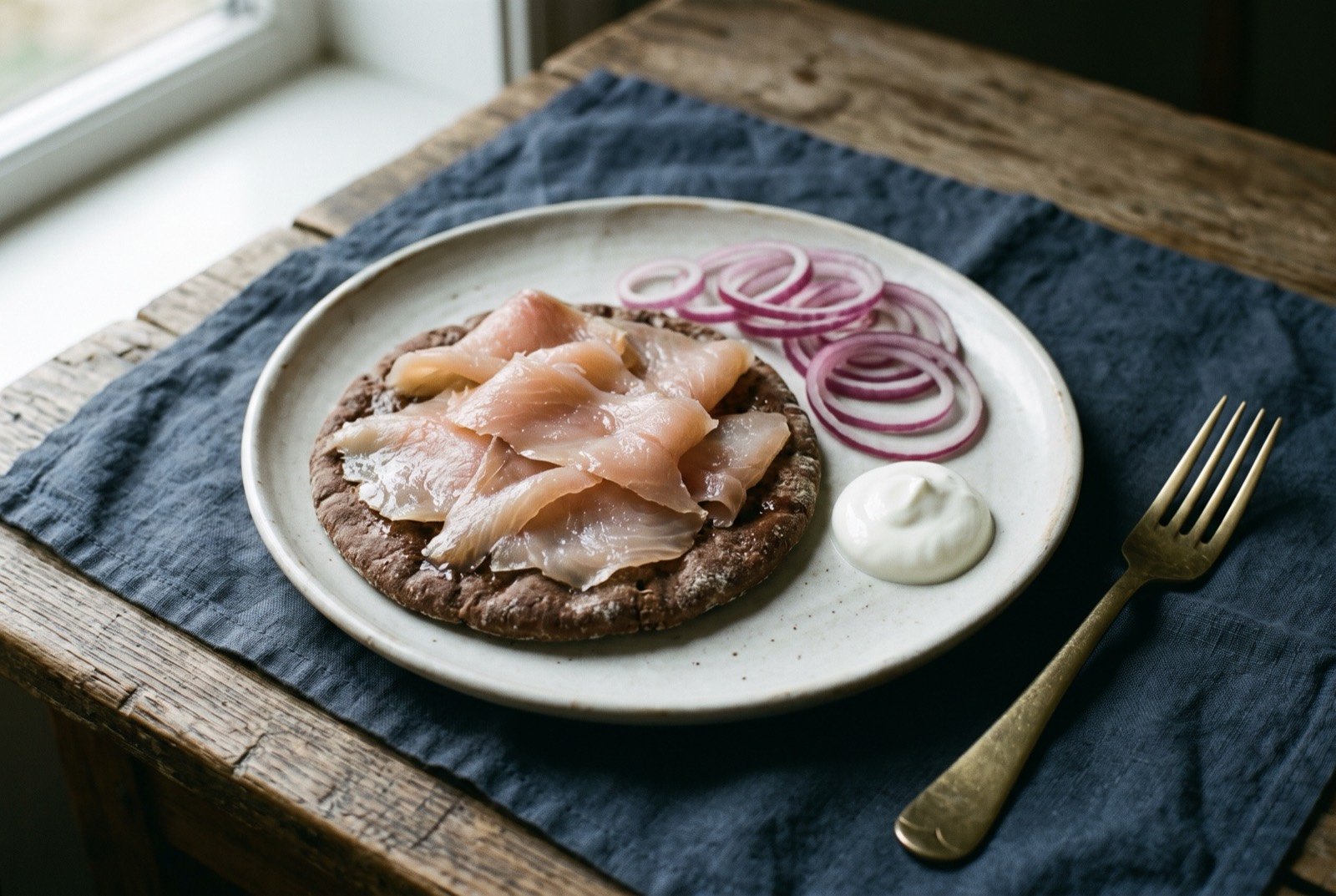
An illustration of the dish, not a photograph of it cooked.
- Time
- About 35 minutes to 2 hoursNo source states a time. Comparable dishes in this atlas take this long.
- Researched
- 5 sources cited
- Reviewed
- Not yet reviewed from inside the tradition
- Cooked
- Not yet cooked and reported
Sources genuinely disagree on how old this practice is: one places the word itself in 1348, the official protected-designation body instead dates documented trade in it to the 1600s, and this chapter presents the dish as centuries old rather than claiming a precise date neither source can support cleanly. What is well documented, thanks to Norway's own state food research institute, is exactly how the fermentation works.
As tradition built it
Serves 4 as a starter. 3 to 12 months fermenting.
Ingredients
- 1 whole trout, gutted and flat-cut
- 4 to 6% of the fish's weight fine salt, to reach 4 to 6% of the fish's weight
- to serve flatbrød or potetlefse, sour cream, raw onion, pickled beetroot and boiled egg, to serve
Method
- Salt the fish generously inside the cavity and over the flesh, to a calculated 4 to 6% of its total weight.
- Pack belly up, under weight, in a sealed, non-reactive container.
- Store at a controlled 3 to 8°C for 3 to 12 months, the fish fully submerged in the brine its own salt draws out.
- Serve thinly sliced, cold, on flatbread, with sour cream, raw onion, pickled beetroot and boiled egg, alongside beer and akevitt.
What a modern chef changes
The fermentation given the same scientific respect Nofima itself has given it
Rung 2.
Method
- Hold the cure in a dedicated, calibrated fridge or wine cooler, not the family fridge's fluctuating door shelf, since Nofima's own research found reproducibility depends on tightly controlled salinity and temperature, not on leaving a barrel to its own devices as folklore might suggest.
- Weigh the salt precisely against the fish's own weight rather than salting by eye, treating the 4 to 6% figure as a real specification, not a rough guide.
- Treat the multi-month timescale as a genuine safety discipline, not a curiosity: this is a slow fermentation of raw fish, and a UK cook attempting it at home should research current food safety guidance on listeria risk in long fermented fish before starting, exactly as a commercial Norwegian producer must.