The Nordics and the Baltic · Volume 23, The North Atlantic under the Danish Crown
Stegt Flæsk med Persillesovs
Denmark
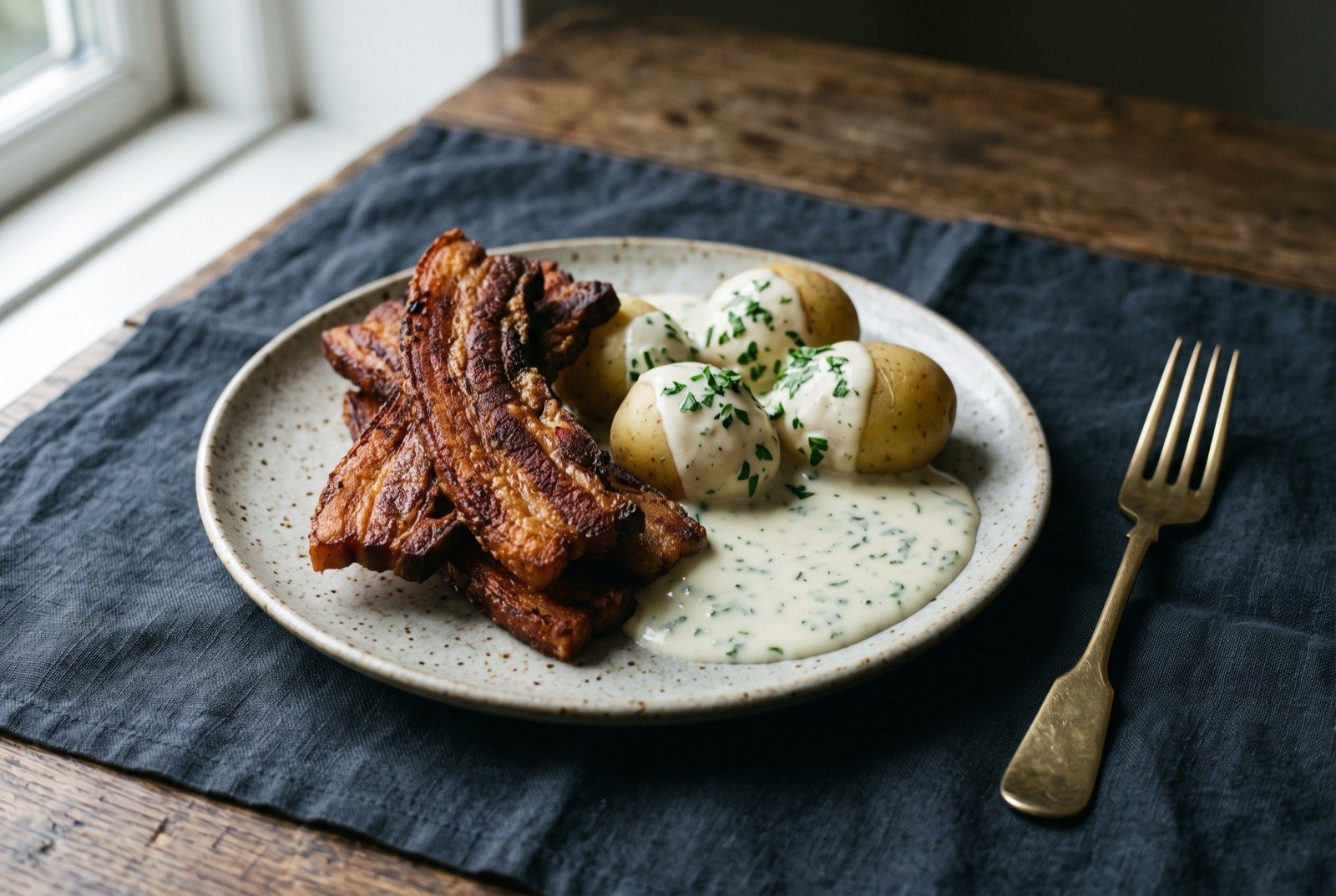
An illustration of the dish, not a photograph of it cooked.
- Time
- 40 minutes
- Researched
- 5 sources cited
- Reviewed
- Not yet reviewed from inside the tradition
- Cooked
- Not yet cooked and reported
In autumn 2014 Denmark's food minister launched a public vote for an official national dish, explicitly to provoke debate about Danish food culture rather than to settle a fact. Over sixty thousand people voted, and stegt flæsk med persillesovs won with over forty four per cent, beating frikadeller, hakkebøf and smørrebrød into second place. The result has been argued over since the day it was announced: the food writer and television cook Camilla Plum objected publicly that the choice excludes roughly a tenth of Denmark's population who do not eat pork for religious or cultural reasons, and as recently as 2026 a group calling itself the Smørrebrødsalliancen has campaigned to replace it with something that can genuinely include vegans, Muslims and cultural Christians alike. This chapter presents the dish as Denmark's contested, officially chosen national dish, not its settled, uncontested one.
As tradition built it
Serves 4. About 40 minutes.
Ingredients
- 600 g pork belly, sliced into 1 cm strips
- 40 g butter
- 40 g plain flour
- 500 ml whole milk
- 1 bunch, or to taste a large bunch of parsley, chopped
- to taste salt and white pepper
- to serve boiled potatoes, to serve
Method
- Fry the pork belly slices in a dry pan over high heat, 4 to 6 minutes a side, until deeply browned and crisp at the edges. Set aside, keeping the rendered fat.
- Melt the butter in a separate pan, stir in the flour, and cook out 2 to 3 minutes to lose the raw flour taste.
- Whisk in the milk gradually, to a smooth, pourable white sauce, simmering gently until thickened.
- Stir through the chopped parsley off the heat, and season with salt and white pepper.
- Serve the pork over boiled potatoes, the sauce poured over or alongside.
What a modern chef changes
The belly's fat rendered with real intent, and the sauce built the way it should be, not skipped
Rung 4, applied by analogy to belly rather than a whole joint.
Method
- Score the belly's fat cap before frying, exactly as flæskesteg's own crackling technique demands, to let fat render more evenly and the surface crisp further than a plain unscored strip manages.
- Render slowly first, over a lower heat, before finishing hot, so more of the fat cap's fat actually leaves the meat rather than simply crisping its surface while staying greasy underneath.
- Cook the roux out properly, a full 2 to 3 minutes, never rushed, the same discipline this atlas keeps returning to wherever a butter and flour sauce appears: an undercooked roux tastes of raw flour no amount of parsley disguises.