Iberia · Volume 09, Gofio, the Guanche Grain Beneath a Castilian Table
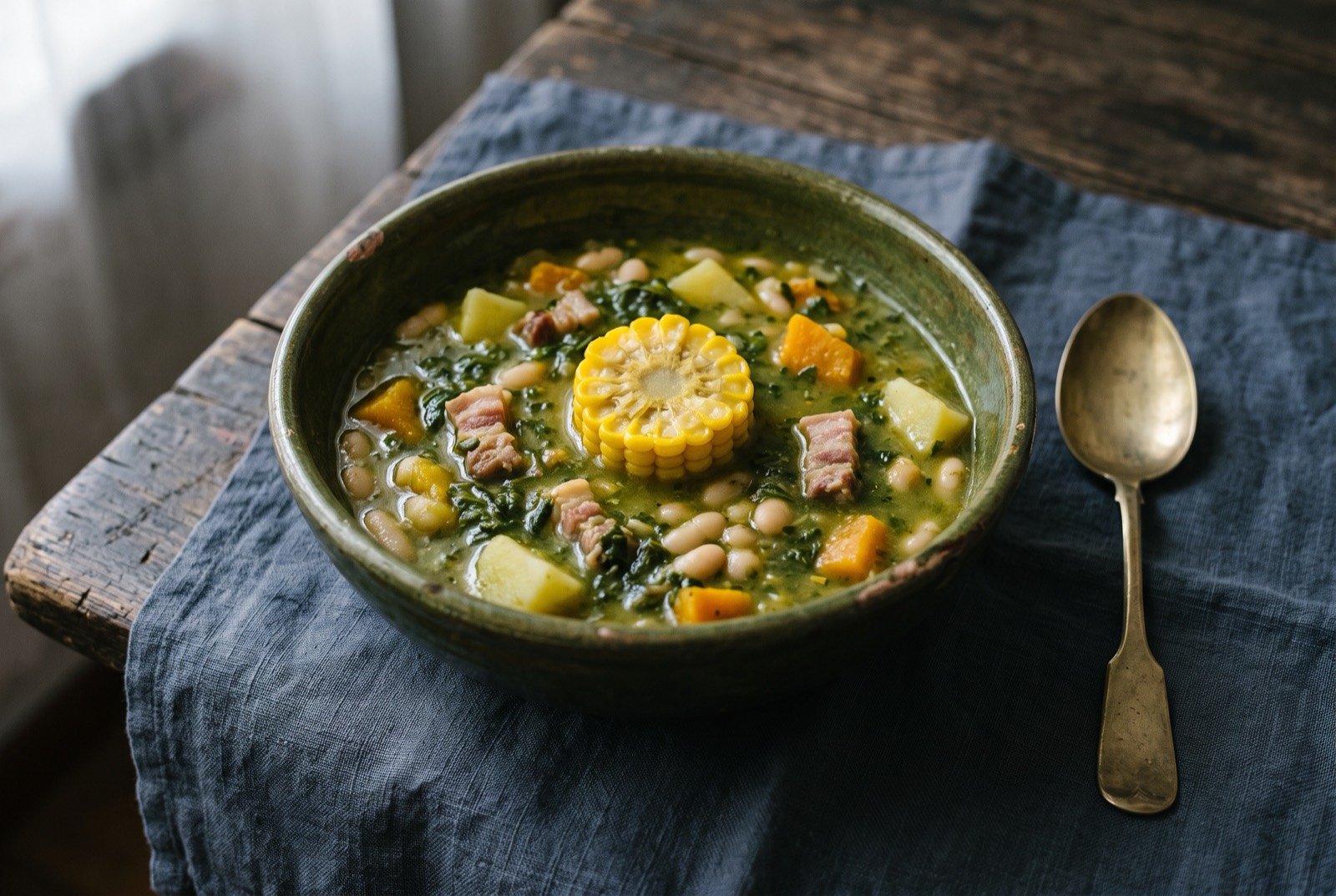
Potaje de Berros
Gran Canaria and La Palma
Illustration
- Time
- Hands on 1 hour · Waiting 8 hours
- Researched
- 4 sources cited
Documented in real ethnographic detail through named family recipes gathered by FEDAC, the Canarian government's own heritage and craft foundation, rather than through generic recipe media, which is unusually strong sourcing for a dish this humble, and a useful reminder that this chapter's ordinary, everyday food deserves the same seriousness as its festival dishes.
As tradition built it
Serves 4. About an hour, plus overnight soaking if using dried beans.
Ingredients
- 500 g watercress, roughly chopped
- 250 g fresh or dried pinto beans, soaked overnight if dried
- 250 g pork belly or salted pork, in pieces
- 2 corn cobs, cut into thick rounds
- 1 onion, chopped
- 2 potatoes, peeled and cubed
- 200 g squash, peeled and cubed
- 1 courgette, sliced
- 3 garlic cloves, chopped
- 1 tomato, chopped
- a pinch pinch of saffron
- to taste olive oil, salt
Method
- If using dried beans, drain and rinse after their overnight soak.
- Build a sofrito of onion, garlic and tomato in a little oil in the base of a large pot.
- Add the pork and beans, cover generously with water, and simmer until the beans are nearly tender, about 30 to 40 minutes.
- Add the corn, potatoes, squash and courgette, and continue simmering until everything is tender.
- Add the watercress and saffron in the last few minutes, so the watercress wilts through without overcooking.
- Mash a portion of the vegetables against the side of the pot to thicken the broth, or blend a ladleful separately and stir back in, and adjust seasoning.
- Serve hot, traditionally with gofio, cheese or fried sardines alongside.
What a modern chef changes
The watercress's brightness protected rather than boiled away, and the broth's body built with real intent
Kit note, not tied to a numbered rung
Method
- Blanch and refresh a portion of the watercress separately, blend it to a smooth purée in a high-power blender, and stir it back in only at the very end, off the heat, preserving a vivid green colour and a fresher, less cooked flavour than watercress that has simmered in the pot throughout.
- Dehydrate a small extra portion of watercress leaves to a crisp, and crumble them over the finished bowl as a garnish, a genuine second texture from an ingredient the traditional dish otherwise reduces entirely to broth.
- Purée the mashing vegetables properly in a blender rather than mashing roughly against the pot, for a smoother, more deliberately thickened broth.