Iberia · Volume 09, Gofio, the Guanche Grain Beneath a Castilian Table
Gofio Escaldado
Archipelago-wide
Illustration
- Time
- 15 minutes
- Researched
- 4 sources cited
Gofio's own name is Guanche vocabulary with no Castilian root, and its status as an EU-protected staple since 2014 has not changed what it actually is at home: a toasted grain flour, historically barley and wheat, kneaded into whatever hot liquid is to hand. Escaldón is the simplest and oldest expression of that idea, hot stock poured directly onto the flour and worked in the bowl until it thickens.
As tradition built it
Serves 4. About 15 minutes, given a good stock already made.
Ingredients
- 1 litre hot meat or fish stock, well seasoned
- 300 g gofio, wheat, barley or a mixed-grain blend
- to serve red onion, finely sliced, to serve
- to serve fresh white Canarian cheese, crumbled, to serve
- to serve mojo verde or mojo rojo, to serve
Method
- Bring the stock to a full simmer.
- Pour the hot stock over the gofio in a large, wide bowl, a little at a time, working it in with a wooden spoon between additions.
- Continue adding stock and working the mixture until it forms a thick, cohesive paste that pulls together rather than a loose porridge, adjusting the amount of stock to taste and texture rather than following the quantity mechanically.
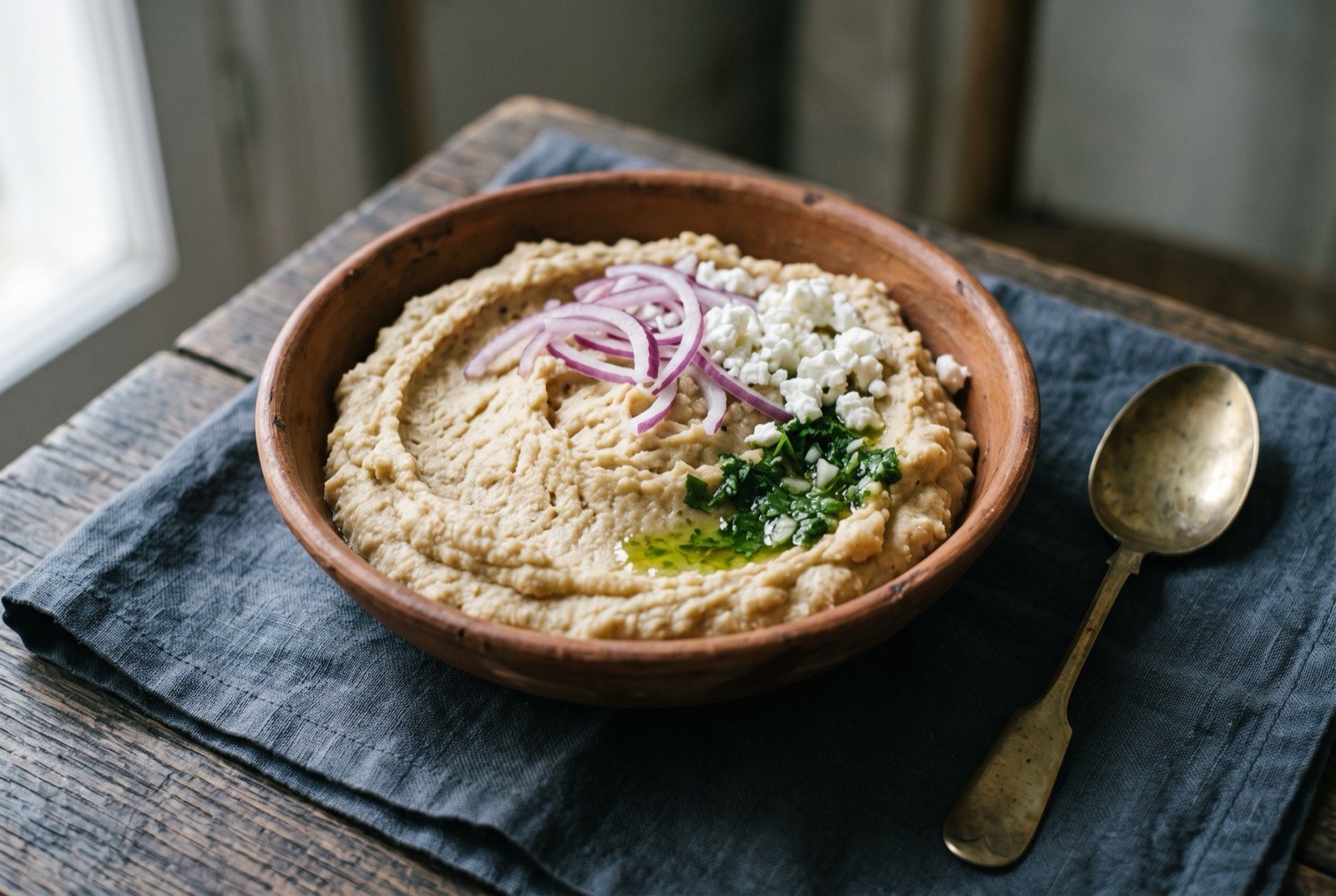
- Serve immediately, in the bowl it was made in, topped with sliced red onion, crumbled fresh cheese and a spoonful of mojo.
What a modern chef changes
The grain given the toasting it deserves before it ever reaches the bowl, and the broth clarified to a standard the dish rarely asks for at home
Rung 3
Method
- Toast your own grain, wheat, barley or maize, in a dry pan or a low, steady Big Green Egg before grinding it fresh in a dedicated spice grinder, rather than relying entirely on shop-bought gofio, which is toasted well but not to your own preferred depth; a home-toasted batch, ground just before use, carries a rounder, more immediate Maillard flavour than a bag that has sat on a shelf.
- Clarify the stock through a chinois, or further through an egg-white raft if a genuinely clear escaldón is wanted, a small precision this dish's home version rarely bothers with but which changes the finished paste's colour and clarity considerably.
- Serve a spoonful of pella, the firmer, kneaded form of gofio, alongside the escaldón rather than only the loose paste, so the dish demonstrates both traditional textures side by side rather than only the wetter of the two.