Iberia · Volume 09, Gofio, the Guanche Grain Beneath a Castilian Table
Almogrote Gomero
La Gomera
Illustration
- Researched
- 4 sources cited
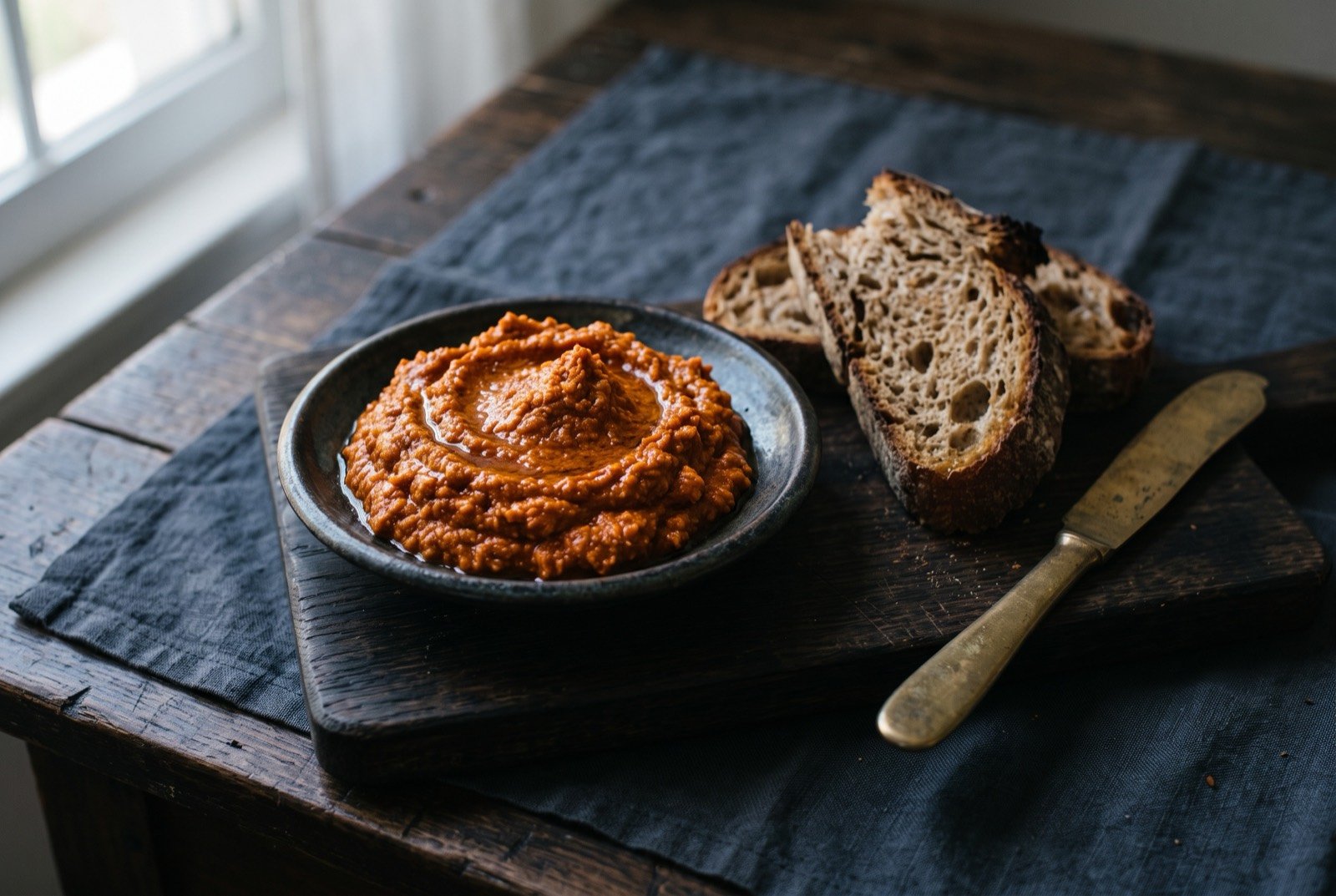
Multiple Canarian sources trace almogrote back to almodrote, a medieval Iberian sauce of cured cheese, roasted garlic and olive oil, itself carrying an Arabic-rooted name. What is specifically Gomeran here is the substitution of the island's own hard, aged goat's cheese, and the addition of tomato, a New World crop that could not have featured in any medieval original, marking this as a genuine post-conquest Canarian reworking rather than an imported dish. Its real origin is utilitarian rather than a delicacy invented from scratch: a way of using up cheese aged too hard and dry to eat on its own.
As tradition built it
Serves 4 to 6, as a spread.
Ingredients
- 250 g very hard, well-aged La Gomera-style goat's cheese, finely grated
- 4 ripe tomatoes, peeled
- 2 garlic cloves
- 2 hot dried peppers, guindilla or pimienta palmera
- to consistency extra virgin olive oil
- to serve crusty bread, to serve
Method
- Grate the hard cheese finely.
- Pound the garlic and dried peppers to a paste in a mortar.
- Work the grated cheese into the paste, adding the tomato in pieces, stirring continuously.
- Add olive oil gradually, working it in until the mixture reaches a thick, spreadable, paté-like consistency.
- Serve at room temperature with crusty bread.
What a modern chef changes
A genuinely aged Gomeran cheese is not something a UK kitchen can easily reach, so this version solves that constraint honestly with a dehydrator rather than pretending a fresh cheese behaves the same way
Kit note
Method
- Take a good, firm fresh goat's cheese and dehydrate thin slices of it at a low, steady heat until properly hard and dry, the closest honest route a UK cook has to the naturally long-aged queso gomero viejo this dish depends on, since that specific cheese is not realistically sourceable here.
- Build the paste in a high-power blender rather than a mortar for a smoother, more emulsified final texture, while still adding the oil gradually rather than all at once.
- Char the dried peppers briefly over a direct flame before pounding them in, deepening their flavour beyond what a straight soak and grind gives.