Mainland Brazil · Volume 41, Beans, Blood and a Sweet the Convents Never Made
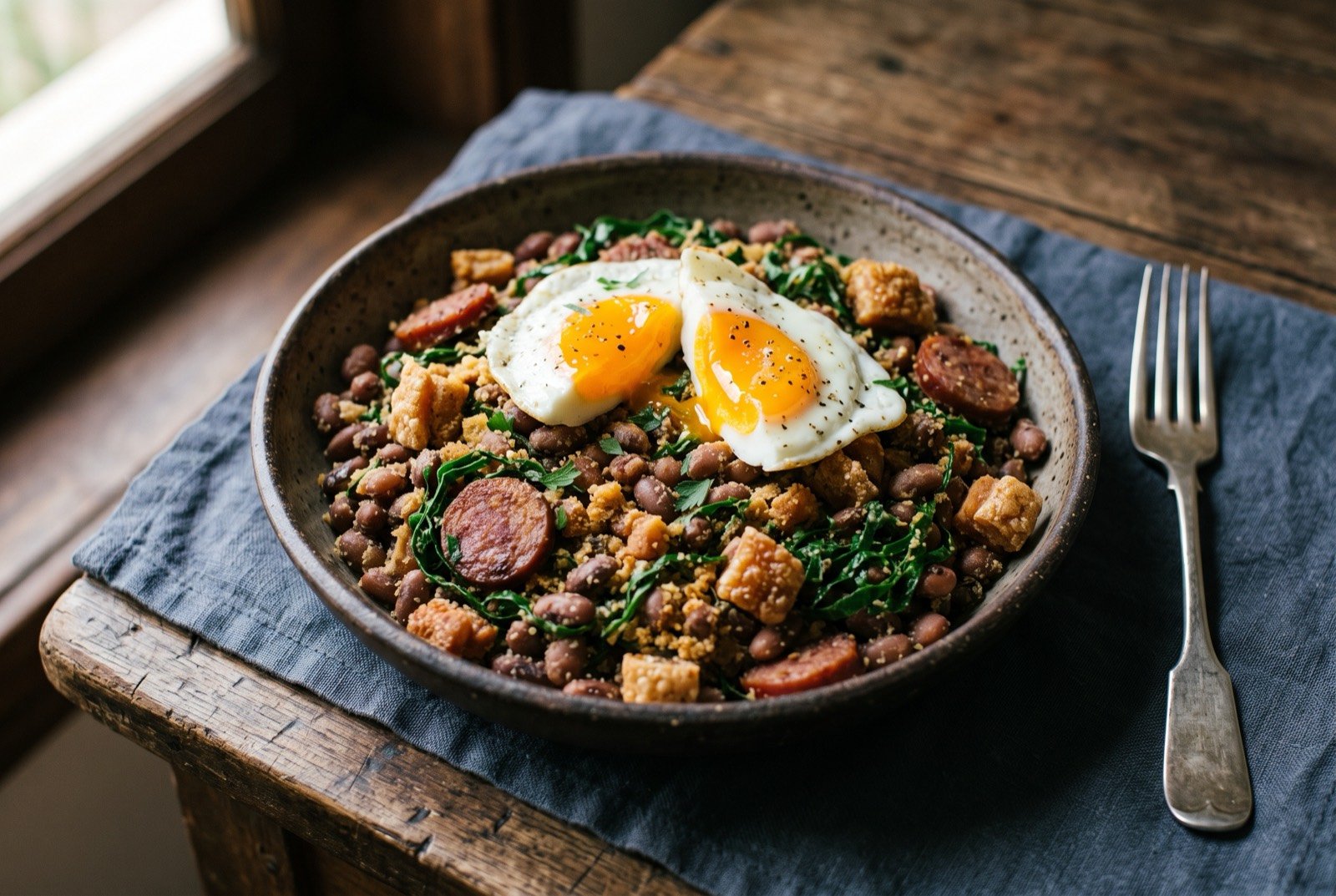
Feijão tropeiro
Minas Gerais, Goiás and São Paulo
Illustration
- Time
- 1 hour 20
- Researched
- Researched from 138 sources in the brief
As tradition built it
Feijão tropeiro
Dried beans simmered until tender, about 45 minutes to 1 hour, plus a further 20 minutes to assemble.
Ingredients
- 400g dried black or pinto beans
- 1 bay leaf
- 150g toucinho or streaky bacon, diced
- 200g linguiça, sliced
- 1 onion, chopped
- 2 cloves garlic
- 150g farinha de mandioca, toasted
- 2 to 3 eggs, fried or scrambled, roughly torn
- a generous handful couve mineira, finely shredded
Method
- Cook the beans, covered generously in water with a bay leaf, until tender but holding their shape, then drain, keeping a little of the cooking liquid back.
- In a heavy pan, render the diced toucinho or bacon until crisp, remove and set aside, then fry the sliced linguiça in the same fat until browned.
- Soften the chopped onion and garlic in the rendered fat, add the cooked beans and enough of the reserved liquid to keep things moist but not wet, and warm through.
- Off the heat, fold through the toasted farinha de mandioca gradually, enough to bind the beans into a moist, textured mass rather than a paste, along with the fried or scrambled eggs, roughly torn.
- Finish with the crisp toucinho and the shredded couve mineira, fried briefly in the same pan until just wilted, added at the very last moment so it keeps its crunch against the soft beans.
Notes
The spine dish of this chapter, its migration from mule train ration to farmhouse staple well documented across sources, though contested between Minas, Goiás and São Paulo as to whose dish it properly is.
No source consulted for this chapter gives complete gram quantities and timings for a historically sourced version; what follows is a workable recipe built from the documented construction, not an invented history.
What a modern chef changes
The two structural components, bean and pork, kept genuinely separate until the plate.
Rungs 2 and 5
Method
- Cook the beans sous vide with aromatics and a little rendered pork fat at 90 degrees Celsius for four hours, for an evenly tender bean that has not blown out at the skins the way a rolling boil can.
- Toast the farinha separately and to order, in a dry pan until deeply golden and properly nutty, then fold through only at the point of plating, never simmered into the beans, so it keeps real crunch against the soft bean and never turns pasty.
- Crisp the toucinho and torresmo last, laid over the top of the finished dish rather than cooked into it, restoring the textural contrast the dish is actually built on, following the same logic the technique ladder sets out for tutu.