Mainland Brazil · Volume 41, Beans, Blood and a Sweet the Convents Never Made
Tutu à mineira
Minas Gerais, Brazil
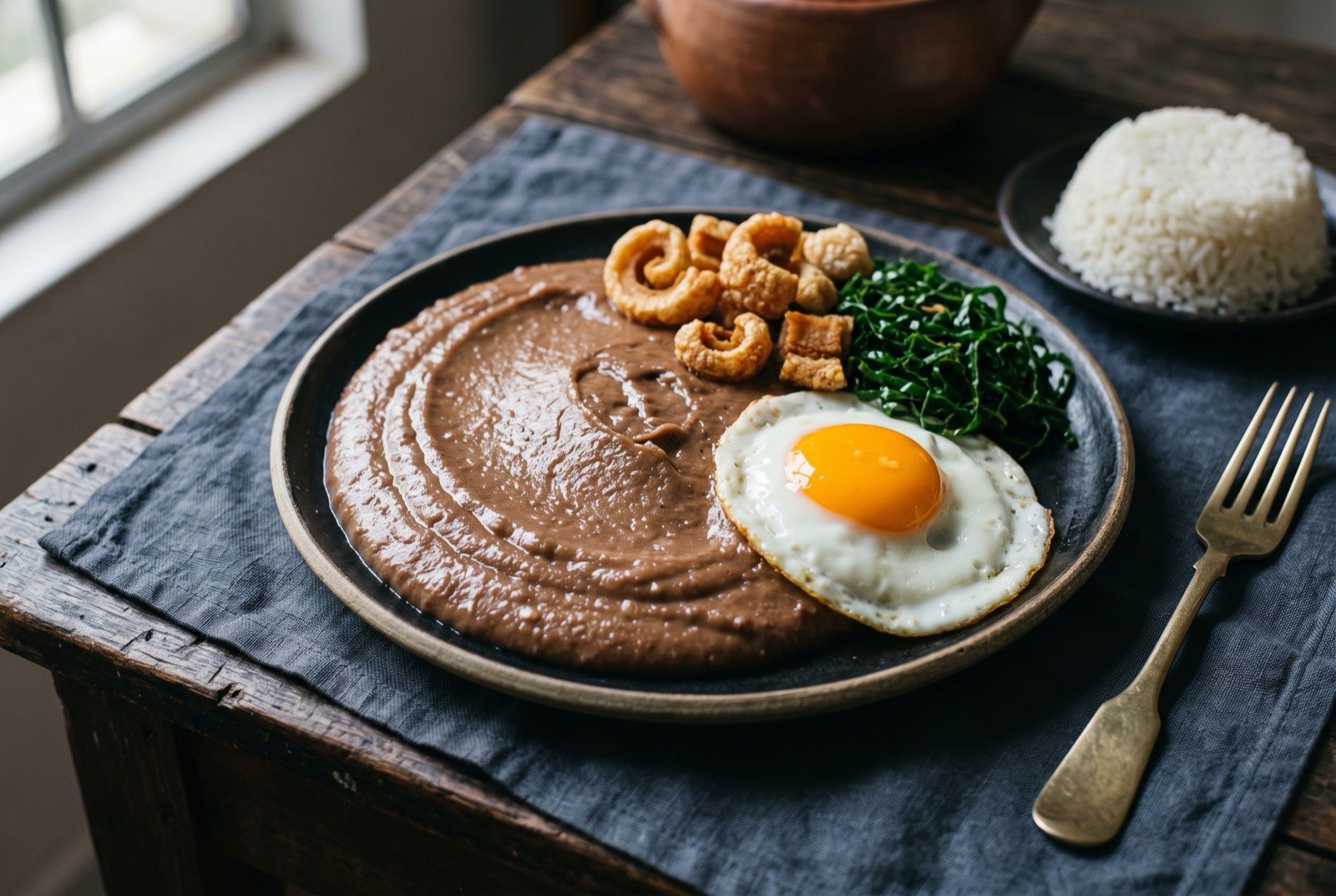
An illustration of the dish, not a photograph of it cooked.
- Time
- Not statedNo source states a time and the atlas has too few comparable dishes to estimate one.
- Reviewed
- Not yet reviewed from inside the tradition
- Cooked
- Not yet cooked and reported
As tradition built it
Tutu à mineira
About 30 to 40 minutes, once the beans are boiled soft.
Ingredients
- 400g dried beans
- 1 bay leaf
- 1 onion
- 2 cloves garlic
- roughly 100g cassava flour
- a little pork fat, rendered, to finish
- as available white rice, to serve
- a handful couve mineira, to serve
- 1 fried egg, to serve
- a handful torresmo, crisp, to serve
Method
- Boil the beans with a bay leaf until fully soft, then blend, with a portion of their cooking liquid, the onion and garlic, to a smooth purée.
- Return to the pan and cook gently, stirring, while working in the cassava flour a spoonful at a time, until the mixture thickens to a firm, spreadable cream that holds its shape on a spoon.
- Finish with a little rendered pork fat worked through at the end for shine and body.
- Serve with white rice, couve mineira, a fried egg and crisp torresmo, the standard mineiro plate this dish anchors.
Notes
Its name is popularly traced to a Bantu word for a bogeyman figure, though this etymology is repeated inconsistently across sources and should be treated as folk tradition rather than settled linguistics.
No gram quantities were found for a historically sourced version.
What a modern chef changes
The mash rebuilt as a proper bean velouté.
Rung 5
Method
- Blend the cooked beans in a high power blender with their own liquid until genuinely silk smooth, then pass through a chinois, a texture no traditional pounding or basic blending reaches, restaurant grade rather than home grade.
- Emulsify the finishing pork fat in gradually, off the heat, the way a French velouté is finished with butter, rather than simply stirring it through, for a glossier, more stable sheen.
- Serve as a base under the plate rather than a component beside it, in the modern tasting menu register this atlas has seen elsewhere in Belo Horizonte's own kitchens, letting the other elements of the classic plate, egg, torresmo, couve, sit on top of it rather than alongside.