Mainland Brazil · Volume 41, Beans, Blood and a Sweet the Convents Never Made
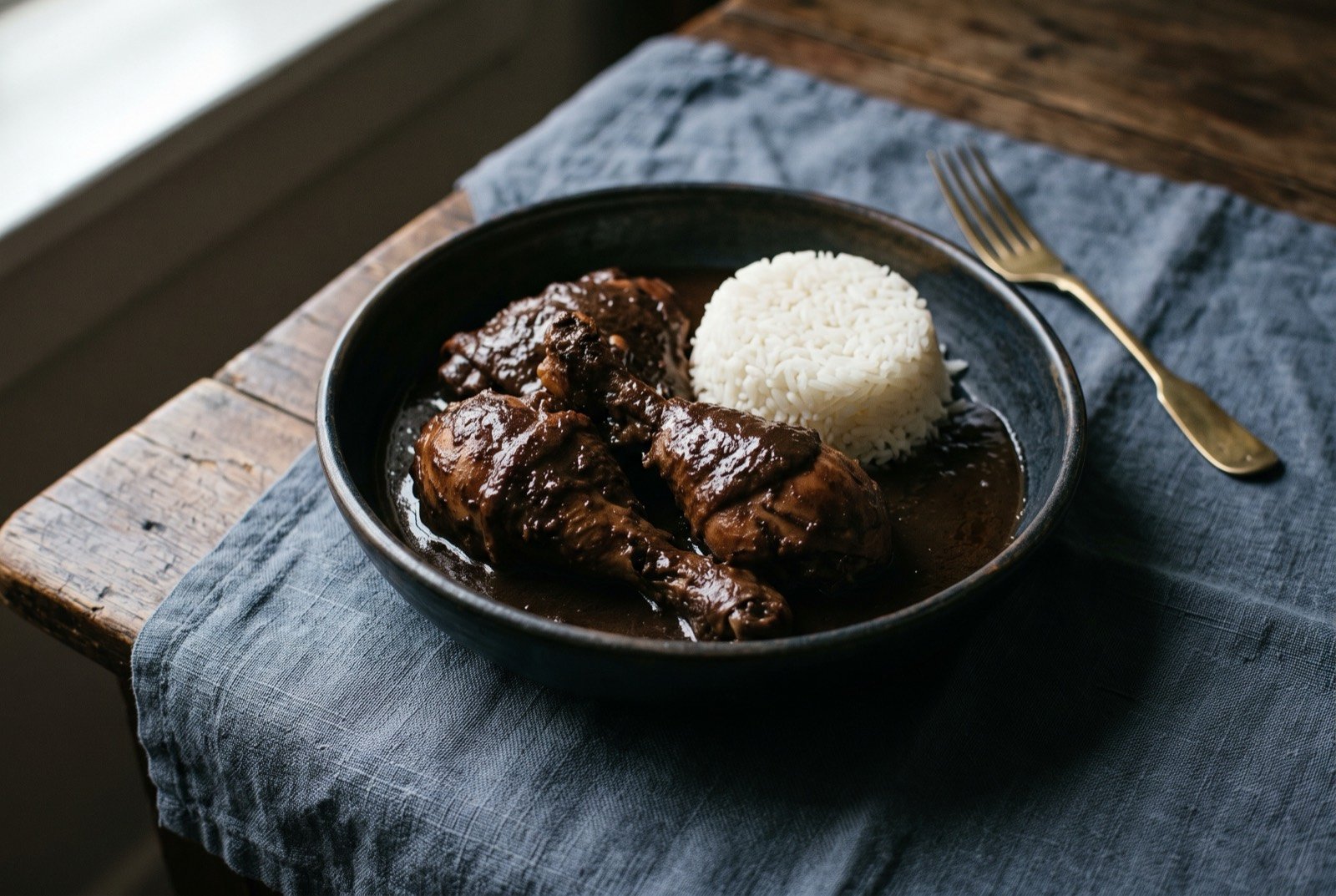
Frango ao molho pardo
Minho, Portugal, carried into Minas Gerais, Brazil
Illustration
- Researched
- Researched from 138 sources in the brief
As tradition built it
Frango ao molho pardo, as documented
Chicken simmered until tender, about 40 to 50 minutes; the blood worked in for a final 3 to 5 minutes, off the boil.
Ingredients
The method as the tradition gives it, ingredients named but not yet weighed. Quantities follow as we verify them, lead dishes first.
- 1kg chicken, jointed
- 1 tbsp vinegar
- the chicken's own blood, drawn fresh at slaughter
- 1 tbsp cornmeal, in spoonfuls
Method
- Marinate the jointed chicken in vinegar, which is also mixed immediately into the bird's own blood, drawn fresh at slaughter, to stop it clotting.
- Brown the chicken, then simmer in the seasoned marinade liquid until tender.
- Work the blood into the pan gradually, alternated with spoonfuls of cornmeal, off any hard boil and stirred slowly and continuously throughout, since boiling would curdle the blood into unpleasant scrambled lumps rather than the smooth, dark, velvety sauce the technique is chasing.
Notes
A direct variant of galinha à cabidela, of confirmed Portuguese origin, documented since at least the sixteenth century and associated particularly with the Minho region there, carried into Minas's own tropeiro hospitality tradition, farms that hosted travellers overnight needing to produce something hearty from whatever the kitchen actually had.
Flávio Trombino, who runs Belo Horizonte's Restaurante Xapuri, says directly that the dish "rarely appears in restaurants nowadays" because the skill of drawing and stabilising blood at slaughter, and the practice of home slaughter itself, is disappearing.
No gram quantities were found for a historically sourced version; a British kitchen, without ready access to fresh poultry blood, is honestly better served treating this as a dish to understand than one to attempt exactly as written, and a workable adaptation is offered instead.
What a modern chef changes
The same darkening and thickening mechanism, without fresh poultry blood.
Rung 3
Method
- Use fresh pig's blood from a specialist butcher, sold for black pudding and genuinely available in Britain, in place of chicken blood, stabilised with the same vinegar the traditional method uses, and understand this as a faithful mechanism substitution, not the original dish.
- Work it into the sauce exactly as the traditional method specifies, gradually, alternated with cornmeal, well off the boil, stirred without pause, since the chemistry that curdles blood does not care which animal it came from.
- Braise the chicken itself on a Big Green Egg at a gentle, even temperature, the thermal mass logic of Rung 3, for a bird tender enough to fall from the bone before the sauce is even finished.
Notes
This is presented as a workable British adaptation of the documented tradition, not a modernist reinterpretation of a tested historical recipe.