Mainland Brazil · Volume 41, Beans, Blood and a Sweet the Convents Never Made
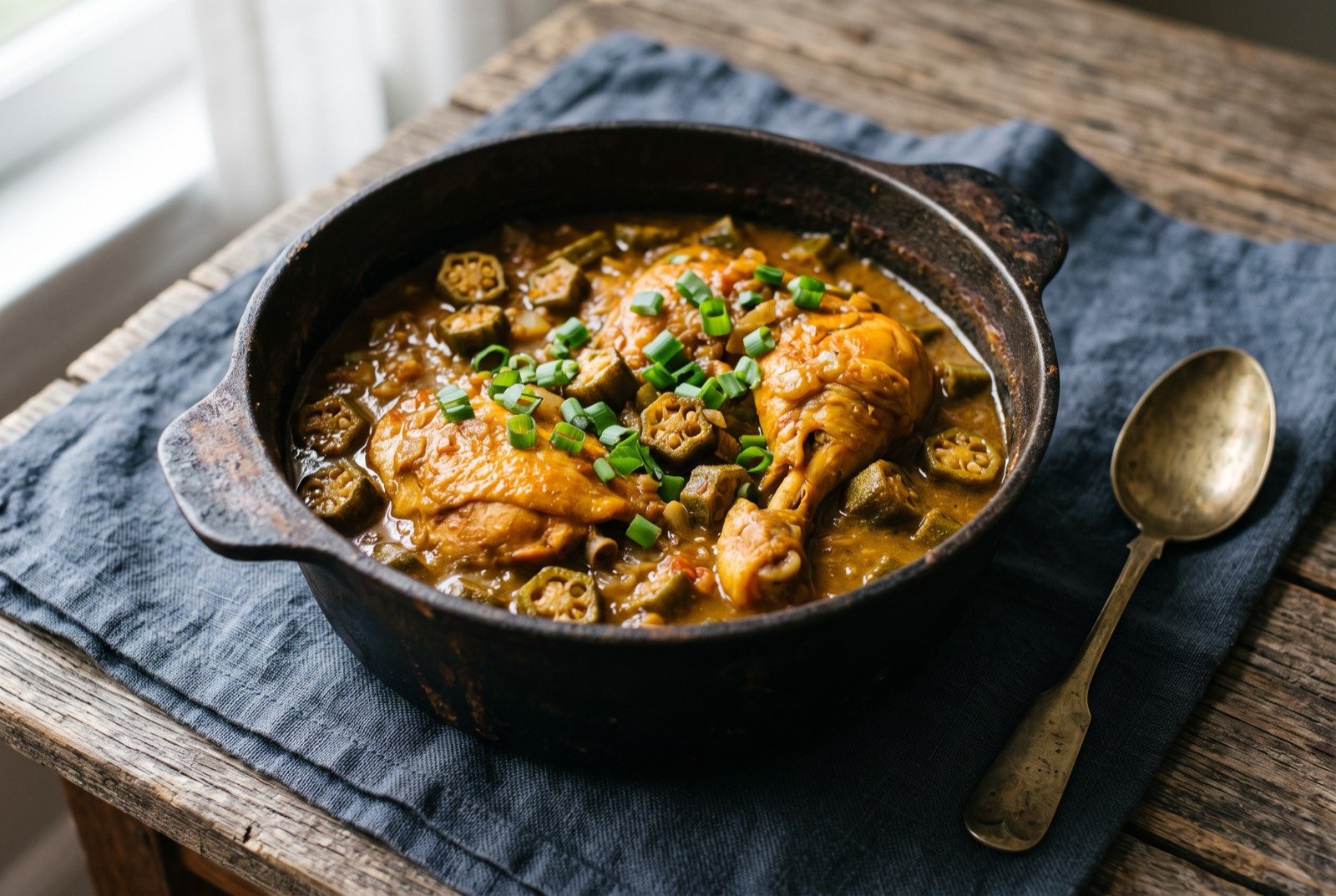
Frango com quiabo
Minas Gerais, Brazil
Illustration
- Time
- 1 hour
- Researched
- Researched from 138 sources in the brief
As tradition built it
Frango com quiabo
Okra sautéed about 20 minutes, the chicken simmered a further 30 to 40 minutes, then combined for a final 5 minutes; about 1 hour in total.
Ingredients
- 500g okra, sliced
- as needed oil
- 1 chicken, jointed, skin on
- as needed colorau (annatto tinted lard or oil)
- 1 onion, chopped
- 2 cloves garlic
- to cover water or stock, to just cover
Method
- Sauté the okra alone in oil over medium high heat for around 20 minutes, stirring regularly, specifically until it stops producing its characteristic mucilage, "baba", and begins to catch and brown at the edges; this step alone is what separates a good version from a slimy one. Set aside.
- In the same pan, brown the jointed chicken, skin on, in colorau, annatto tinted lard or oil, with the chopped onion and garlic.
- Add water or stock to just cover and simmer, covered, until the chicken is tender, 30 to 40 minutes.
- Return the cooked okra to the pan for the final five minutes, just to heat through and combine, never longer, or it will start releasing its mucilage again.
Notes
Standard mineiro home dish, its technique, not merely its ingredient list, credited by a named culinary lecturer to African cooks working outside the European okra tradition.
No gram quantities were found for a historically sourced version.
What a modern chef changes
The okra's timing engineered rather than guessed at.
Rung 3
Method
- Confirm the okra is properly cooked by colour and smell, not by the clock, since pan heat and okra freshness vary; the moment the raw, grassy smell drops away and the edges have real colour is the actual signal, not a fixed 20 minutes.
- Braise the chicken in a Big Green Egg run low and steady with the plate setter in, treating it as the panela de pedra-sabão's thermal mass rather than a grill, for the even, patient heat this dish is traditionally said to need.
- Finish with a spoonful of pequi oil, extracted following the technique ladder's Rung 6 method, where the reader has pequi in season, tying this dish directly to the cerrado half of the volume rather than treating pequi as confined to arroz com pequi alone.