Mainland Brazil · Volume 41, Beans, Blood and a Sweet the Convents Never Made
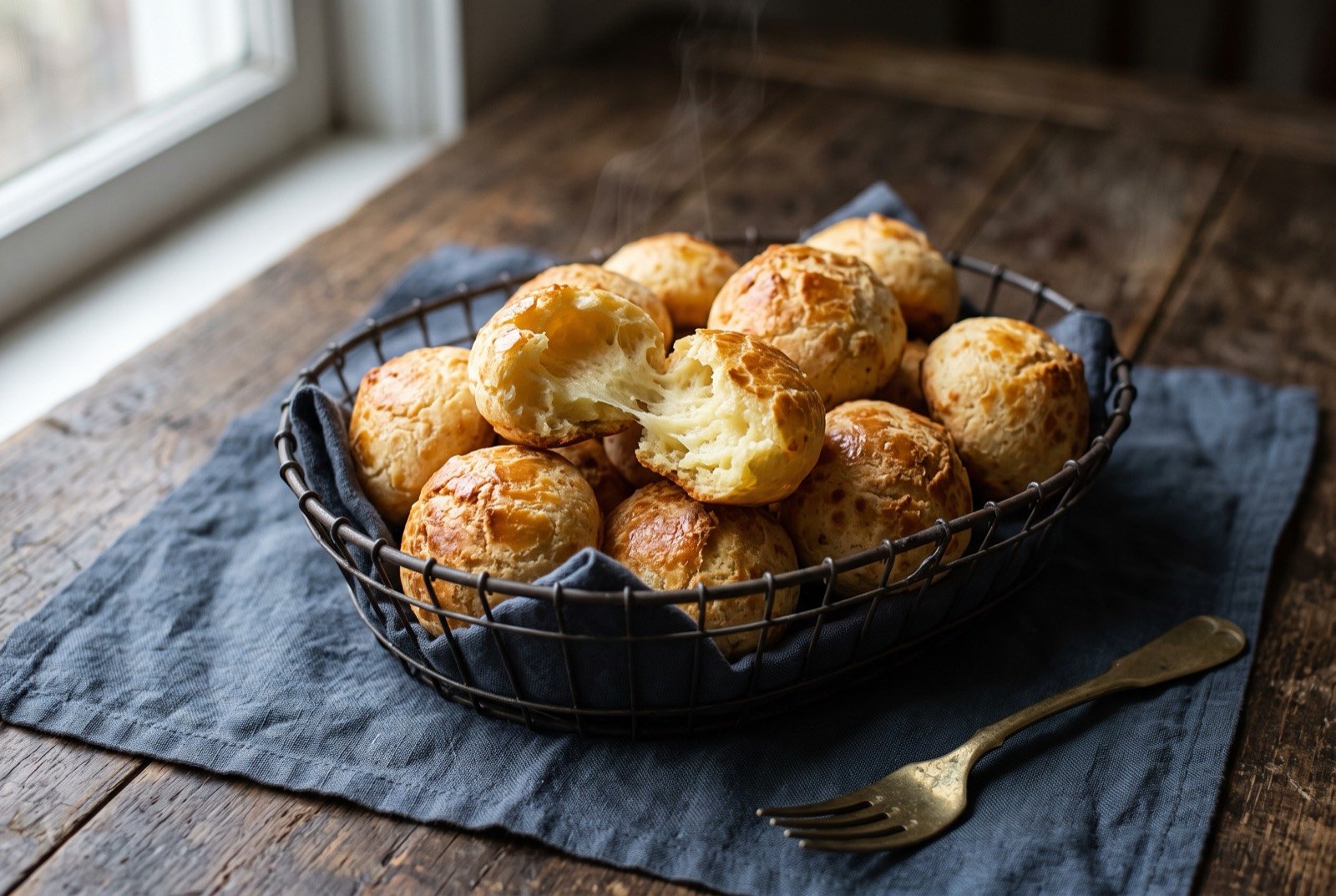
Pão de queijo
Minas Gerais, Brazil
Illustration
- Researched
- Researched from 138 sources in the brief
As tradition built it
Pão de queijo
Bake 200°C, 20 to 25 minutes.
Ingredients
- 250ml milk
- 100g pork lard or butter
- a pinch salt
- 500g polvilho azedo (or a blend of two thirds azedo to one third doce if azedo alone tastes too sharp)
- 3 eggs
- 300g queijo Minas curado, grated, or a mature, salty grating cheese
Method
- Bring the milk and pork lard or butter to a simmer with a pinch of salt, then pour over the polvilho azedo in a large bowl, stirring to a rough, scalded paste.
- Leave to cool to around 50 degrees Celsius, warm but not hot enough to cook the eggs, then work in the eggs one at a time, followed by the grated cheese.
- The dough should be soft, slightly sticky and elastic rather than a firm bread dough.
- Roll into balls roughly the size of a golf ball and bake at 200 degrees Celsius for 20 to 25 minutes, until well risen, deeply golden and audibly hollow when tapped.
Notes
Colonial in origin, arising as a substitute for wheat bread when flour was scarce and imported while cassava starch was abundant locally, but its national fame is a comparatively recent, twentieth century story, tied to a deliberate mid century promotion of Minas cuisine as heritage.
No gram-quantity historical recipe was found; the workable recipe below follows the documented mechanism precisely.
What a modern chef changes
The starch fermentation made visible and controllable.
Rung 1
Method
- Ferment your own polvilho azedo at home using the ferment bench method above, tasted daily for acidity, giving direct control over how sharp the final bread tastes rather than relying on an unknown commercial batch.
- Hold hydrated starch in a sous vide bath at 30 to 35 degrees Celsius for a shorter, monitored fermentation where time is limited, this book's own extrapolation from the documented mechanism rather than a technique any Brazilian source describes.
- Grind a dried, home aged Minas cheese to a fine powder in a dedicated spice grinder and dust it over the balls before baking, for a crisp, savoury crust on top of the traditional soft interior.