Mainland Brazil · Volume 41, Beans, Blood and a Sweet the Convents Never Made
Doce de leite
Viçosa, Minas Gerais, Brazil
Illustration
- Researched
- Researched from 138 sources in the brief
As tradition built it
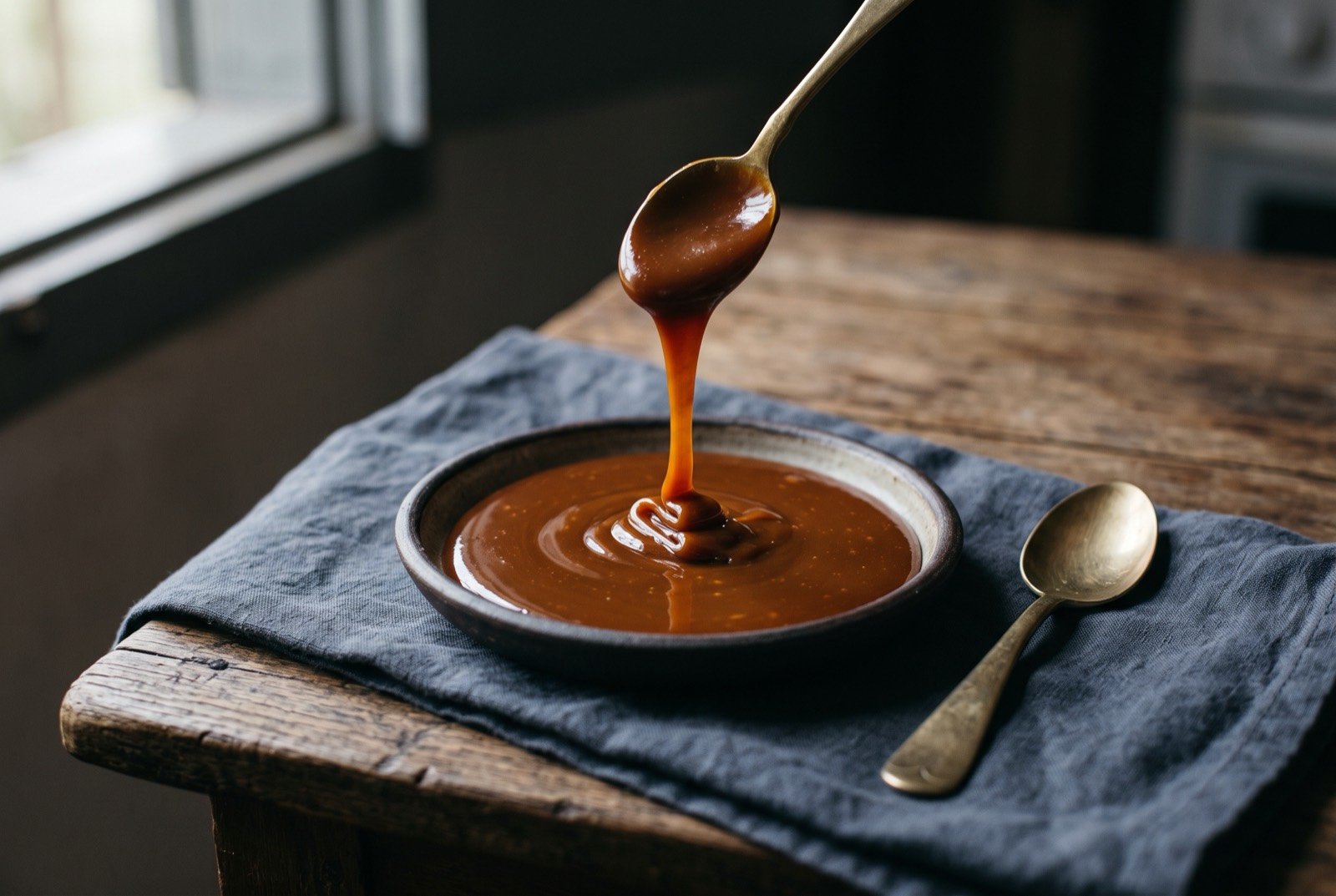
Doce de leite
Simmer 2 to 3 hours, stirring every 15 to 20 minutes.
Ingredients
- 1 litre whole milk
- 600g sugar
- a small pinch bicarbonate of soda
Method
- Bring the milk and sugar to a gentle simmer in a heavy, thick-bottomed pan, with a small pinch of bicarbonate of soda stirred through, which raises the mixture's alkalinity, both preventing the small hard sugar crystals that ruin the texture and deepening the colour toward a proper dark caramel as the milk proteins and sugars brown together.
- Cook at a low simmer, stirring every 15 to 20 minutes to stop it catching on the bottom, for two to three hours, until it has reduced to a thick, glossy caramel that coats the back of a spoon heavily and holds a brief trail when the spoon is dragged across the pan base.
- For doce de leite de corte, the firmer, sliceable style, continue cooking until the mass pulls cleanly away from the sides of the pan as you stir, then pour into a lined, buttered tray and leave to set into slices.
Notes
Minas produces 58.1 per cent of Brazil's doce de leite by national inspection figures, the single largest producing region in the country by a wide margin.
Doce de leite from Viçosa carries Minas state cultural heritage status since January 2022, and Viçosa itself has held the official title of the state's Doce de Leite capital since May 2023.
What a modern chef changes
The long reduction made precise rather than a matter of watching and guessing.
Ferment bench principle, applied to sugar work
Method
- Cook the base in a sous vide bath at a steady, controlled temperature for the bulk of the reduction, finishing the last stage in an open pan on the stove to drive off the final moisture and build proper Maillard colour and flavour that a sealed bag cannot develop on its own.
- Dry a thin layer of the finished doce in a dehydrator into a crisp, brittle tuile, a genuinely useful garnish, this book's own extrapolation from the traditional slow reduction, offered as a version the kit makes possible, not as documented Minas technique.
- Serve alongside a slice of Queijo Minas curado, the same cheese and sweet pairing logic as goiabada's Romeu e Julieta, since doce de leite's dense sweetness genuinely wants a salty, firm cheese alongside it just as much as the guava paste does.