Mainland Brazil · Volume 41, Beans, Blood and a Sweet the Convents Never Made
Queijadinha
Serro, Minas Gerais, Brazil
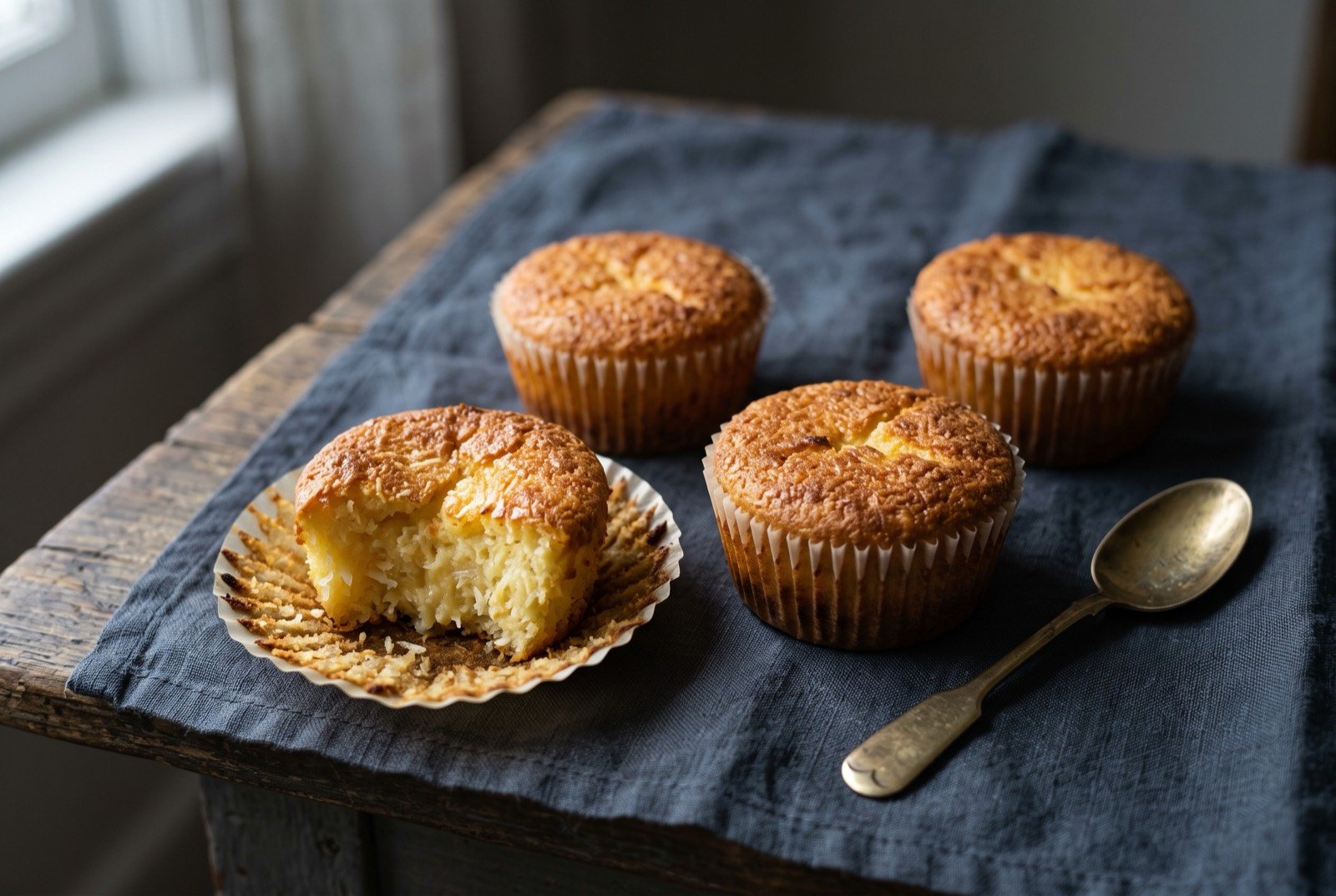
Illustration
- Researched
- Researched from 138 sources in the brief
As tradition built it
Queijadinha
Bake 180°C, 25 to 30 minutes.
Ingredients
- 100g desiccated coconut
- 100g parmesan or a mature Queijo Minas, grated
- 2 tbsp sugar
- 395g tin sweetened condensed milk
- 2 eggs, lightly beaten
- 1 tbsp butter, melted
Method
- Combine the desiccated coconut, grated parmesan or Queijo Minas, and sugar in a bowl.
- Stir in the sweetened condensed milk, then the lightly beaten eggs and melted butter, mixing to a smooth, loose batter.
- Divide between paper or foil cups set inside a deep baking tray, filling each roughly three quarters full, then pour boiling water into the tray to reach halfway up the sides of the cups.
- Bake at 180 degrees Celsius for 25 to 30 minutes, until the tops are golden and just firm to the touch while the centre still holds a faint, custardy wobble.
What a modern chef changes
The bain-marie mechanism respected, not shortcut.
Rung 2 principle, applied to custard
Method
- Never bake this dry: the water bath is not optional decoration; it is the entire reason the custard sets gently rather than curdling at the edges before the centre catches up, exactly the same food science as a crème caramel.
- Use a 60-day matured Queijo Minas rather than parmesan, following the example of the Serro cooperative CooperSerro's own reworked version, for a saltier, more complex savoury note against the coconut and condensed milk.
- Unmould onto a spoonful of the pequi oil from Rung 6, off season substitutable with a little toasted coconut oil, a genuinely speculative pairing this book's own suggestion, offered because the resinous pequi note and the sweet coconut custard share enough common ground to be worth a home cook's own experiment.