Melanesia, Micronesia and Polynesia · Volume 08, The Reducción, the Fiesta and the Fishing Stone
Latiya
CHamoru, Guam, Spanish-derived
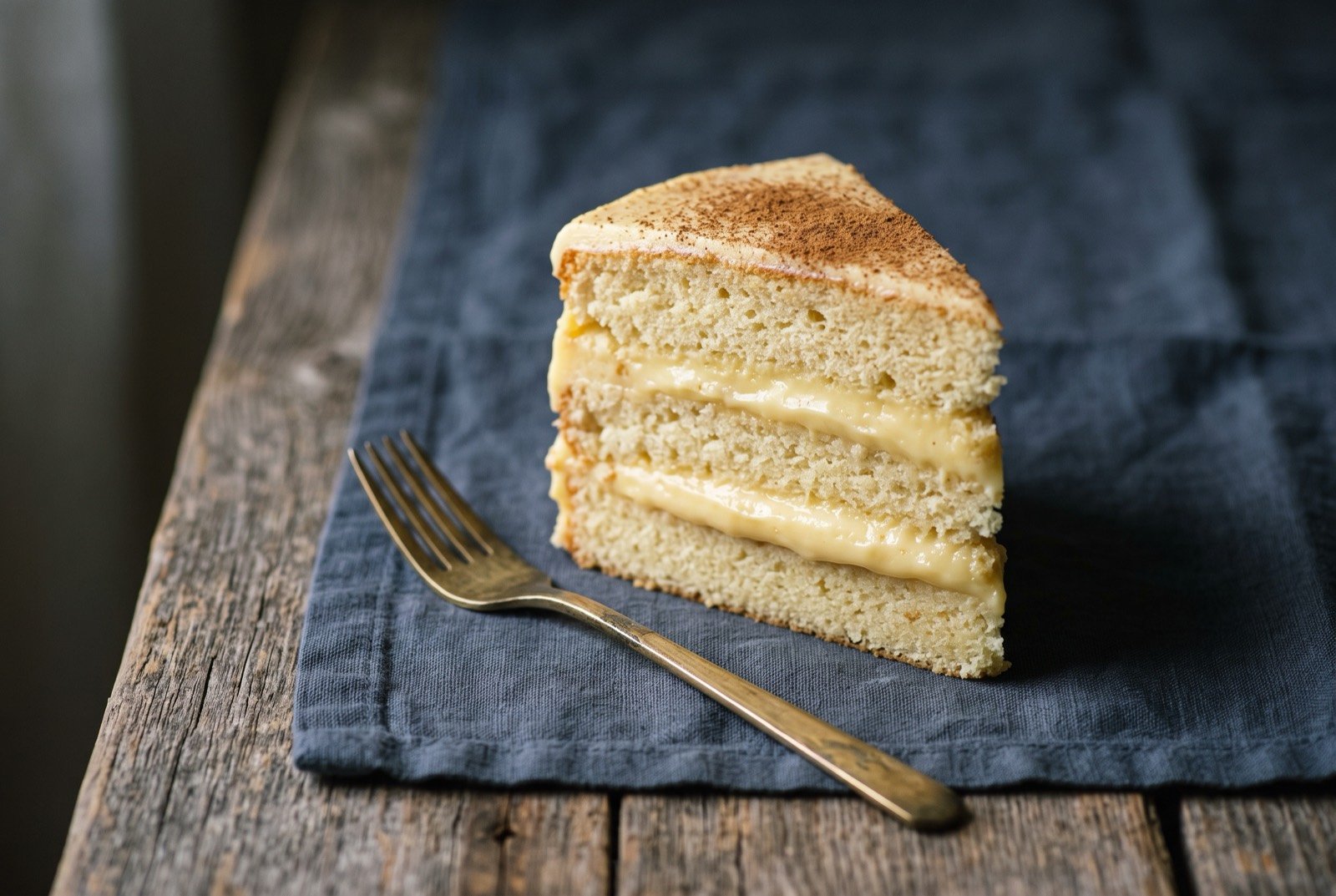
Illustration
- Researched
- Researched from 44 sources in the brief
A Spanish-derived custard cake, and the clearest single dish in this chapter for tracing exactly how a colonial import settles into a local table.
Latiya descends directly from Spanish natillas, custard, traditionally eaten with bizcocho genovesa, a golden sponge-finger cake, introduced during Spanish colonisation. The name carries the etymology intact: natilla is Spanish for custard, a diminutive of nata, cream, and CHamoru speakers historically shifted an initial Spanish N to L, turning natilla into latiya, though some speakers still say natiya. The CHamoru adaptation changed presentation rather than substance: a full sponge cake replaces the Spanish sponge fingers as the base, with custard poured over. Because the pre-contact CHamoru diet had no dairy or refined sugar, both ingredients in this dish specifically are late Spanish-period introductions, not adaptations of anything older.
As tradition built it
Method as documented; no exact quantities given in any source consulted.
Ingredients
- one 8 inch sponge cake, baked plain sponge cake (baked plain)
- 1⅔ cups water, 1 large tin condensed milk, ¼ cup cornstarch, 2 eggs, 6 tbsp sugar, 2 tsp vanilla extract, ¼ cup butter and ½ tsp cinnamon vanilla custard
Method
- Bake a plain sponge cake and allow it to cool.
- Prepare a vanilla custard on the stovetop until thickened.
- Slice the sponge into layers and pour the warm custard over each layer as it is assembled.
- Chill until fully set before serving.
What a modern chef changes
The custard set with more precision, and the sponge given a texture the original never had.
Method
- Set the custard with a controlled bain-marie or a low-temperature combi oven bake rather than a stovetop cook judged by eye, for a smoother, more reliably set result.
- Dehydrate a thin layer of sponge crumb separately for a crisp textural contrast scattered over the finished cake, a genuine addition this chapter offers plainly as its own, not a documented CHamoru technique.