Melanesia, Micronesia and Polynesia · Volume 08, The Reducción, the Fiesta and the Fishing Stone
Hineksa' aga'ga'
CHamoru, Guam
Illustration
- Researched
- Researched from 44 sources in the brief
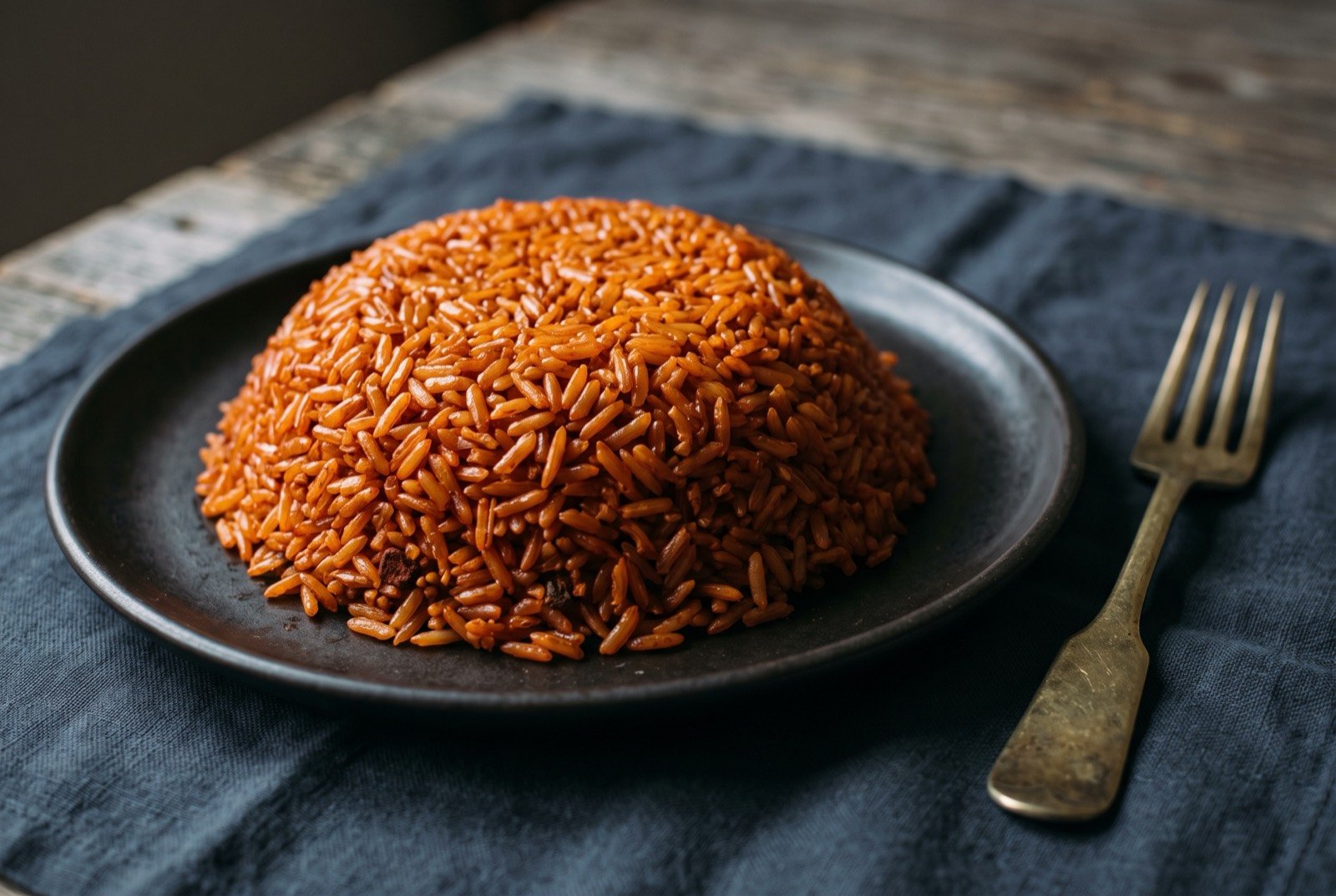
The load-bearing starch of the CHamoru fiesta table. Short-grain rice cooked in water stained deep orange-red by soaked achote seed.
Achote seeds are steeped in warm water with a little oil and salt to build the colouring liquid, then used to cook the rice, at a ratio of one cup more water than rice; bacon, peas, onion and garlic are named optional additions. Red rice is always the first dish placed at the head of a fiesta table, and Guampedia states plainly that "it is rare to see a fiesta table blessed and opened if the rice has not yet been placed," its presence in that specific position treated as close to a precondition for the meal beginning at all.
As tradition built it
Ratio of one cup more liquid than rice. Recipe credited to Martha VC Mendiola.
Ingredients
- 4 cups short-grain rice
- 1 cup more than the rice water, for the achote liquid
- 1 cup achote (annatto) seeds
- ¼ cup a little oil
- 2 tsp, adjustable a pinch of salt
- optional bacon, onion, garlic and peas
Method
- Steep achote seeds in warm water with a little oil and a pinch of salt until the water turns deep orange-red.
- Strain out the seeds, reserving the coloured liquid.
- Cook the rice in the achote liquid, using one cup more liquid than rice.
- If using, fry bacon, onion and garlic and fold through with peas once the rice is cooked.
What a modern chef changes
The infusion extended and clarified, the colour finished rather than only cooked in.
Rung 3
Method
- Warm the achote infusion gently over a longer steep rather than a quick soak, extracting more of the seed's fat-soluble colour before the rice ever meets it.
- Strain the infusion through a chinois for a completely grit-free liquid, a genuinely cleaner result than the traditional method's straining allows.
- Reserve a small measure of the achote oil and finish it over the cooked rice at the end, giving a more even, glossier colour than relying on the cooking liquid alone.