The Sinosphere · Volume 30, The Red-Lees Jar, the Ten-Second Slice and a Coast Two Tongues Call Home
Hongzao chicken (红糟鸡)
Fuzhou, Fujian
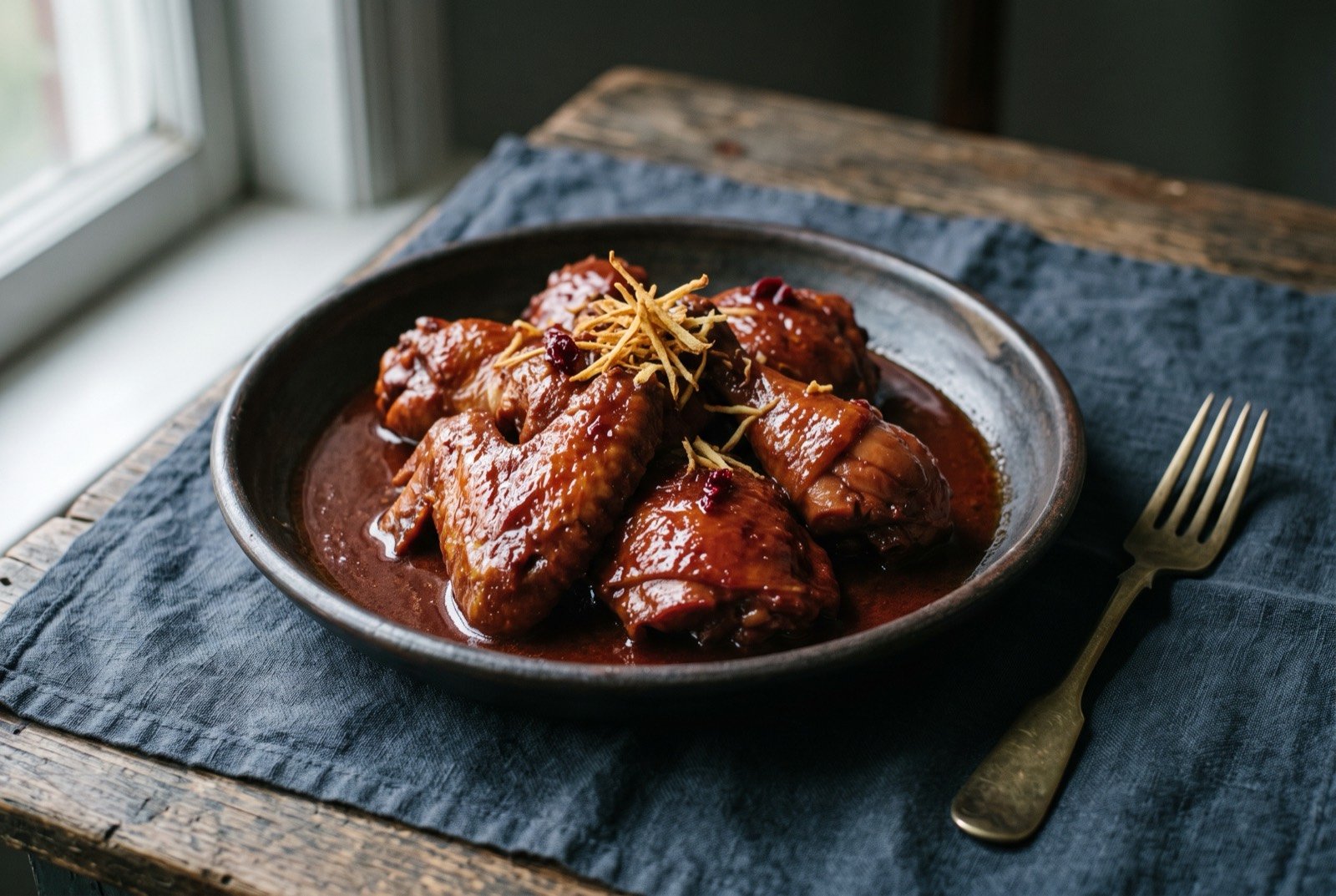
An illustration of the dish, not a photograph of it cooked.
- Time
- 1 hour 30
- Reviewed
- Not yet reviewed from inside the tradition
- Cooked
- Not yet cooked and reported
A near-identical version of this dish, published in Malaysia's Sin Chew Daily newspaper, shows it surviving essentially unchanged in the Fuzhou diaspora community there, evidence of exactly the kind of qiaopi-carried culinary continuity this chapter's history section describes.
As tradition built it
Serves 4. About 30 minutes, plus at least an hour to marinate.
Ingredients
- about 450g, jointed into 3 to 4 pieces chicken pieces
- 1 tablespoon, enough to coat and marinate the chicken hongzao, enough to marinate the chicken
- 2 tbsp, shredded ginger, shredded
- 1 teaspoon, to fry the ginger sesame oil
- 1 and a half cups water
- to taste sugar
- to taste soy sauce
Method
- Marinate the chicken pieces in hongzao for at least an hour.
- Fry the shredded ginger first in sesame oil.
- Add the marinated chicken to the same pan and stir-fry until the meat's colour changes.
- Add water and simmer the whole roughly 10 minutes until the sauce reduces by about half.
- Finish with sugar and soy sauce.
Notes
The dish's noodle variant, hongzao chicken noodle (红糟鸡面线), builds a separate stock, simmers it with hongzao, sugar and soy for a further 8 to 10 minutes until the chicken is tender, then finishes with thin wheat noodles (面线) boiled through briefly and the hot broth ladled over.
What a modern chef changes
A vacuum-aged marinade, a mounted sauce, and a hongzao powder from the spent lees
Rung 2
Method
- Age the hongzao marinade under vacuum rather than in an open bowl, sealing the chicken with pounded hongzao and a measured proportion of its own rendered fat under low pressure for several hours, so the lees' flavour penetrates fully rather than only coating the surface.
- Mount the finished sauce, off the heat, with a little of the rendered chicken fat worked in through a chinois, for a glossier, more stable emulsion than a straight pan reduction gives.
- Dehydrate the spent lees into a hongzao "powder" once their marinating work is done, a genuinely new garnish that simply concentrates an ingredient the tradition has already built, rather than importing anything from outside it.