The Sinosphere · Volume 30, The Red-Lees Jar, the Ten-Second Slice and a Coast Two Tongues Call Home
Chaoshan beef hotpot (潮汕牛肉火锅)
Shantou and the Chaoshan coast, Guangdong
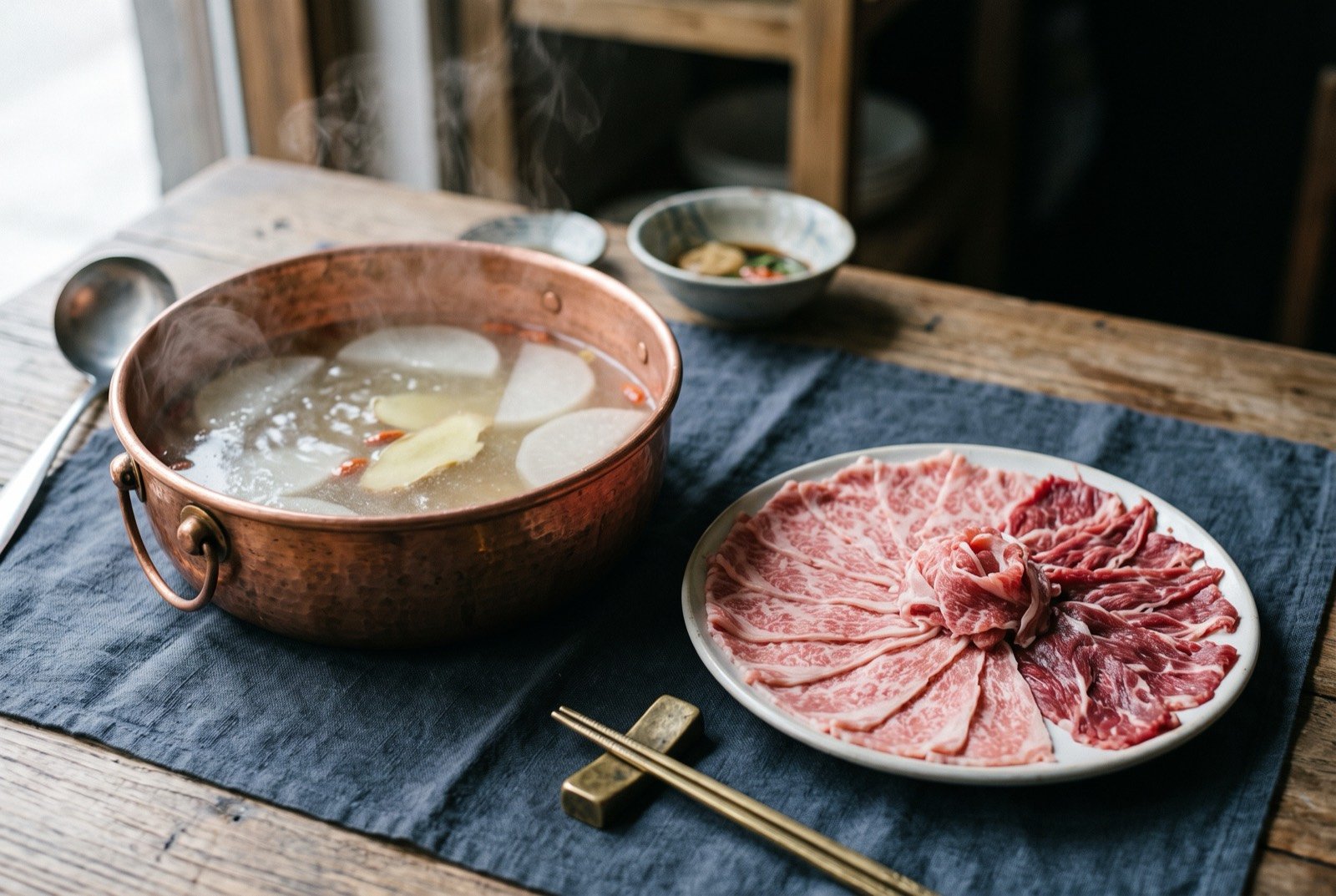
An illustration of the dish, not a photograph of it cooked.
- Time
- Not statedNo source states a time and the atlas has too few comparable dishes to estimate one.
- Reviewed
- Not yet reviewed from inside the tradition
- Cooked
- Not yet cooked and reported
The philosophy is "great simplicity," 大道至简, a deliberate rejection of the mala tradition of Sichuan and Chongqing hotpot. Cattle are slaughtered same-day, never frozen, the most serious operators coordinating directly with the abattoir so meat arrives still warm.
As tradition built it
Serves 4 to 6. Broth simmers gently while the beef is sliced to order.
Ingredients
- a large piece or two, blanched first beef bones, for a plain clear broth
- a large piece southern ginger
- 1, cut into large pieces white radish
- 1, cut into segments corn, for background sweetness
- as available beef, a range of named cuts: marbled 雪花 and 吊龙, tendon-bearing 三花趾 and 五花趾, and the fattier brisket cut 胸口朥
- to taste shacha sauce, as a table dipping sauce
Method
- Build a plain beef-bone clear broth, seasoned only with southern ginger, white radish and corn for background sweetness, no thick oil or heavy seasoning, so the beef itself stays foregrounded.
- Trained cutting-board masters slice each named cut at roughly 90 degrees to the grain, to its own specific thickness: the tenderest cuts, like 匙仁, sliced roughly a millimetre thin; the fattier brisket cut, 胸口朥, left thicker.
- Cook each cut in the simmering broth for its own specific handful of seconds, the tenderest cuts barely 8 seconds, the fattier brisket cut left in for minutes to render and crisp.
- Serve with shacha sauce as the table dipping sauce, once the broth's own base before this hotpot evolved into its clear-broth form.
What a modern chef changes
A consommé raft for the broth, a blast-chill instead of a damp cloth, and freshly ground condiment
Rung 5
Method
- Source the broth's clarity through a proper consommé raft rather than skimming alone, since the dish's whole philosophy depends on the broth reading as genuinely clean rather than merely undressed; a chinois then finishes the polish.
- Replace the traditional damp-cloth chill for delicate cuts with a brief, controlled blast-chill of the whole primal before slicing, cold enough to firm the fat for the thinnest possible cut without ever crossing into actually freezing the meat, which changes its structure and defeats the dish's entire point.
- Grind the white pepper and dried chilli table condiment cold, in a dedicated spice grinder, for a finer, more evenly dispersed result than the coarser grind most hotpot restaurants serve, a small change that respects the broth's own restraint rather than fighting it.