Melanesia, Micronesia and Polynesia · Volume 08, The Reducción, the Fiesta and the Fishing Stone
Titiyas
CHamoru, Guam, Spanish-derived
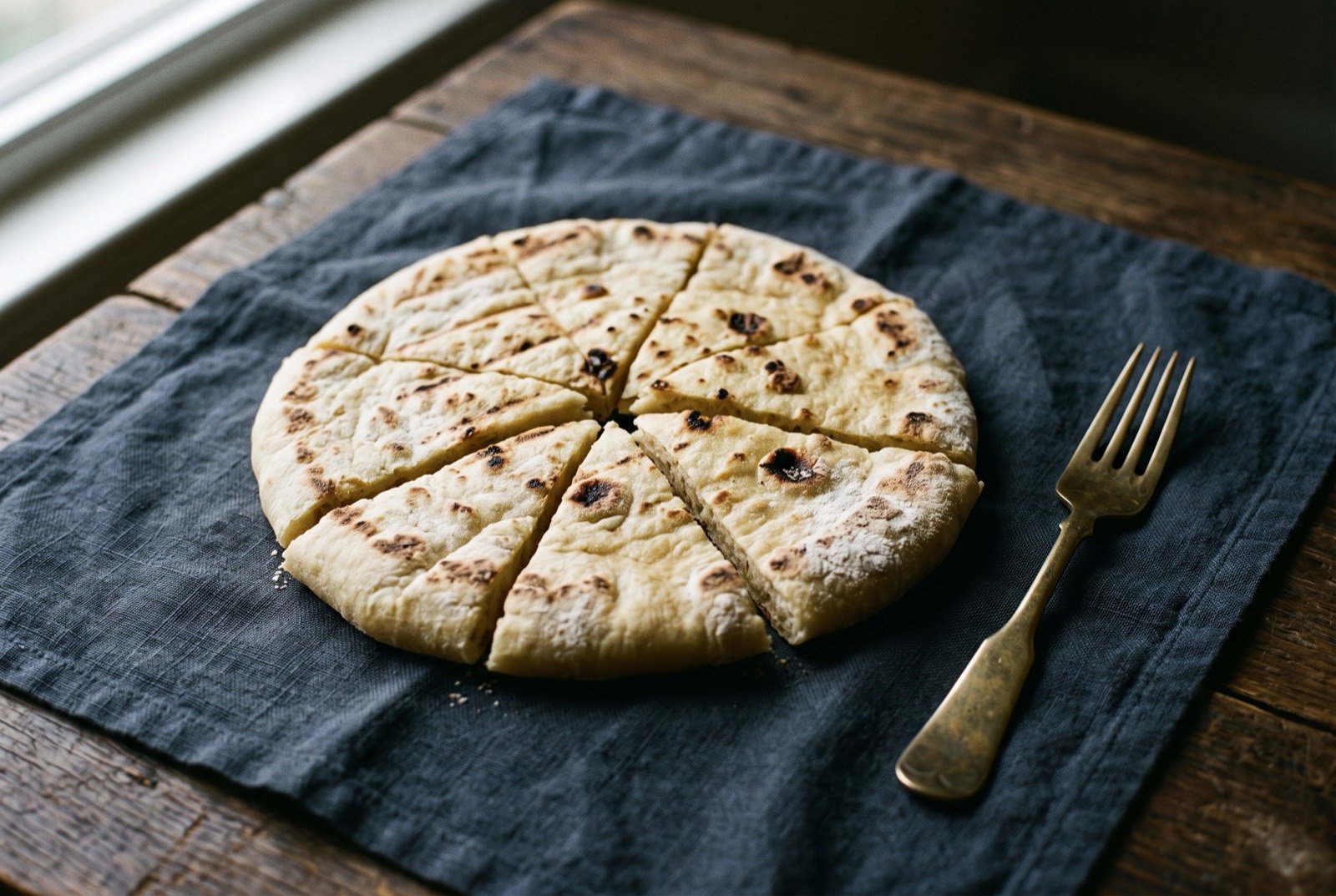
An illustration of the dish, not a photograph of it cooked.
- Time
- Not statedNo source states a time and the atlas has too few comparable dishes to estimate one.
- Reviewed
- Not yet reviewed from inside the tradition
- Cooked
- Not yet cooked and reported
The name is a CHamoru-phonetic adaptation of the Spanish "tortilla," settled into its current form once Spanish rule was firmly established in the 1700s.
Three forms are named on Guam: harina (flour, sweetened), mai'es (corn) and faddang (Federico nut). The earliest documented references to corn-flour flatbread making appear in seventeenth-century Spanish missionary writing; corn, a New World crop, flourished on the islands once introduced, and the milling equipment itself, the metate and mano, came from Mexico too, CHamoru-ised into mitåte and månu.
As tradition built it
Flour titiyas
Serves 8 to 10. Recipe credited to Magdalena S. Taitano, 1985 cookbook.
Ingredients
- 3 cups flour
- 4 tsp baking powder
- ⅓ cup sugar
- ¼ tsp salt
- ¼ cup salad oil
- ¾ cup milk
Method
- Mix the baking powder into the flour, then add the sugar, salt and oil.
- Work in the milk to form a dough.
- Divide into 3 equal portions and roll each out on a floured surface.
- Cook on a grill over medium heat, pricking the dough with holes and turning twice per side, for 8 minutes total.
- Wrap in foil to keep soft, or cook longer for a crisp, dippable texture. Slice into 8 wedges per titiyas to serve like bread.
What a modern chef changes
The grill's even heat reproduced with more control, and the dough's hydration measured rather than judged by feel.
Method
- Cook on a Big Green Egg fitted with a flat griddle plate rather than an open grill, for a more even, more controllable surface temperature across the full 8-minute cook.
- Weigh the flour and liquid rather than measuring by volume, for a more consistent dough batch to batch, since a flatbread's texture is unusually sensitive to hydration.