Mainland Brazil · Volume 41, Beans, Blood and a Sweet the Convents Never Made
Arroz com pequi
Cerrado plateau, Goiás and Minas Gerais
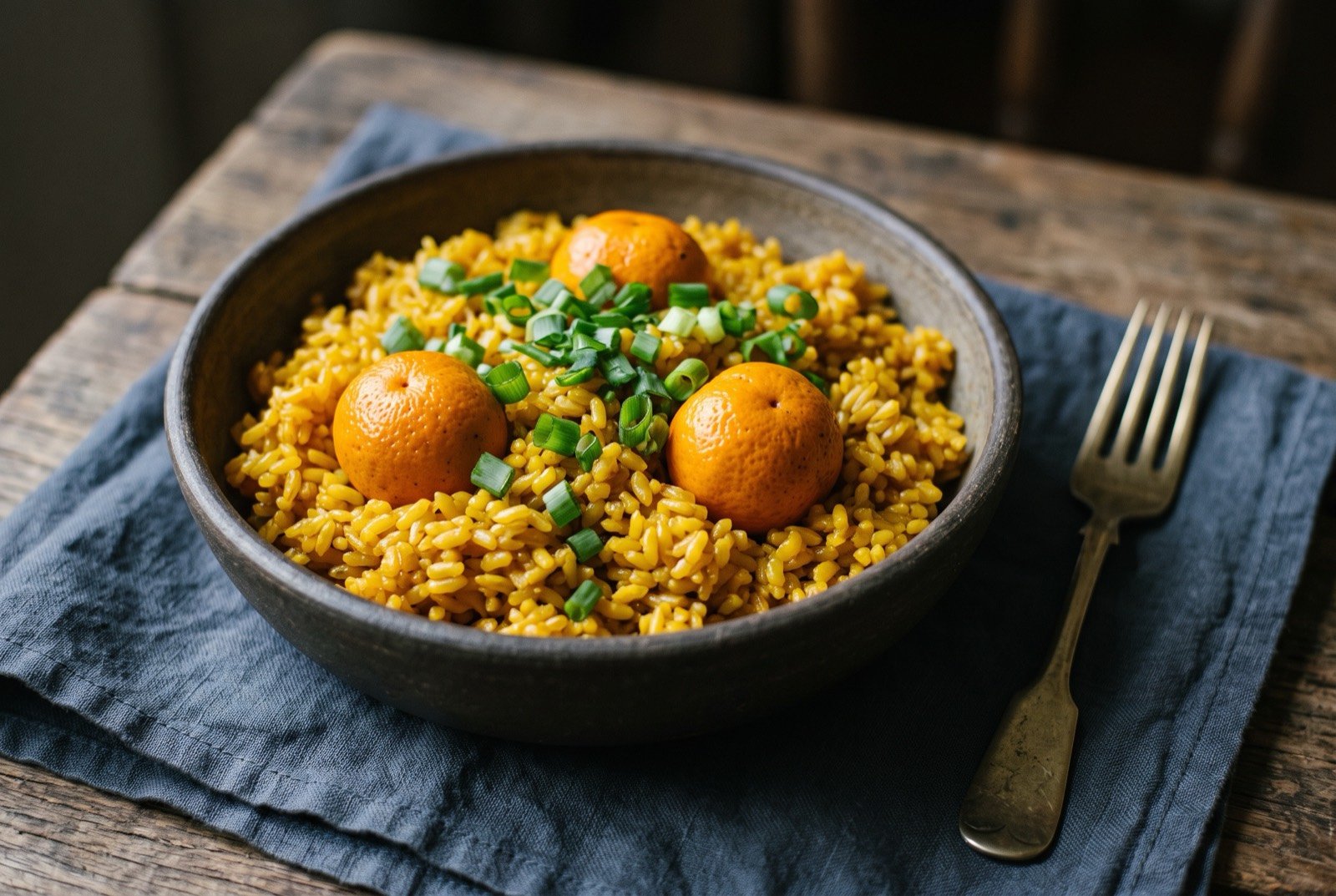
An illustration of the dish, not a photograph of it cooked.
- Time
- 45 minutes
- Reviewed
- Not yet reviewed from inside the tradition
- Cooked
- Not yet cooked and reported
As tradition built it
Arroz com pequi
Pequi simmered 20 to 30 minutes before the rice goes into the same pot; about 45 minutes in total.
Ingredients
- 1 onion, chopped
- 2 cloves garlic
- as needed oil
- 6 to 8 pequi fruit, whole, salted and peppered
- to cover water, to cover
- 2 cups (400g) rice, rinsed
Method
- Read the technique ladder's Rung 6 in full before starting; this is not optional.
- Sauté the chopped onion and garlic in oil, add the pequi fruit, salted and peppered, cover with water, and simmer at a steady, rolling boil for 20 to 30 minutes, stirring often as the water reduces, never biting or cutting into the stone at any point.
- Add the rinsed rice to the pot along with the pequi and enough of the cooking water to cook it through in the usual way, so the rice takes on the fruit's colour and its dense, resinous aroma.
- Serve the whole pequi fruit in among the rice, and eat the flesh only by gnawing or scraping it carefully off the pit with a spoon.
Notes
The emblem dish of the wider cerrado belt, strongest in neighbouring Goiás but shared into Minas's own cerrado plateau, calendar tied to the pequi harvest each year rather than cooked year round.
No gram quantities were found for a historically sourced version, and this chapter does not soften the safety warning for the sake of a tidier recipe.
Handling pequi carries a genuine, documented safety risk: see the technique ladder's Rung 6 before attempting this dish.
What a modern chef changes
The fruit's flavour extracted and separated from its own hazard.
Rung 6
Method
- Extract pequi oil in advance using a high power blender and controlled gentle heat, following the reasoning in Rung 6, a faster and genuinely safer mechanical process than the traditional eight-hour open fire maceration of a thousand crushed stones, and use a spoonful of this oil to finish the rice instead of serving the whole hazardous fruit at the table.
- Where the whole fruit is served for authenticity, plate it separately from the rice with an explicit verbal warning at service, treating the pequi as a garnish to be approached carefully rather than folded invisibly through a dish a guest might eat without full attention.
- Use frozen pequi bought in season and properly dried before any long storage, per the porosity warning in the technique ladder, since fermentation in storage is a real, documented risk with this fruit, not a theoretical one.