Mainland Brazil · Volume 41, Beans, Blood and a Sweet the Convents Never Made
Torresmo de rolo
Minas Gerais, Brazil
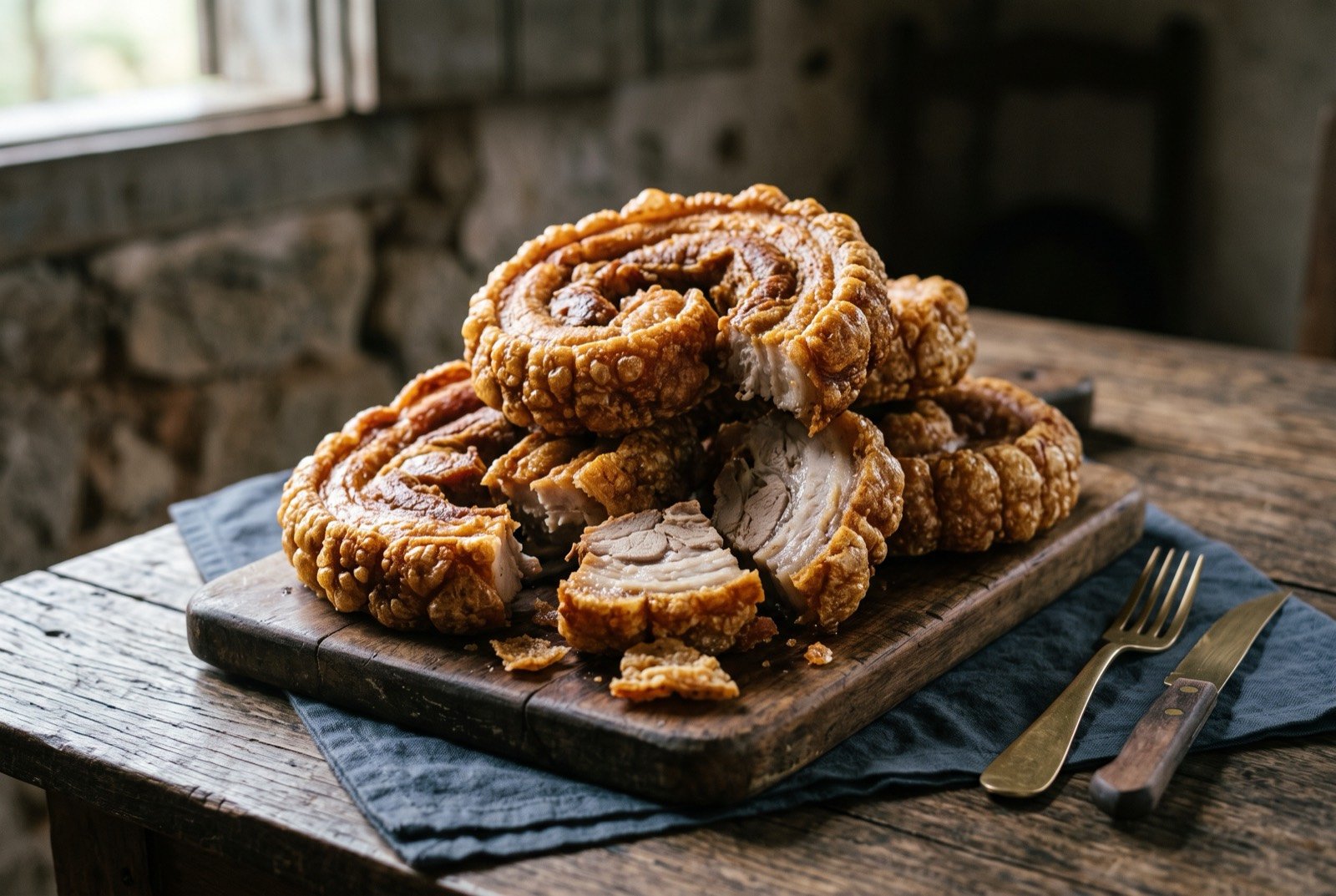
An illustration of the dish, not a photograph of it cooked.
- Time
- Not statedNo source states a time and the atlas has too few comparable dishes to estimate one.
- Reviewed
- Not yet reviewed from inside the tradition
- Cooked
- Not yet cooked and reported
As tradition built it
Torresmo de rolo
Simmer 10 minutes, chill at least an hour, then finish on high heat until the skin blisters and crackles.
Ingredients
- 1kg pork belly, skin on, cut into long strips
- to taste salt
- 1 bay leaf
- a splash vinegar
- for frying the pig's own rendered fat, for frying or roasting
Method
- Cut the pork belly, skin on, into long strips and simmer in water with salt, a bay leaf and a splash of vinegar for around 10 minutes, enough to pre render some surface fat and firm the skin without cooking the meat through.
- Drain well, pat completely dry, and chill hard, ideally in the freezer for an hour or two, until firm.
- Fry or roast at a high, dry heat, traditionally in the pig's own rendered fat, until the skin blisters, puffs and turns deeply golden and audibly crackling, "pururuca".
- Keep the fat left in the pan as household lard, banha de porco, for the next dish in the kitchen.
Notes
A specifically mineiro adaptation of Portuguese derived torresmo, near universal both as a dish and as a garnish across this chapter's other recipes.
The two stage cooking method, well corroborated across independent Brazilian sources, is genuinely load bearing, not a stylistic flourish.
What a modern chef changes
The pre-render and the chill made exact, then a genuinely hot finish.
Rung 4
Method
- Sous vide the belly at 75 degrees Celsius for 10 to 12 hours in place of the traditional short simmer, rendering fat and cooking the meat through evenly without the risk of drying it, a controlled version of the same first stage.
- Chill hard in a blast chiller or the coldest part of a domestic freezer for at least two hours, not merely refrigerator cold, since the skin and fat need to be genuinely firm for the final stage to blister rather than steam.
- Finish on a Big Green Egg run as hot and dry as it will go, direct heat rather than indirect for this one step only, for a blister and crackle a domestic oven struggles to match.