The Indian subcontinent · Volume 21, The Convent Kitchen, the Temple Kitchen and the Toddy Tapper’s Coast
Sorpotel
Catholic Goa
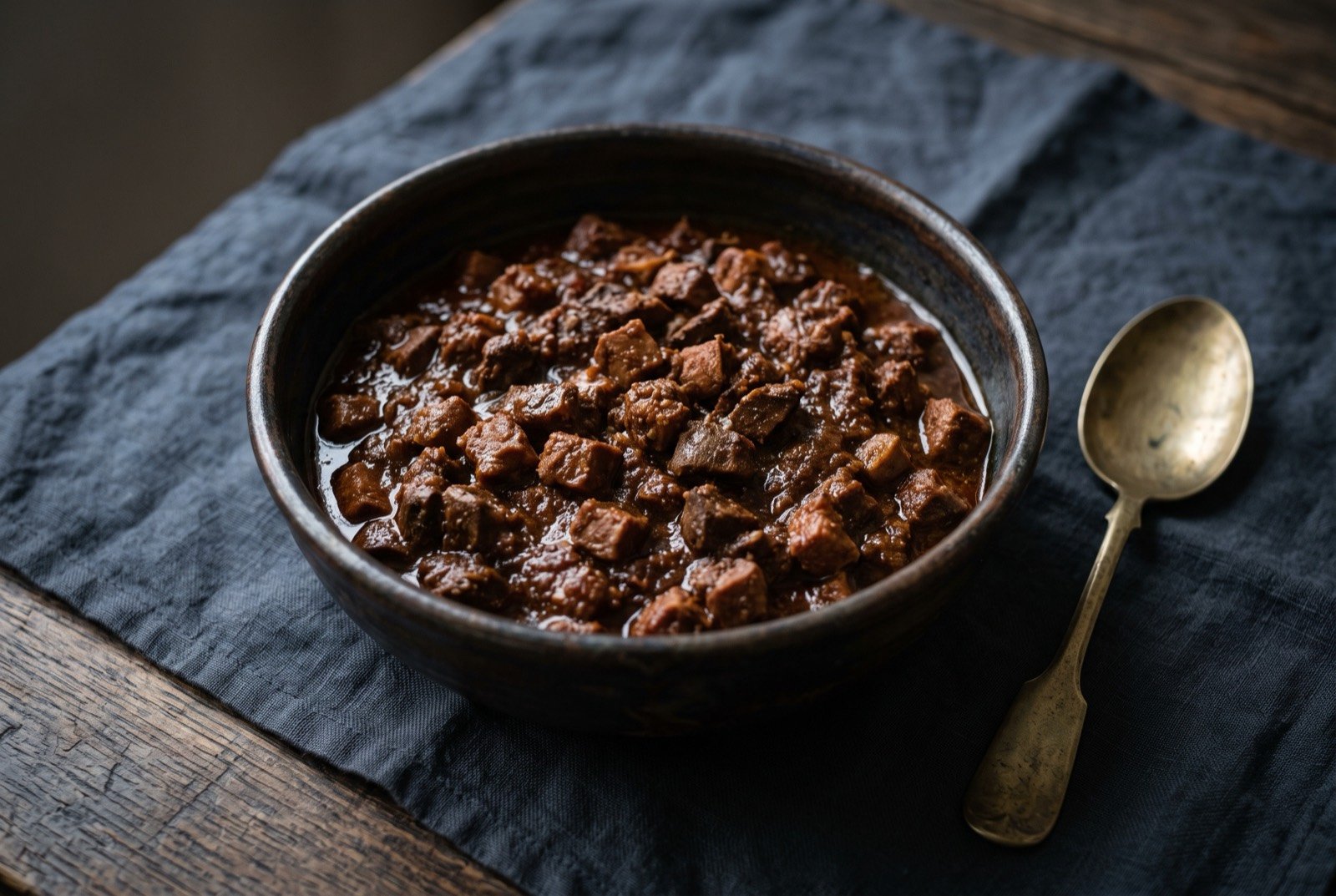
An illustration of the dish, not a photograph of it cooked.
- Time
- 2 hours
- Reviewed
- Not yet reviewed from inside the tradition
- Cooked
- Not yet cooked and reported
The Catholic feast dish, offal and blood transformed. Discarded ears, tail and limbs from the Portuguese sarapatel, kept spiced and slow.
As tradition built it
Serves 6 to 8. Best made a day ahead. About 2 hours active cooking.
Ingredients
- 500 g pork belly, cubed
- 500 g pork liver, cubed
- 2 bay leaves
- 5 cm cinnamon stick
- 12 to 15 dried Kashmiri chillies, soaked
- 8 garlic cloves
- 2.5 cm ginger
- 1 tsp cumin seeds
- 8 black peppercorns
- 6 tbsp toddy vinegar
- 2 onions, chopped
- to taste salt
- 2 tbsp coconut oil
Method
- Parboil the pork belly and liver together with the bay leaves and cinnamon stick for about 30 minutes, until just cooked through. Drain, reserving the stock, and dice both meats small.
- Blend the soaked chillies, garlic, ginger, cumin and peppercorns with the vinegar to a smooth paste.
- Fry the onions in coconut oil until golden, add the spice paste, and cook until the raw smell is gone.
- Add the diced pork and liver, season with salt, and pour in enough of the reserved stock to loosen the mixture without drowning it.
- Simmer gently for about 45 minutes, until the sauce has thickened around the meat.
- Cool, refrigerate, and rest at least overnight: sorpotel is consistently described, across every source this chapter's research reached, as improving with a few days' rest, and is the standard dish for weddings and feasts.
Notes
No named in-tradition source gave a precise rest period beyond "a few days"; some households add pig's blood in the cabidela style or a splash of feni, and this chapter found no single canonical recipe, only a consistent method.
What a modern chef changes
A cleaner offal texture and a sauce that reduces without scorching
Rung 2.
Method
- Poach the liver separately, more gently and briefly than the belly, since liver overcooks and turns grainy long before the belly is tender; combine only at the final simmer.
- Reduce the sauce in a wide, uncovered pan rather than a lidded pot, watching it thicken by sight rather than by time, for the same reason ambot tik and balchão below are built on visible reduction rather than a clock.
- Rest the finished dish, covered, in the fridge for a full 48 hours before reheating gently to serve, treating the traditional "a few days" rest as a deliberate technique rather than mere convenience.