The Indian subcontinent · Volume 21, The Convent Kitchen, the Temple Kitchen and the Toddy Tapper’s Coast
Bebinca
Catholic Goan convent kitchen
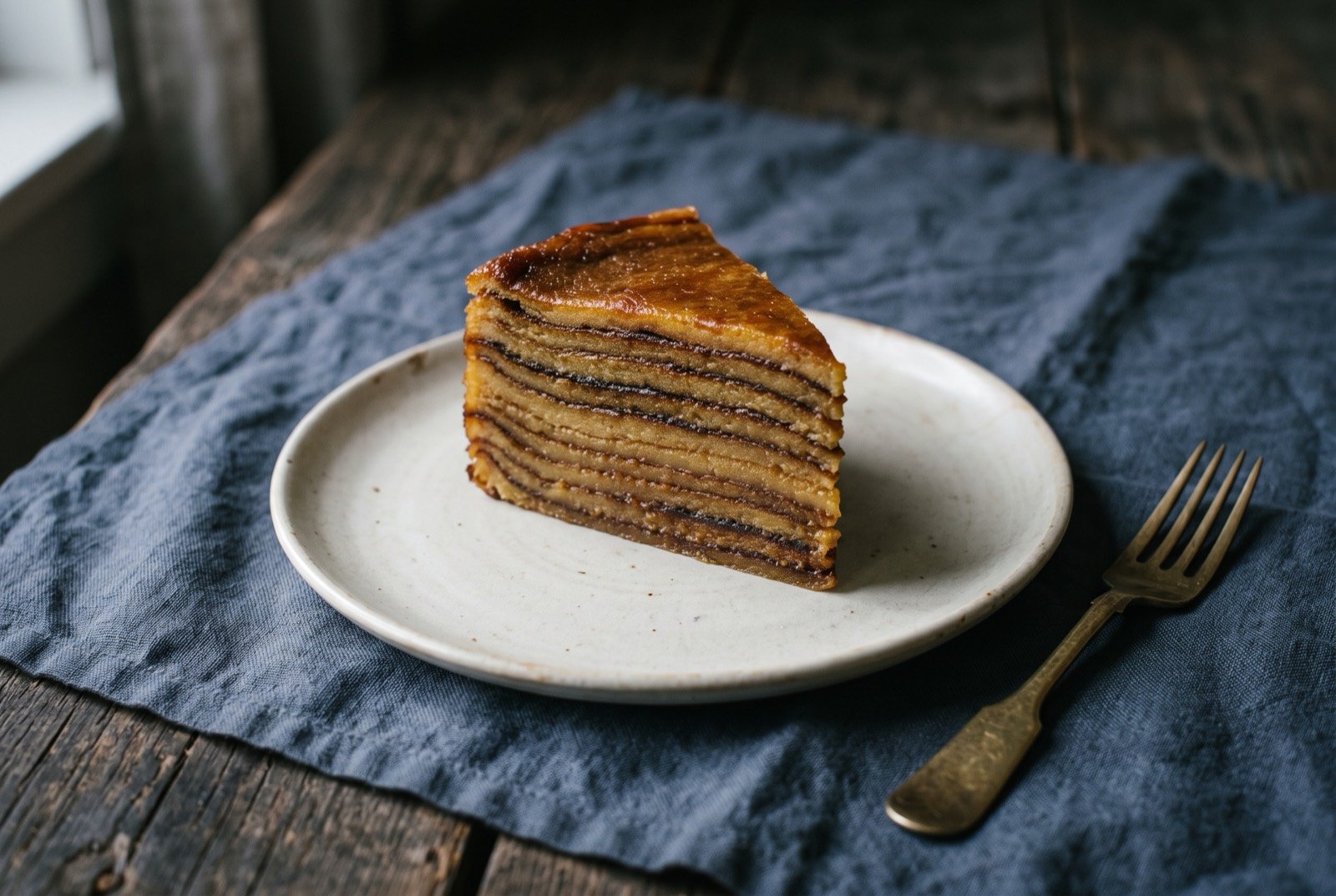
An illustration of the dish, not a photograph of it cooked.
- Time
- 3 hours
- Reviewed
- Not yet reviewed from inside the tradition
- Cooked
- Not yet cooked and reported
Seven layers, poured and baked one at a time. The convent-kitchen dessert, and the legend that goes with it.
As tradition built it
Makes one bebinca, 8 to 10 layers. About 3 hours, one layer at a time.
Ingredients
- 12 egg yolks
- 400 g sugar
- 400 ml coconut milk
- 200 g plain flour
- 1/4 tsp ground cardamom
- 100 g butter, melted, for greasing and brushing
Method
- Whisk the egg yolks with the sugar until pale and thick.
- Whisk in the coconut milk, then sift in the flour and cardamom, whisking to a smooth, thin batter.
- Grease a heavy round tin generously with melted butter and heat it under a grill or in a very hot oven.
- Pour in one thin layer of batter and bake or grill until set and lightly browned at the edges, a few minutes per layer.
- Brush with melted butter, pour the next layer directly over the top, and repeat, layer by layer, until the batter is used, traditionally at least seven layers, some households making twelve or more.
- Cool completely before turning out and slicing; the layers should be visibly distinct.
Notes
"Or so the legend goes": the dessert's origin story, a nun named Bebiana at the Convento de Santa Monica inventing it as a zero-waste use of leftover egg yolks (convents used quantities of egg white alone for starching altar linen and clarifying wine), the seven layers symbolising the seven hills shared by old Goa city and Lisbon, is told this way by the historian who is its own strongest source, and this chapter tells it the same way rather than as settled fact.
What a modern chef changes
An evenly baked, precisely layered version using controlled heat
Rung 1 (applied to layered baking rather than a spice roast).
Method
- Bake each layer under a salamander or a very hot, closely watched grill rather than a domestic oven, for the fast, even top-browning each thin layer needs before the next is poured.
- Rest the whole finished cake overnight before slicing, for cleaner, more distinct layers than cutting it warm ever gives.