The Indian subcontinent · Volume 21, The Convent Kitchen, the Temple Kitchen and the Toddy Tapper’s Coast
Xacuti
Goa, shared and disputed between the Catholic and Hindu tables
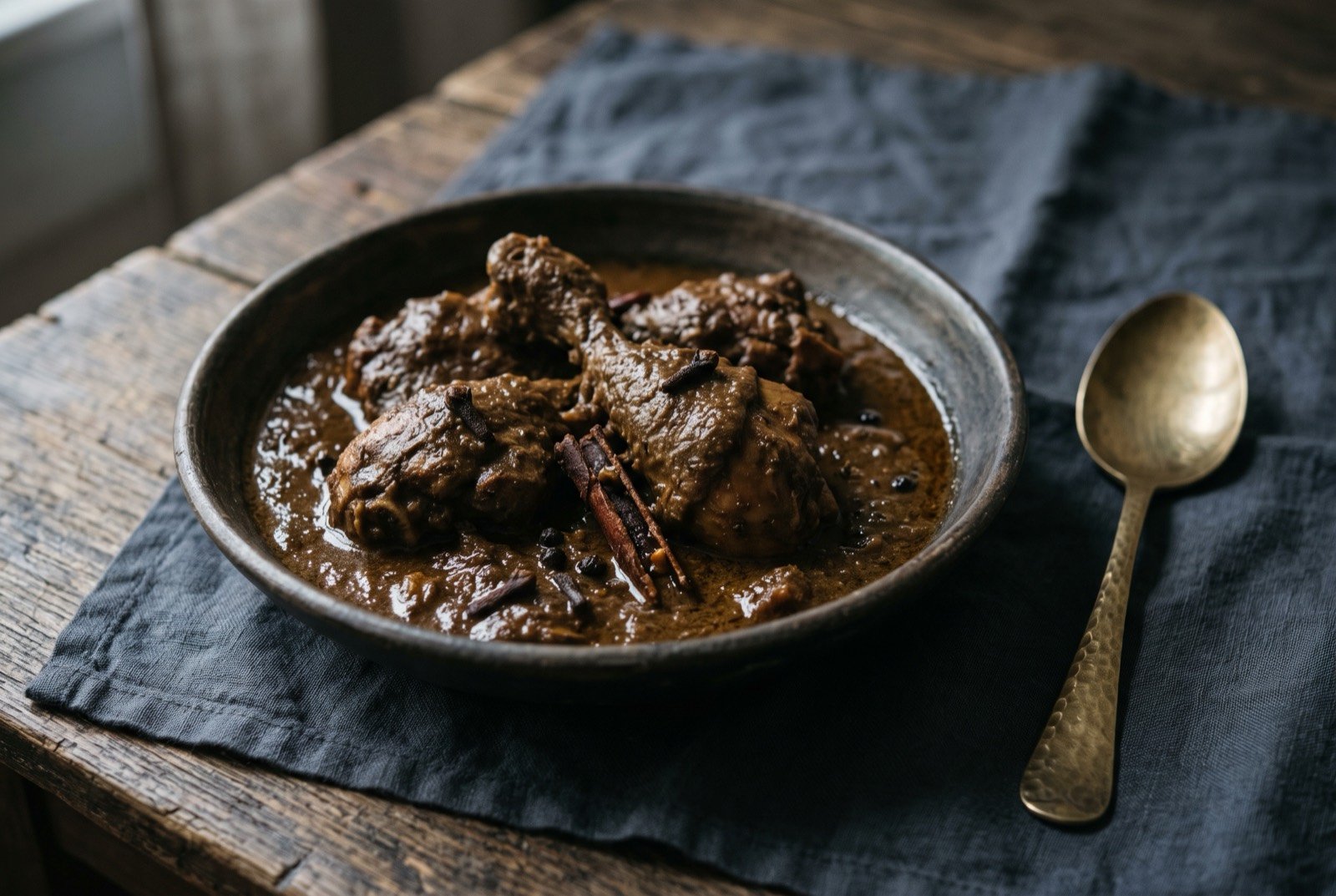
An illustration of the dish, not a photograph of it cooked.
- Time
- 1 hour
- Reviewed
- Not yet reviewed from inside the tradition
- Cooked
- Not yet cooked and reported
Claimed by both tables. Roasted spice and coconut, ground to a paste rather than a wet masala, cooked at festive occasions in Christian and Hindu households alike.
As tradition built it
Serves 4 to 6, chicken or mutton. About 1 hour.
Ingredients
- 1 kg chicken thighs, or mutton on the bone
- 1 fresh coconut, grated, or 200g desiccated, roasted
- 8 dried red chillies
- 1 tbsp coriander seeds
- 1 tsp cumin seeds
- 6 cloves
- 5 cm cinnamon stick
- 1 tsp fennel seeds
- 1/4 nutmeg, grated
- 1 tsp poppy seeds
- 2 onions, sliced
- 6 garlic cloves
- 2.5 cm ginger
- to taste tamarind pulp, to taste
- to taste salt
- 2 tbsp coconut oil
Method
- Dry-roast the chillies, coriander, cumin, cloves, cinnamon, fennel, nutmeg and poppy seeds separately in a heavy pan until each is individually coloured and fragrant. This is the technique that defines xacuti: roasted, not raw, and ground only once cooled.
- In the same dry pan, roast the grated coconut until deep golden brown.
- Grind the roasted spices and coconut together with the garlic and ginger to a smooth paste, loosening with a little water.
- Fry the onions in coconut oil until golden, add the paste, and cook until the oil separates.
- Add the chicken or mutton, season with salt and tamarind, and enough water to just cover.
- Simmer, covered, for about 45 minutes for chicken or up to 1 hour 30 minutes for mutton, until tender and the sauce has thickened.
Notes
This dish is presented here as shared or disputed rather than exclusively Catholic, against the assumption this volume started with; Portuguese-language sourcing calls it Hindu-influenced, Hindu-side sourcing calls it possibly pre-Portuguese, and no source in either research pass settles the question.
What a modern chef changes
A paste roasted and ground in stages for a cleaner, more layered final flavour
Rung 1.
Method
- Roast and grind the whole spices and the coconut separately, in a high-power blender, rather than together, combining the two pastes only at the final cooking stage, for a spice note that reads distinctly against the coconut's own roasted sweetness rather than blurring into one flavour.
- Pass the finished sauce through a chinois before adding the meat, for a completely smooth gravy with none of the grit a home mortar inevitably leaves.