The Indian subcontinent · Volume 21, The Convent Kitchen, the Temple Kitchen and the Toddy Tapper’s Coast
Kismur (kismoor)
Goa, Hindu Saraswat table
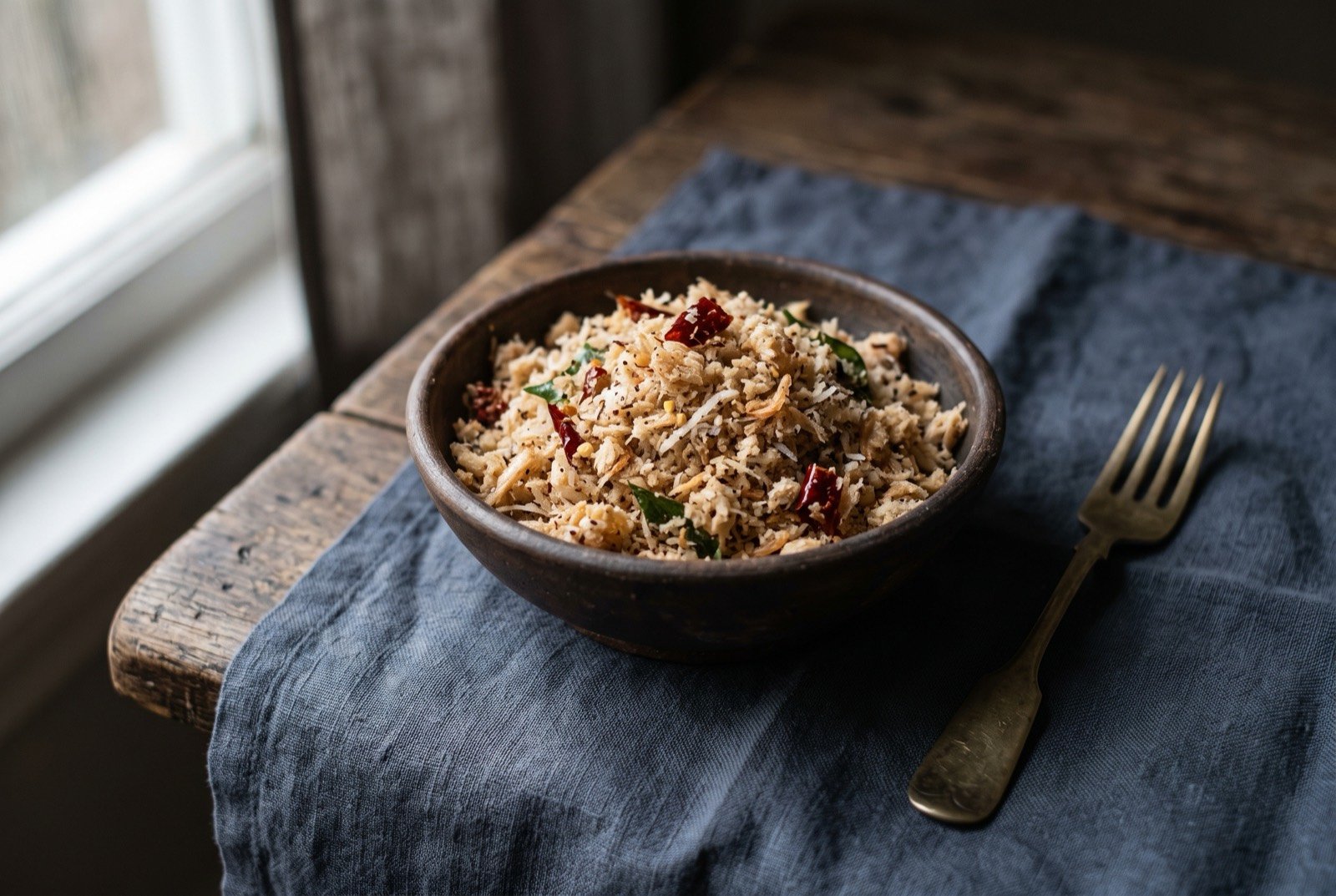
An illustration of the dish, not a photograph of it cooked.
- Time
- 15 minutes
- Reviewed
- Not yet reviewed from inside the tradition
- Cooked
- Not yet cooked and reported
Dried prawn and fresh coconut, eaten at room temperature. The dish that carries the Hindu table through the monsoon, when fresh fish is scarce.
As tradition built it
Serves 4, as a side. 15 minutes.
Ingredients
- 100 g dried shrimp/prawn
- 100 g fresh coconut, grated
- 2 dried red chillies
- 1 small onion, finely chopped
- ½ lime juice of half a lime
- to taste salt
- 1 tbsp coconut oil
- 1 tsp mustard seeds
Method
- Rinse the dried prawns briefly and pat dry, then pound or pulse them coarsely, not to a powder.
- Dry-roast the chillies briefly, then crumble.
- Mix the pounded prawns with the grated coconut, crumbled chilli and chopped onion.
- Temper: heat the coconut oil, add the mustard seeds until they pop, and pour over the mixture.
- Finish with lime juice and salt to taste. Serve at room temperature, never hot, alongside rice and dal.
Notes
The name is said to mean "mixture" or "to mix everything together", consistent with its role as a pantry dish built from what keeps through the rains rather than a precisely timed preparation.
What a modern chef changes
A cleaner, drier texture, using the dehydrator on the coconut itself
Rung 4 (applied to a raw finishing dish rather than a stuffing).
Method
- Dehydrate half the grated coconut lightly before mixing it in, restoring some of the drier, more concentrated texture the dish would once have had when made with older, more thoroughly sun-dried prawns.
- Toast the mustard seeds and chilli together rather than separately, for a single combined tempering aroma that coats the whole mixture more evenly.