Maritime Southeast Asia · Volume 46, The Sago, the Citrus Cure and the River Before the Road
Ikan Patin Masak Habang
Banjarese, South Kalimantan
Illustration
- Time
- 45 minutes
- Researched
- 7 sources cited
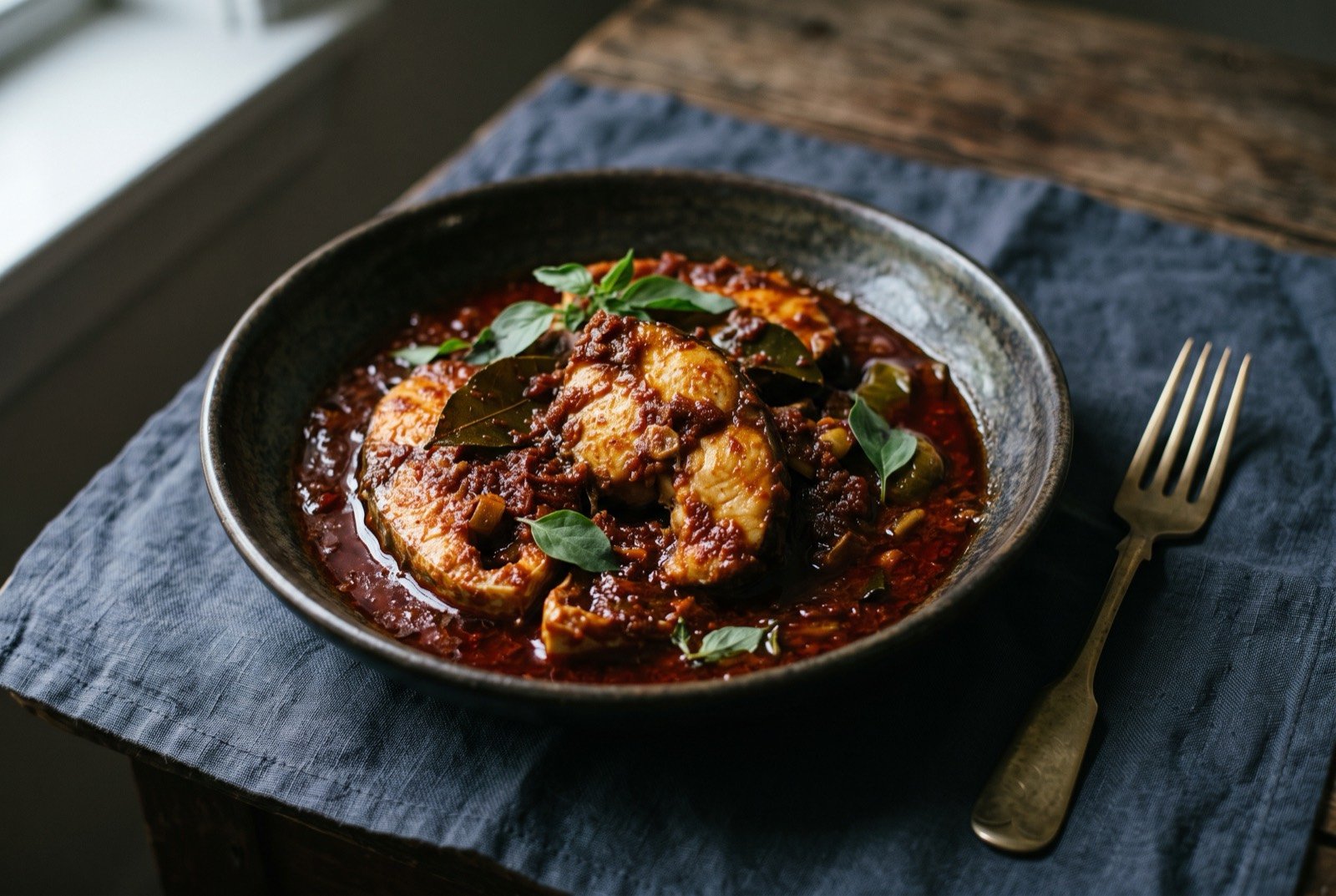
Bumbu habang, built from dried red chillies, shallots, garlic, ginger, cinnamon, shrimp paste and a generous quantity of sugar, with kencur adding a distinguishing, slightly camphor-like note.
As tradition built it
Serves 4. About 45 minutes.
Ingredients
- 600g patin (catfish), cut into steaks
- 6 dried red chillies, soaked
- 4 shallots
- 4 cloves garlic
- 1 thumb ginger
- 1 stick cinnamon
- 1 tsp belacan
- 1 thumb kencur (lesser galangal)
- 1 to 2 tbsp palm sugar
- 200ml coconut milk
- to taste tamarind water, bay leaf, lemongrass, kaffir lime leaf, to taste
- to taste lime juice, sweet basil, to finish
Method
- Grind the soaked chillies, shallots, garlic, ginger, cinnamon, belacan and kencur to a smooth paste.
- Fry the paste in oil until dark red and fragrant, the oil separating at the edges.
- Add the palm sugar, coconut milk, tamarind water, bay leaf, lemongrass and kaffir lime leaf; simmer.
- Add the catfish steaks, simmer gently until just cooked through.
- Finish with lime juice and torn sweet basil.
What a modern chef changes
The paste's sugar and dried-chilli character respected rather than corrected toward a generic sambal, and a note on where this dish sits socially.
Rung 6
Method
- Use dried, not fresh, red chillies for the paste. This is what gives bumbu habang its dark, deep red colour and distinguishes it from balado and other fresh-chilli-forward Indonesian pastes; substituting fresh chillies changes the dish's actual identity, not just its heat level.
- Do not under-sugar the paste out of instinct. The generous sugar content is structural to this specific paste's sweet-savoury profile, not a modern addition to be trimmed back for a British palate expecting pure heat.
- Remember this dish was ceremonial food before it was everyday food. Serve it, as the sultanate-era version would have been served, alongside nasi kuning, turmeric yellow rice, rather than plain rice, if the occasion warrants the fuller presentation.