Maritime Southeast Asia · Volume 49, The Monopoly, the Monsoon Line and a Border Still Drawn
Papeda dengan ikan kuah kuning
Maluku
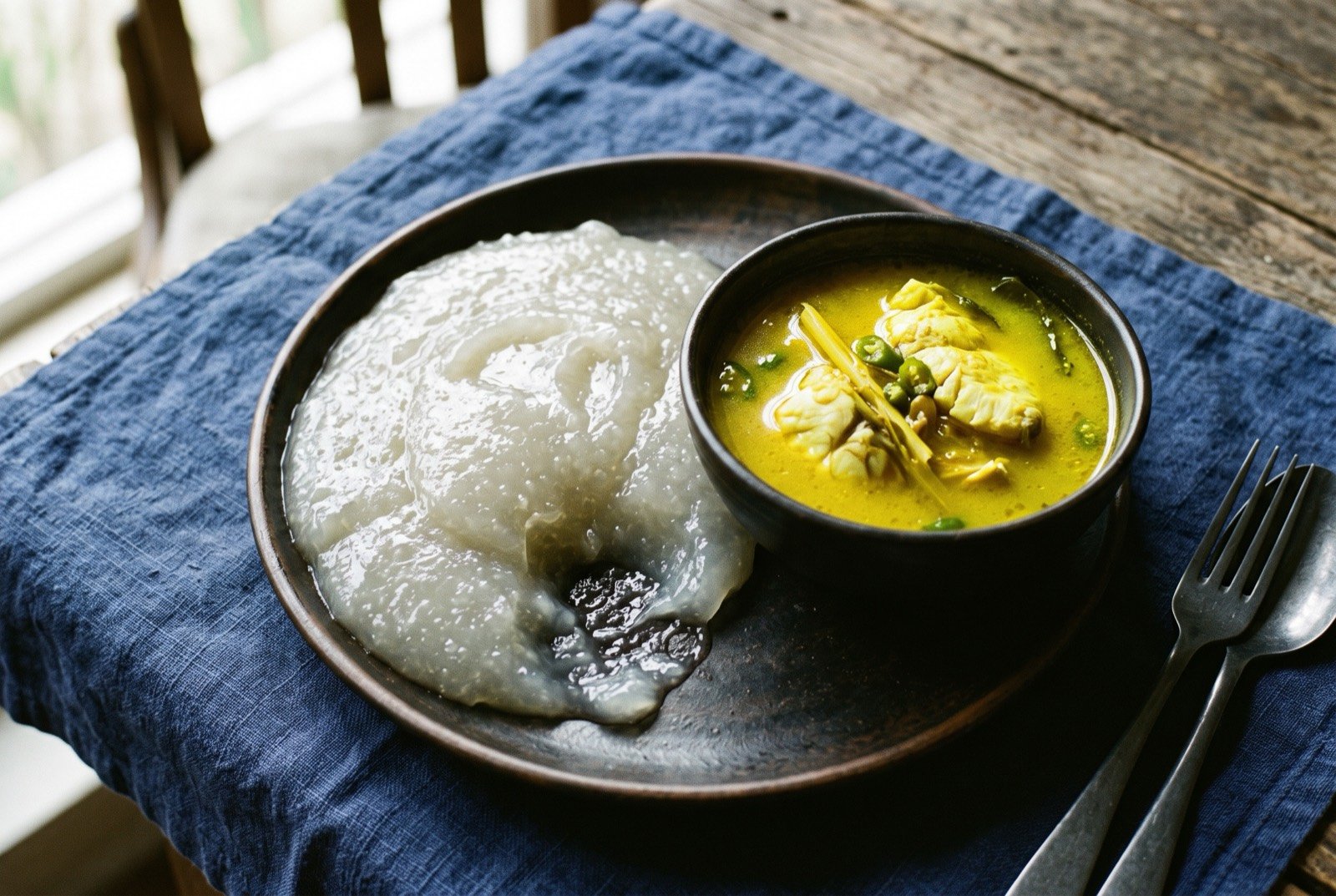
An illustration of the dish, not a photograph of it cooked.
- Time
- 15 minutes
- Researched
- No outside sources linked
- Reviewed
- Not yet reviewed from inside the tradition
- Cooked
- Not yet cooked and reported
Maluku. Sago and turmeric fish, the pairing that carries real ceremonial weight on Seram and across the wider archipelago.
As tradition built it
Serves 4. Papeda 15 minutes, soup 30 minutes.
Ingredients
- 250 g sago starch
- ½ lime juice of half a lime
- a pinch salt
- 3 litres water, for the papeda
- 600 g skipjack tuna, cut into pieces
- 1 lime juice of 1 lime or tamarind water, for marinating
- 3cm turmeric, 2cm ginger, 2cm galangal, 2 stalks lemongrass, 2 bay leaves, 3 kaffir lime leaves turmeric, ginger, galangal, lemongrass, bay leaf, kaffir lime leaf, ground and sautéed
- 400 ml coconut milk
- to taste salt and sugar, to taste
Method
- Rub the skipjack tuna with salt and lime or tamarind water, rest 10 minutes, drain, then shallow-fry until browned. Set aside.
- For the papeda: mix the sago starch with the lime juice and a pinch of salt in a heatproof bowl. Bring the 3 litres of water to a full rolling boil.
- Pour the boiling water into the sago gradually, stirring continuously and hard, until the mixture thickens into a sticky, translucent, elastic mass with no lumps. Judge this by feel, not the clock: it is done when the mass pulls cleanly and elastically away from the spoon.
- For the soup: sauté the ground turmeric, ginger, galangal, lemongrass, bay leaf and kaffir lime leaf until fragrant. Add the coconut milk, salt and sugar, and bring to a gentle simmer.
- Return the fried fish to the pot and simmer gently until the sauce has penetrated.
- Serve the papeda alongside the soup, twirled onto a plate with two forks or chopsticks rather than spooned, and ladle the hot soup over or beside it.
What a modern chef changes
The ratio treated as the whole dish, not a footnote to it.
Rung 4.
Method
- Weigh the sago and water precisely on a first attempt, then adjust by feel on repeat attempts, building the reader's own working ratio rather than trusting one written figure the way Indonesian sources themselves do not.
- Poach the fish sous vide separately, low and precise, then finish it in the hot soup only at the very end, protecting its texture completely rather than risking it in an open simmer.
- Pass the finished soup through the chinois for a version with real clarity against the papeda's own opacity, a deliberate textural contrast between the two elements on the plate rather than one uniform bowl.