Maritime Southeast Asia · Volume 49, The Monopoly, the Monsoon Line and a Border Still Drawn
Se'i sapi
Rote and West Timor
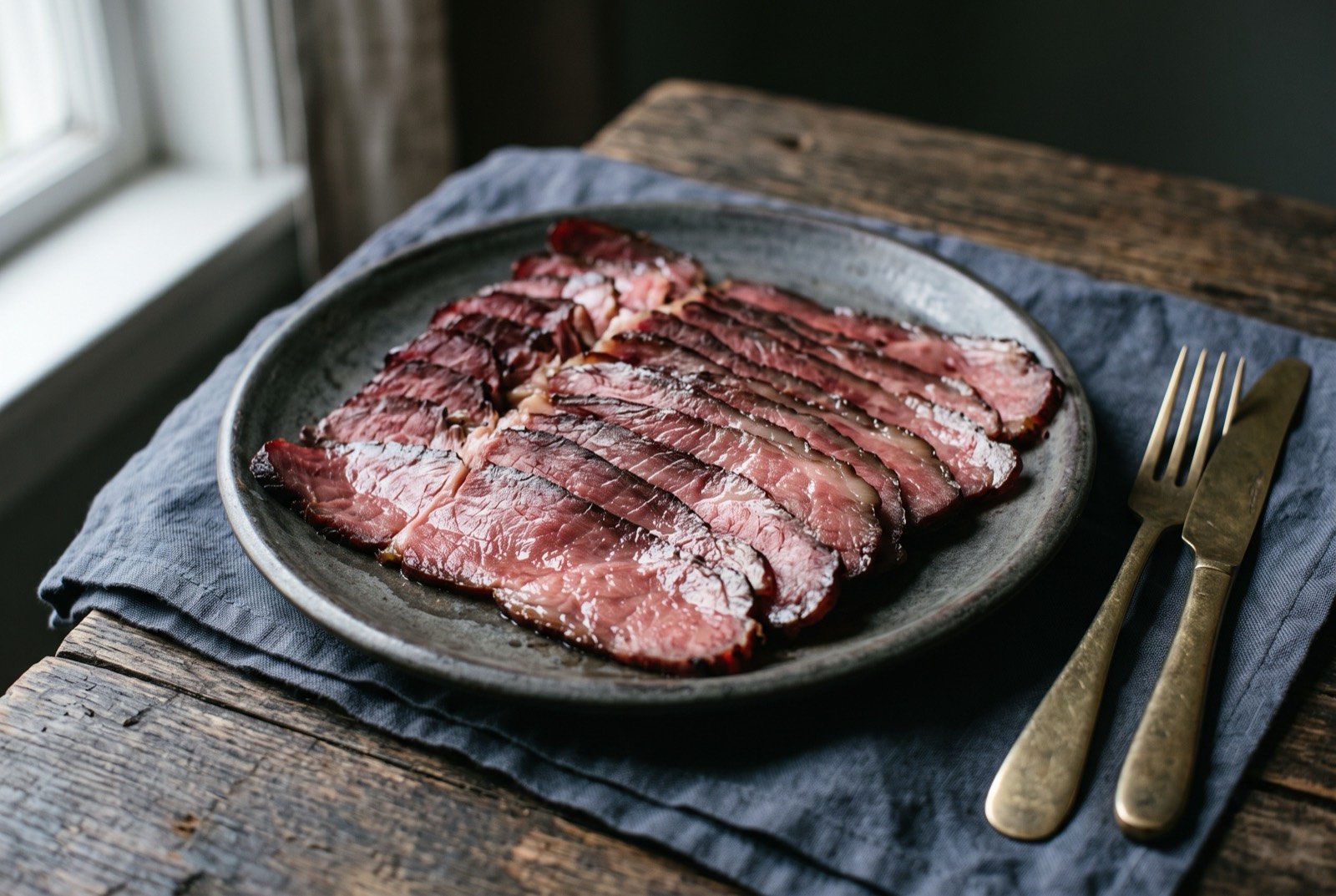
An illustration of the dish, not a photograph of it cooked.
- Time
- 12 hours
- Researched
- No outside sources linked
- Reviewed
- Not yet reviewed from inside the tradition
- Cooked
- Not yet cooked and reported
Rote and West Timor. Thin-sliced, salted, slow-smoked beef, reserved once for ceremony and now everyday food across the whole archipelago.
As tradition built it
Serves 4 to 6. Salt 6 to 12 hours, smoke up to 9 hours.
Ingredients
- 1.5 kg beef (traditionally thin-sliced topside or similar), thinly sliced
- 2% of the meat's weight (about 1 tbsp per kg), or to taste salt
- as available kosambi wood, or the honest UK substitute (see Sourcing)
Method
- Salt the sliced beef generously and rest, covered and refrigerated, for 6 to 12 hours.
- Set up a smoker or covered grill, burning kosambi wood or the honest UK substitute, with the meat held a genuine distance from the coals, never directly over them.
- Smoke slowly, low and indirect, for up to 9 hours depending on quantity, keeping the fire smouldering rather than flaming, and turning occasionally.
- The meat is ready when it has taken deep smoke flavour and firmed, its surface staying a fresh red rather than browning the way direct hot-smoking would produce.
What a modern chef changes
The reader's own kit, doing exactly what tradition asks of it.
Rung 3.
Method
- Run a Big Green Egg fully indirect with a convEGGtor, dome temperature held around 65 to 82°C, for the full multi-hour smoke: this is not an approximation of se'i's technique, it is the same physical principle, distance from the fire, built into the equipment.
- Use apple or cherry wood in place of unobtainable kosambi, chosen for a comparably mild, faintly sweet smoke rather than an aggressive hickory or mesquite character that would overpower the dish's own delicacy.
- Slice a portion of the finished meat paper-thin on a slicer and dehydrate it further into a se'i “crisp,” a genuine textural extension of the tradition's own thin-slicing logic rather than an invented garnish.