Maritime Southeast Asia · Volume 46, The Sago, the Citrus Cure and the River Before the Road
Hinava
Kadazan-Dusun, Sabah
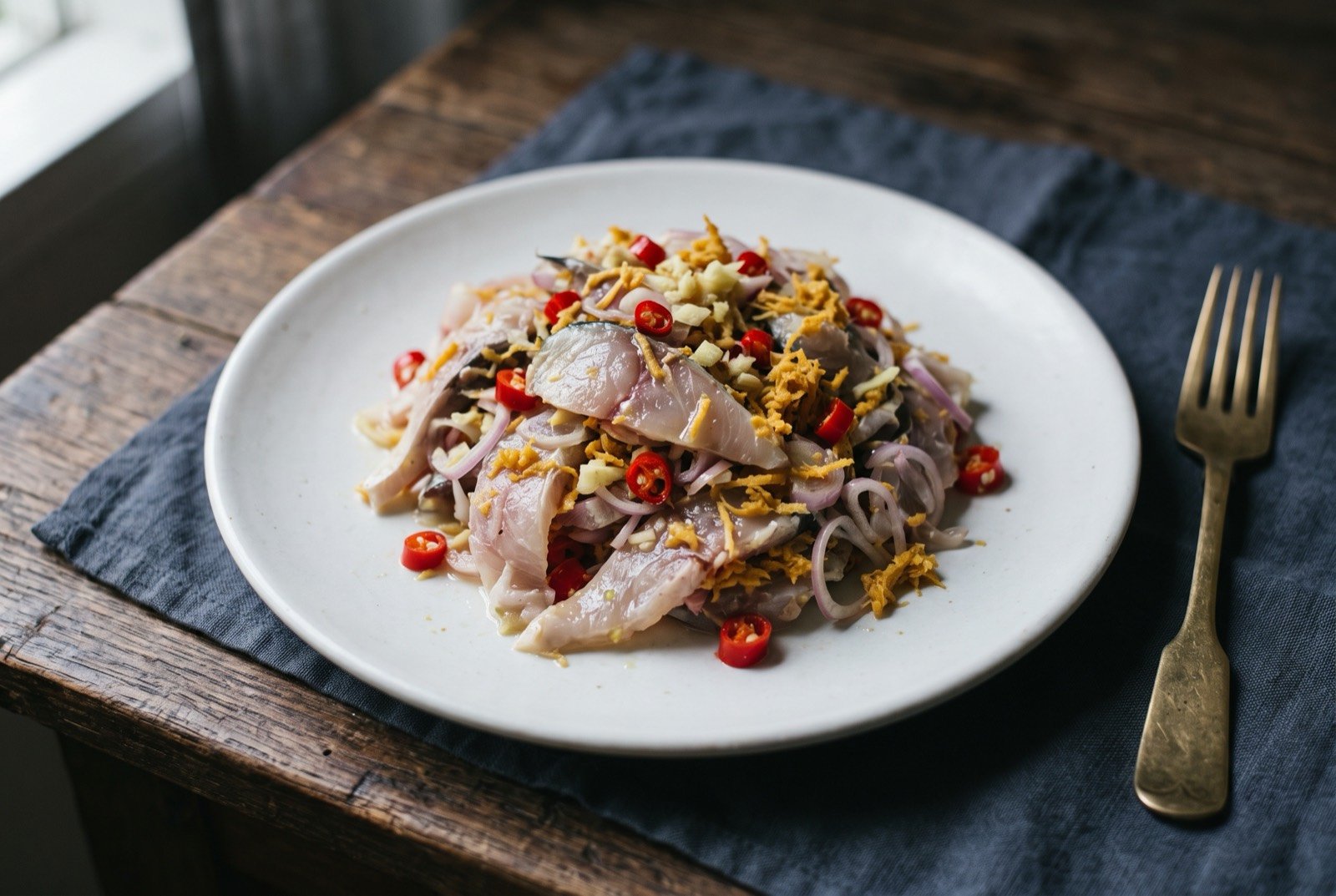
An illustration of the dish, not a photograph of it cooked.
- Time
- 30 minutes
- Researched
- 7 sources cited
- Reviewed
- Not yet reviewed from inside the tradition
- Cooked
- Not yet cooked and reported
Traditionally tenggiri, Spanish mackerel, cured with the native lime limau kapas rather than the calamansi now commonly substituted, per a 91-year-old Kadazan elder interviewed for the record.
As tradition built it
Serves 4 as a starter. 30 minutes.
Ingredients
- 300g tenggiri (Spanish mackerel), very fresh, thinly sliced
- 1 bambangan seed grated kernel of 1 bambangan seed
- 4 shallots, finely sliced
- 1 thumb ginger, finely sliced
- 2 to 3 bird's eye chillies, sliced
- 3 to 4 limes juice of 3 to 4 limes
- to taste salt, to taste
- 1 small raw bitter gourd, thinly sliced (optional)
Method
- Rinse the sliced fish briefly in hot water until it just whitens at the edges, then pat dry.
- Mix with the grated bambangan kernel, shallot, ginger and chilli.
- Dress with lime juice and salt; add the bitter gourd if using.
- Rest 20 to 30 minutes before serving; the fish "cooks" purely by the citrus.
What a modern chef changes
Both of hinava's real corner-cuts named and refused, plus the same UK safety step umai needs.
Rung 2
Method
- Freeze the fish solid for at least 96 hours before curing, the same non-negotiable UK safety step umai's elevation uses.
- Do not swap the bambangan kernel for anything else if you can source it at all. MySabah.com is explicit that "most hinava served at restaurants is a simplified modern version" precisely because the kernel gets omitted; it is what differentiates this dish from umai, not a garnish.
- Where bambangan genuinely cannot be sourced, say so on the plate rather than pretending green mango is equivalent. Green mango covers the sour fruit-flesh role reasonably; nothing sold in Britain reproduces the kernel's specific savoury, faintly fermented depth.