Maritime Southeast Asia · Volume 50, The Vinegar Line, the Sizzling Plate and the Whole Roast Pig
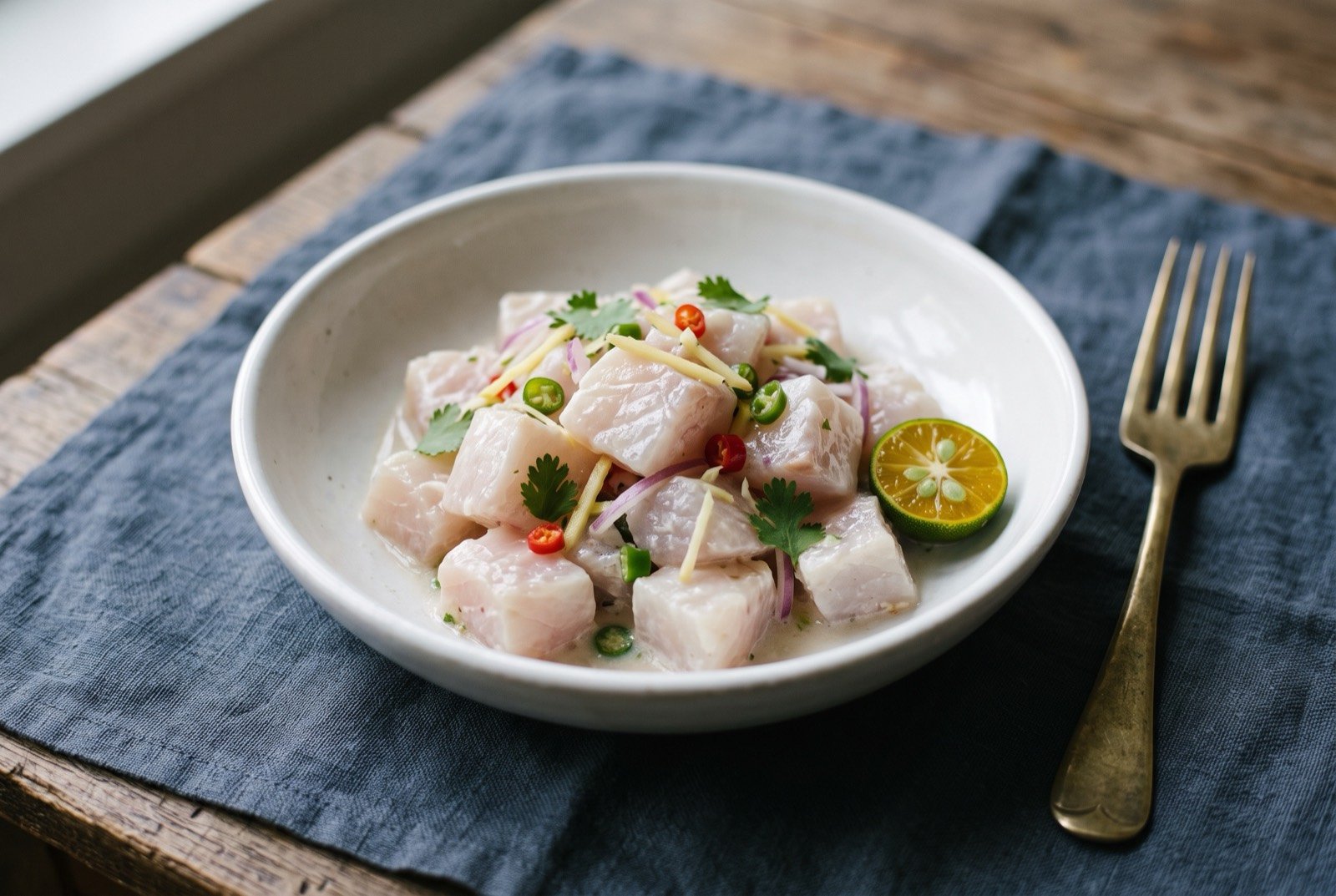
Kinilaw
Cebu and the Central Visayas
Illustration
- Time
- 15 minutes
- Researched
- Researched from 124 sources in the brief
Archaeological finds at a Butuan balangay site from the tenth to thirteenth centuries show fish bones cut in a manner consistent with kinilaw's raw-cure cubing, and Pigafetta recorded a broadly similar meal, roasted fish, pork, rice, coconut, served to Magellan's expedition at its 1521 Visayan landfall. This is precolonial technique, not a Philippine reworking of ceviche.
As tradition built it
About 15 minutes' curing, longer to taste.
Ingredients
- 500g firm white fish or mackerel
- 120ml (½ cup) sukang tuba (coconut vinegar)
- 2 tbsp calamansi juice
- 1 tbsp ginger, sliced
- 1 small onion, sliced
- 1 to 2 chilli, chopped
- as available coconut milk, optional, for the gata variant
Method
- Cube a firm white fish or mackerel into even, bite-sized pieces.
- Cure it in sukang tuba, coconut vinegar, with calamansi juice, sliced ginger, sliced onion and chopped chilli, tossed through and left to cure for around 15 minutes, though longer curing is common and simply firms the fish further.
- For the coconut-milk variant, kinilaw na isda sa gata, drizzle coconut milk through at the end to soften the vinegar's sharp edge, typically omitting the sweeter citrus and hot pepper elements Luzon versions sometimes add.
What a modern chef changes
Two cures at two lengths, and the coconut element aerated rather than poured
Rung 2
Method
- Cure two different cuts of the same fish for two different lengths of time, a thin-sliced portion for 4 minutes, barely touched by the acid, alongside a cubed portion for the full 15, so the same protein is served at two distinct stages of the denaturation the vinegar and citrus are driving, a direct demonstration of the mechanism behind Rung 2 rather than a single fixed texture.
- Build the coconut element as a light, aerated foam rather than a poured sauce, coconut milk warmed gently and charged, so it sits on the plate as texture rather than pooling and diluting the cure.
- Dehydrate thin ginger and shallot slices into crisp shards for a textural contrast the traditional raw versions do not offer.
- Finish with a few drops of aged sukang tuba, reduced separately to concentrate its character without adding further raw acidity to the already-cured fish, and a scattering of micro coriander in place of the traditional roughly chopped herb.