Maritime Southeast Asia · Volume 50, The Vinegar Line, the Sizzling Plate and the Whole Roast Pig
Adobo
Archipelago-wide; contested between regions and between historians
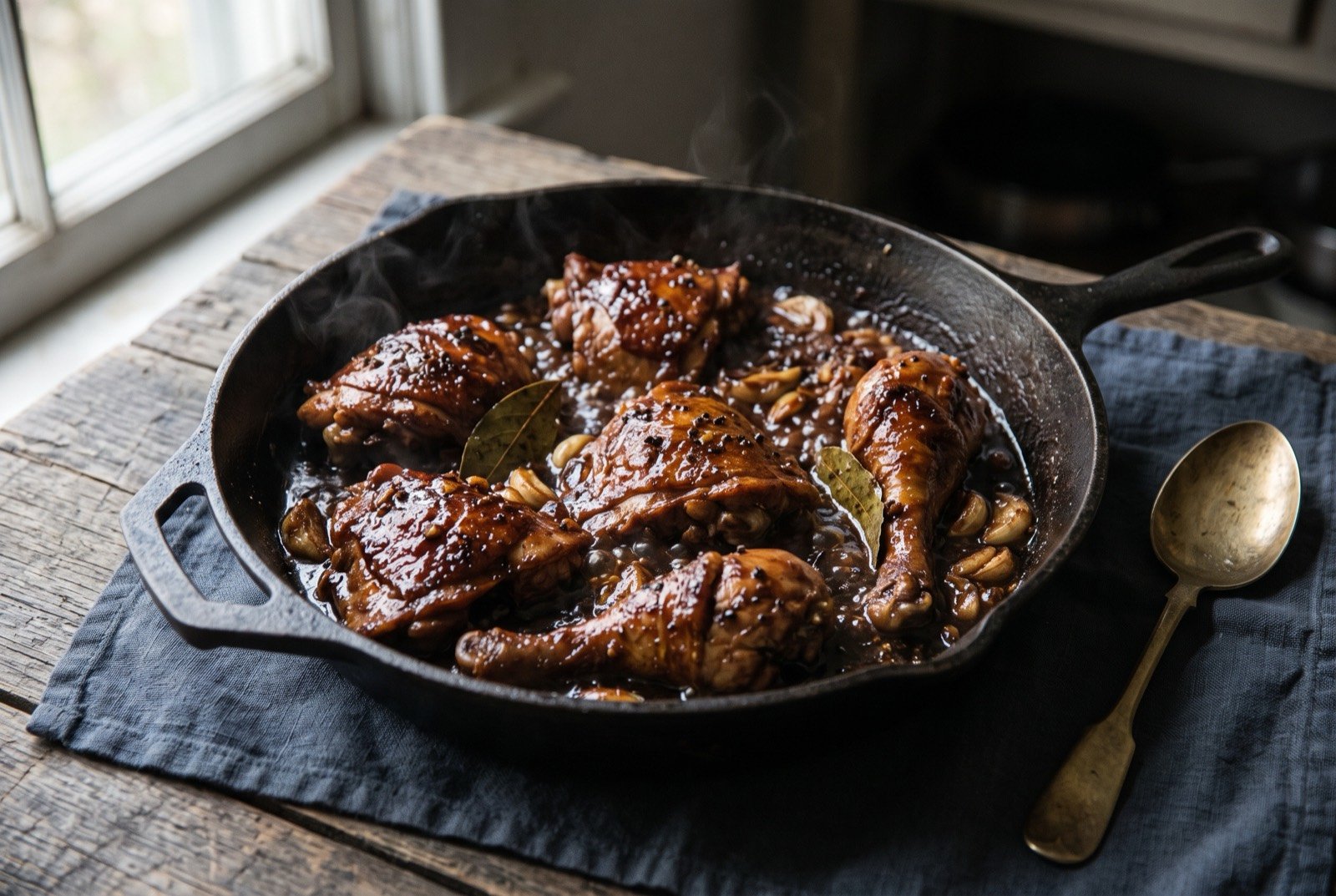
An illustration of the dish, not a photograph of it cooked.
- Time
- 2 hours
- Reviewed
- Not yet reviewed from inside the tradition
- Cooked
- Not yet cooked and reported
Three positions exist for where adobo actually comes from, and none has displaced the others: an indigenous vinegar-and-salt technique that only borrowed a Spanish label after Pedro de San Buenaventura recorded adobo de los naturales in 1612; Doreen Fernandez's more cautious theory that it was indigenised from a Mexican adobo carried by the Manila-Acapulco galleon trade; and the argument that it is simply native paksiw wearing a borrowed name. Fernandez herself, the essential reference this house style asks every chapter to reach for first, did not think adobo deserved its status as the presumptive national dish at all, writing that sinigang seemed to her “the most representative of Filipino taste.” This chapter leads with adobo because the international reader will expect it and because the technique repays close attention, not because its origin is settled.
As tradition built it
Serves 4. About 2 hours in total, including marination.
Ingredients
- 2 lb (900 g) chicken, cut into serving pieces
- 4 tbsp soy sauce
- 4½ tbsp white cane vinegar
- 10 cloves garlic, crushed
- 3 dried bay leaves
- 1 tsp whole black peppercorns
- 1½ cups (350 ml) water
- 4 tbsp cooking oil
- 1 tsp sugar
- to taste salt, to taste
Method
- Marinate the chicken in the soy sauce and crushed garlic for at least an hour.
- Separate the chicken from the marinade and pan-fry it in the oil, two minutes a side, then set aside.
- Sauté the reserved garlic from the marinade in the same oil until it browns.
- Return the chicken to the pan with the full marinade, the peppercorns, bay leaves and water.
- Bring to the boil, cover, and simmer until the chicken is tender, around 25 to 30 minutes.
- Add the vinegar, boil it uncovered without stirring for a full two minutes to drive off its sharpest volatile notes, then reduce the heat and simmer uncovered a further 15 minutes, letting the sauce reduce and glaze the meat.
- Finish with the sugar and salt to taste.
What a modern chef changes
Three components separated, and the vinegar-soy glaze reduced on its own
Rungs 1 and 3
Method
- Vacuum the chicken thighs with the soy, garlic, bay and peppercorn, no vinegar yet, and cook sous vide at 65°C for two hours, giving fully tender, precisely cooked meat with intact skin.
- Meanwhile build the vinegar-soy glaze on its own, reducing cane vinegar, the sous vide bag liquor, and a little extra soy in an open pan until it coats a spoon, exactly the uncovered-reduction logic of Rung 1, but now applied to a concentrated liquid rather than a whole braise, so its acidity can be tasted and adjusted precisely rather than guessed at.
- Pat the sous vide chicken thighs completely dry, then blowtorch or hard-sear the skin in a screaming pan for real crackling, something the closed bag can never give on its own.
- Plate the crackled thigh, brush with the reduced glaze, and finish with a scattering of dehydrated fried garlic and a single crisp fried bay leaf, the same aromatics the traditional pot cooks soft, now given back their crunch.
- The changed variables: sous vide replaces the braise for doneness control, the glaze is built and reduced independently rather than as the cooking liquid itself, the skin is crisped as a separate hot-surface step per Rung 3's logic, and the garlic and bay return as a textural garnish rather than disappearing into the sauce.