Maritime Southeast Asia · Volume 50, The Vinegar Line, the Sizzling Plate and the Whole Roast Pig
Sisig
Kapampangan Pampanga
Illustration
- Researched
- Researched from 124 sources in the brief
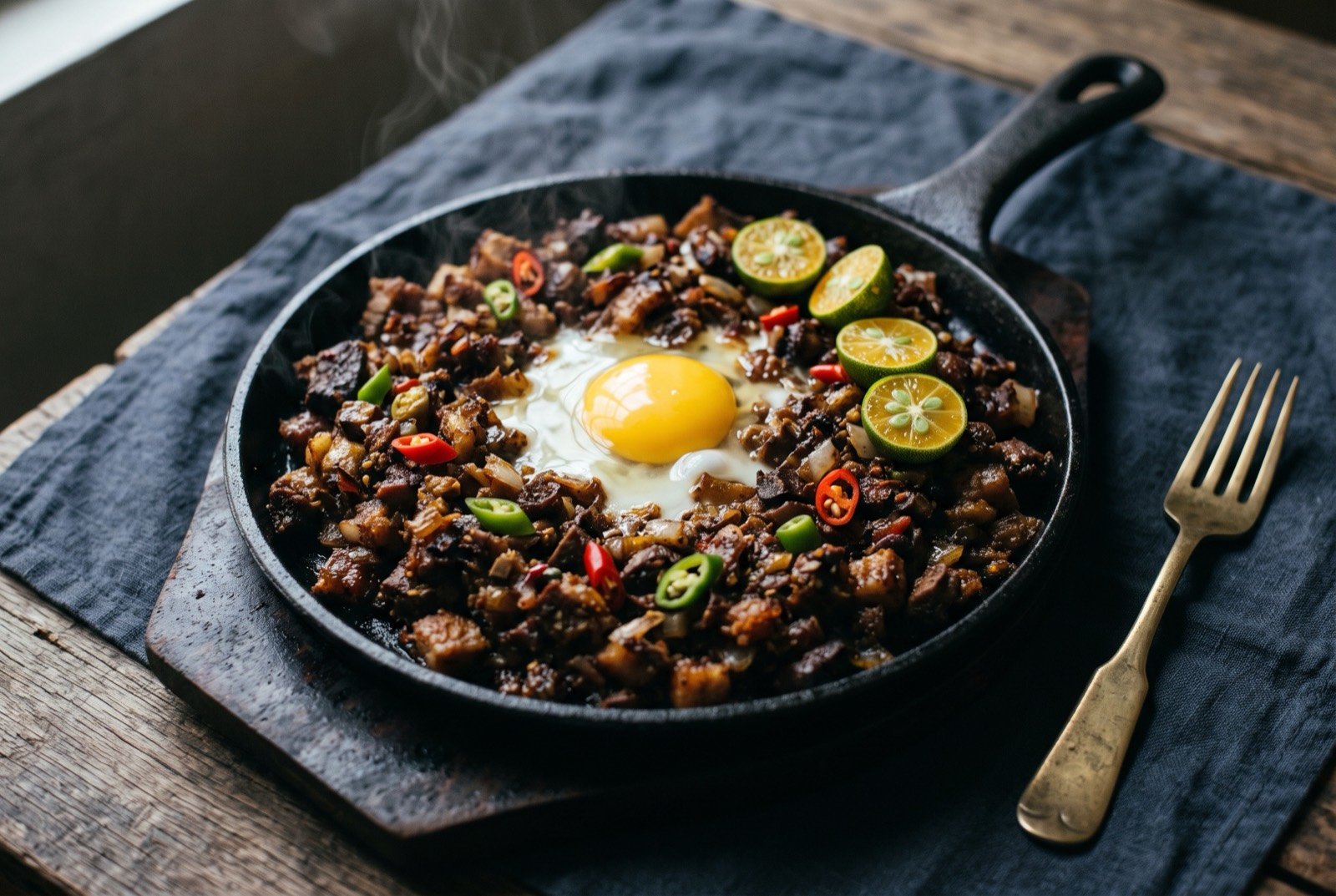
Sisig took its modern grilled, chopped and sizzling-plate form from Lucia “Aling Lucing” Cunanan in Pampanga. Her 2008 death is reported two ways this chapter will not resolve: a widely repeated robbery account, and parricide charges filed against her husband days after an initial robbery-homicide finding, reported in contemporary Philippine press. No source found here reports how, or whether, that case concluded.
As tradition built it
Around 2 hours, boiling and grilling, then a fast finish at the table.
Ingredients
- 900g (2 lb) pig's head, ears, jowl and cheek
- 1 head, crushed garlic
- 1 whole, plus 1 small, chopped onion, whole (for boiling) and chopped (for sautéing)
- 2 bay leaf
- 1 tsp black peppercorn
- 1 tbsp, plus more to taste salt
- 2 tbsp cooking oil, for sautéing
- 200g chicken liver
- 4 tbsp calamansi juice
- 2 tbsp vinegar
- ¼ tsp ground black pepper
- 1 per serving raw egg
- 2 to 3, sliced sliced chilli, to finish
Method
- Boil pig's head, ears, jowl and cheek in water with garlic, onion, bay leaf, black peppercorn and salt until tender, around an hour to 90 minutes.
- Drain and grill the boiled meat over charcoal until it takes real colour and a little char, then chop it fine by hand, the characteristic rough, varied texture a food processor cannot replicate.
- Sauté chopped onion in oil, add the chopped meat and chicken liver, and season aggressively with calamansi juice, vinegar, salt and ground black pepper.
- Preheat a metal plate on the stove or in the oven until it is properly hot.
- Transfer the sisig to the sizzling plate at the table, crack a raw egg on top, and let the residual heat of the plate cook it gently as it is folded through, finishing with more calamansi and sliced chilli to taste.
What a modern chef changes
The cheek and ear cooked apart, and the liver rebuilt as a parfait
Rung 4
Method
- Sous vide pork cheek and ear separately, the cheek at 75°C for 12 hours until meltingly tender while holding its shape, the ear at 85°C for 8 hours to soften its cartilage without dissolving it entirely.
- Dry both thoroughly, then flash-fry the ear until it crisps into shards, chopped fine as the traditional crunch element.
- Blend the chicken liver into a smooth parfait with butter and a little of the pork cooking liquor, passed through a chinois, quenelled onto the plate rather than chopped through the meat, giving a pooling richness the traditional version only hints at.
- Dehydrate a portion of the pork skin separately and fry it to a shattering crumble, scattered over the top for the crackling texture true sisig relies on incidentally.
- Reduce calamansi juice with a little sugar into a light gel, dotted around the plate rather than squeezed on wholesale, so its acidity reads as a controlled counterpoint rather than a blanket seasoning.
- The sizzling metal plate itself is not optional and is not changed: per Rung 4, it remains the dish's real final cooking step, finishing the composed elements at the table exactly as tradition demands.