Maritime Southeast Asia · Volume 50, The Vinegar Line, the Sizzling Plate and the Whole Roast Pig
Sinigang na Baboy
Tagalog Manila and the central plain
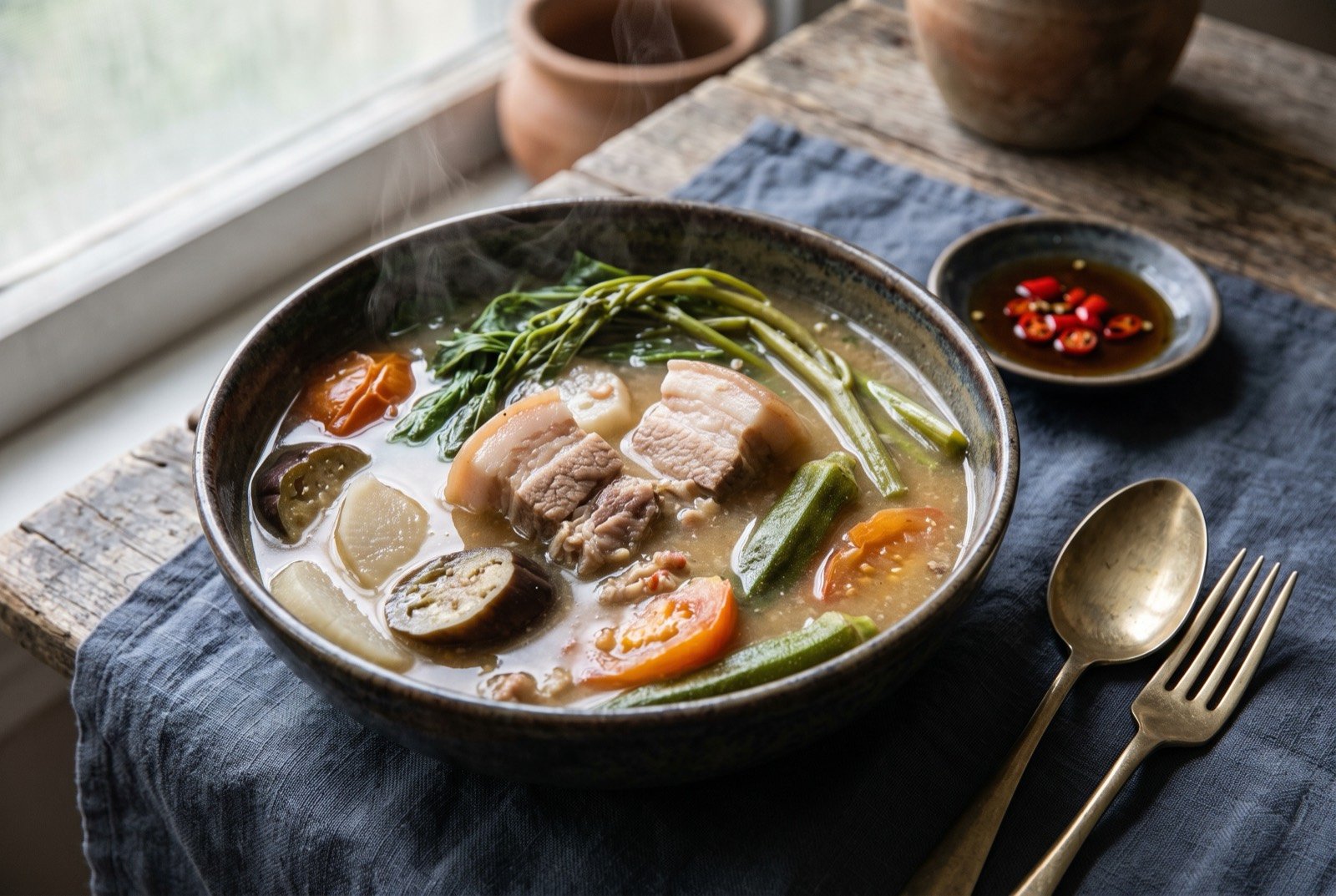
An illustration of the dish, not a photograph of it cooked.
- Time
- 1 hour 30
- Reviewed
- Not yet reviewed from inside the tradition
- Cooked
- Not yet cooked and reported
Doreen Fernandez, the essential reference this house style asks every chapter to reach for first, argued in her essay “Why Sinigang” that this dish, not adobo, is the truest expression of Filipino taste, precisely because it adapts to every class, budget and season. The souring agent is the real regional signature: tamarind is Manila's default, kamias cuts more sharply through oily fish, and Ilonggo cooks reserve a different fruit, batwan, for kansi rather than sinigang.
As tradition built it
Serves 4. About 1½ hours.
Ingredients
- 2 lb (900 g) pork belly
- 1 lb (450 g) young tamarind
- 2 quarts (1.9 litres) water
- 1 bunch kangkong (water spinach)
- 8 string beans, cut into 2-inch lengths
- 2 Chinese eggplants, sliced
- 1 daikon radish, sliced
- 8 okra
- 2 tomatoes, wedged
- 2 long green peppers
- 1 onion, wedged
- to taste fish sauce and black pepper, to taste
Method
- Boil the young tamarind in the water for 40 minutes, then strain and press the pulp through a sieve to extract the sour broth.
- Bring the broth to the boil with the onion, pork belly and half the tomatoes, skimming for the first 15 minutes, season with a tablespoon of fish sauce and black pepper to taste, and simmer covered for around an hour until the pork belly is tender.
- Add the daikon and eggplant and cook 5 minutes.
- Add the pepper, string beans, remaining tomato and okra, cook 3 minutes.
- Finish with the kangkong stalks and adjust seasoning, cooking 2 minutes, then add the leaves off the heat and rest 3 to 5 minutes before serving.
- Kamias can substitute for tamarind, added fresh at the boil rather than pre-extracted.
What a modern chef changes
A clarified broth titrated to a measured sourness
Rung 2
Method
- Clarify the pork and tamarind broth using an egg white raft, straining it through a chinois until it runs bright and clear, a consommé rather than a cloudy stew liquor.
- Rather than souring by taste, titrate the clarified broth to a target acidity with a measured tamarind concentrate, weighed as a percentage of the liquid's weight, so the same dish is reproducible service after service, the Rung 2 principle taken to its logical modern conclusion.
- Cook the vegetables separately and precisely, the daikon and eggplant sous vide until just tender, the okra and string beans blanched and shocked to hold their colour and snap, rather than simmered together into a single soft texture.
- Build the pork belly as its own component, poached gently in the unclarified stock until tender, then the skin dried and blowtorched for a crisp cap.
- Assemble tableside: the clear, precisely soured broth poured over the composed vegetables, pork and a scattering of dehydrated kangkong leaves, crisped in the dehydrator until they shatter, restoring as texture what clarification removed as cloudiness.