Maritime Southeast Asia · Volume 50, The Vinegar Line, the Sizzling Plate and the Whole Roast Pig
Kare-kare
Tagalog Manila and the central plain
Illustration
- Time
- 3 hours 30
- Researched
- Researched from 124 sources in the brief
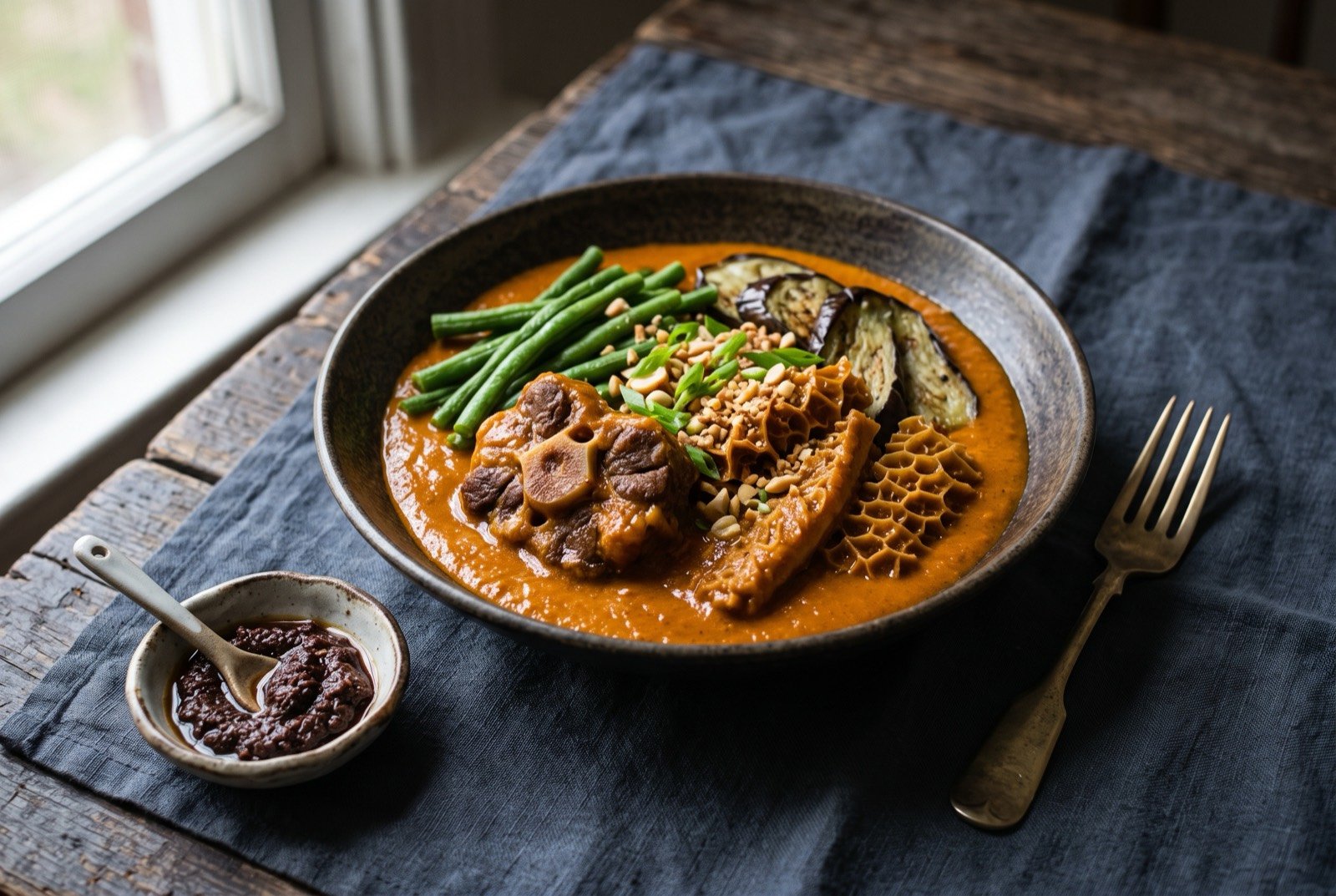
A peanut stew whose own name may be a Kapampangan joke about how badly it copies a curry nobody quite agrees was ever really there to copy, kare-kare carries its colour from achuete, annatto oil, and its body from peanut and toasted ground rice rather than from any coconut-milk or chilli-paste base.
As tradition built it
Serves 4 to 6. About 3½ hours.
Ingredients
- 2 to 3 lb (about 1.2 kg) oxtail, cut into 2-inch pieces
- 1 lb (450 g) beef tripe, optional
- 1½ cups smooth peanut butter
- ¼ cup toasted ground rice
- 3 tbsp annatto seeds steeped in ¼ cup (60ml) oil achuete oil (annatto seeds steeped in hot oil, strained)
- 10, cut into 2-inch lengths sitaw (long beans)
- 1, sliced eggplant
- 2 bunches pechay leaves
- ½ cup bagoong alamang, to serve
Method
- Braise the oxtail, cut into 2-inch pieces, with the beef tripe if using, until fully tender, around three hours at a gentle simmer.
- Thicken the braising liquid with the peanut butter and a portion of toasted ground rice, stirred through until the sauce coats a spoon.
- Colour the sauce with achuete oil, made by steeping annatto seeds in hot oil and straining.
- Add the sitaw, long beans, and eggplant late, so they keep some bite, along with pechay leaves at the very end.
- Serve with a small dish of bagoong alamang, fermented shrimp paste, on the side, stirred through by each diner to taste.
What a modern chef changes
A forty-eight-hour oxtail, and the peanut sauce passed through a chinois
Rung 5
Method
- Cook the oxtail sous vide at 62°C for 48 hours, long enough to render it completely tender while the meat holds its shape rather than falling apart into shreds, a texture the traditional long simmer cannot achieve without some collapse.
- Build the peanut sauce in a high-power blender from freshly toasted peanuts, a little peanut butter for body, and toasted rice flour, then pass it through a chinois for a completely smooth, glossy finish rather than the traditional coarser texture.
- Clarify the achuete oil over a longer, gentler infusion for a cleaner colour without the faint bitterness a rushed extraction can leave.
- Reduce the bagoong alamang with a little of the braising liquor into a concentrated savoury glaze, brushed onto the plate rather than served as a raw side dollop, built into the dish per Rung 5's logic instead of added at the table as an afterthought.
- Individually blanch and shock the sitaw and eggplant so each holds its own colour and bite precisely, arranged rather than stirred through, with the sauce poured at the table.