The Levant and Anatolia · Volume 02, The Steppe, the Fire and a Divided Table
Gaziantep baklava
Gaziantep
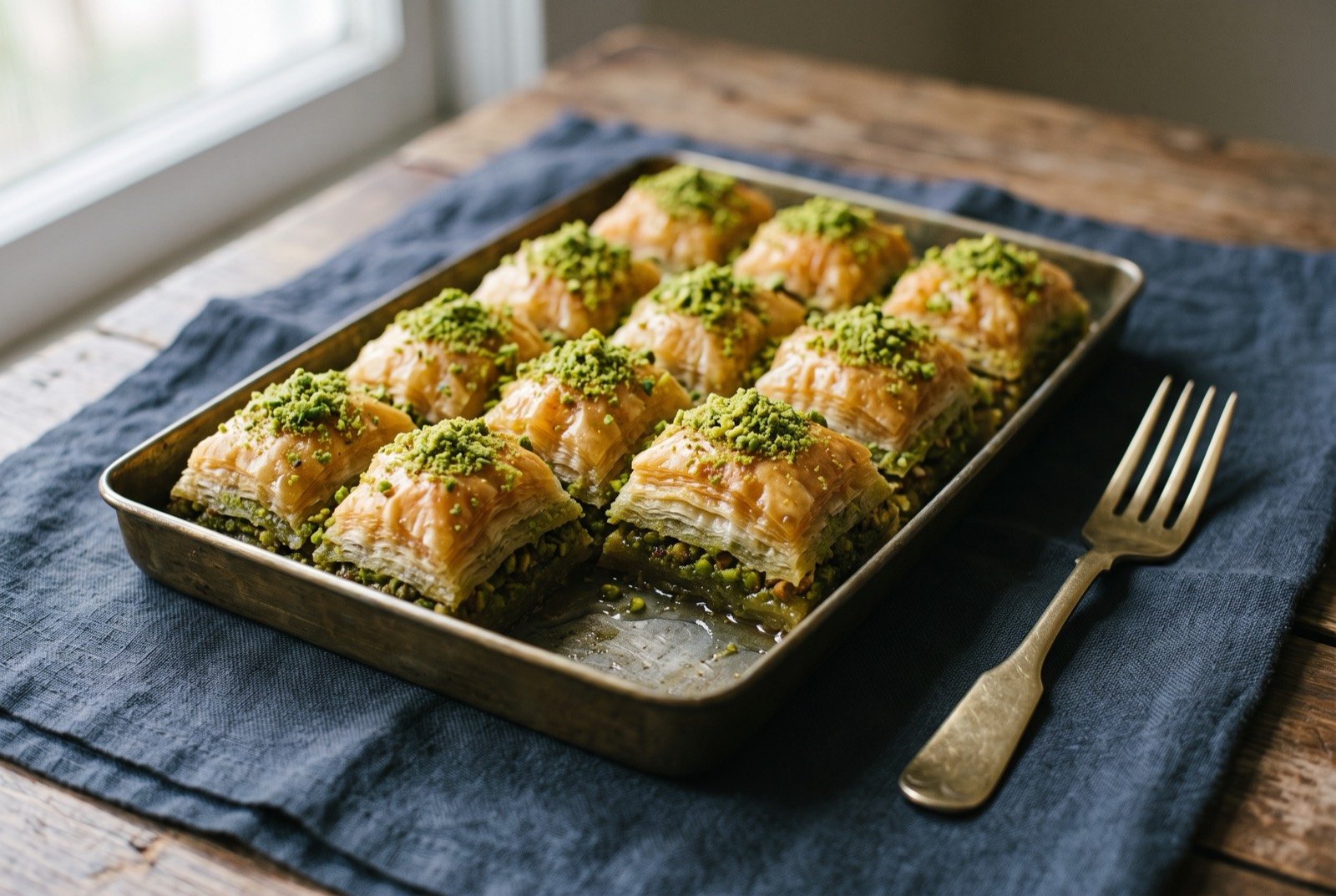
Illustration
- Time
- 1 hour
- Researched
- 1 source cited
As tradition built it
Makes one large tray, serves 12 to 16. Around 1 hour to assemble, 30 to 40 minutes to bake.
Ingredients
- 20 to 24 sheets yufka (filo), hand-stretched or shop-bought as thin as available
- 200 g unsalted butter, melted
- 450 g kaymak, or full-fat mascarpone as a substitute
- 400 g shelled, unroasted Antep pistachio, finely chopped
- 400 g sugar
- 400 ml water
- A squeeze a squeeze of lemon juice
Method
- Make the syrup first: dissolve the sugar in the water over low heat, add the lemon juice, bring to a simmer for 10 minutes, then set aside; it should be hot, at around 102 to 110°C, when it meets the baklava.
- Lay two whole sheets of yufka in a buttered baking tray as the base, brushing each with melted butter.
- Continue layering sheets, brushed with butter, interspersed with the kaymak spread thinly across one layer and the chopped pistachio spread generously across another, building up in stages rather than all at once.
- Cut into diamonds or squares before baking, cutting all the way through to the base.
- Bake at 180°C for 30 to 40 minutes, until deep golden.
- Pour the hot syrup evenly over the baklava the moment it comes out of the oven, so a hot pastry meets a hot syrup rather than pooling on a cool surface.
Notes
The pistachio should be raw and unroasted, described by İmam Çağdaş, the Gaziantep house whose technique this recipe draws on, as "the heart and soul" of the dish; the claim that Gaziantep is objectively the reference standard against Aegean or Syrian baklava is a very widely and confidently held local opinion, not an adjudicated fact, and this chapter reports it as the former.
What a modern chef changes
Machine-even sheets, and a syrup controlled by thermometer rather than instinct.
Rung 3
Method
- Roll the dough through a pasta machine in stages, resting between each setting, for a sheet more evenly thin than most home hand-stretching achieves.
- Use a probe thermometer on the syrup, pouring it at a genuinely held 102 to 110°C rather than judging "hot enough" by eye.
- Grind a portion of the pistachio to a fine dust in a high-power blender for a top dusting, keeping the interior layer coarsely chopped for texture, so the finished baklava carries both a fine visual finish and real bite.