The Levant and Anatolia · Volume 01, The Oil Coast, the Anchovy Coast and the Court Between Them
Laz Böreği
The Black Sea coast, and, in Lazca, paponi
Illustration
- Time
- 1 hour
- Researched
- 20 sources cited
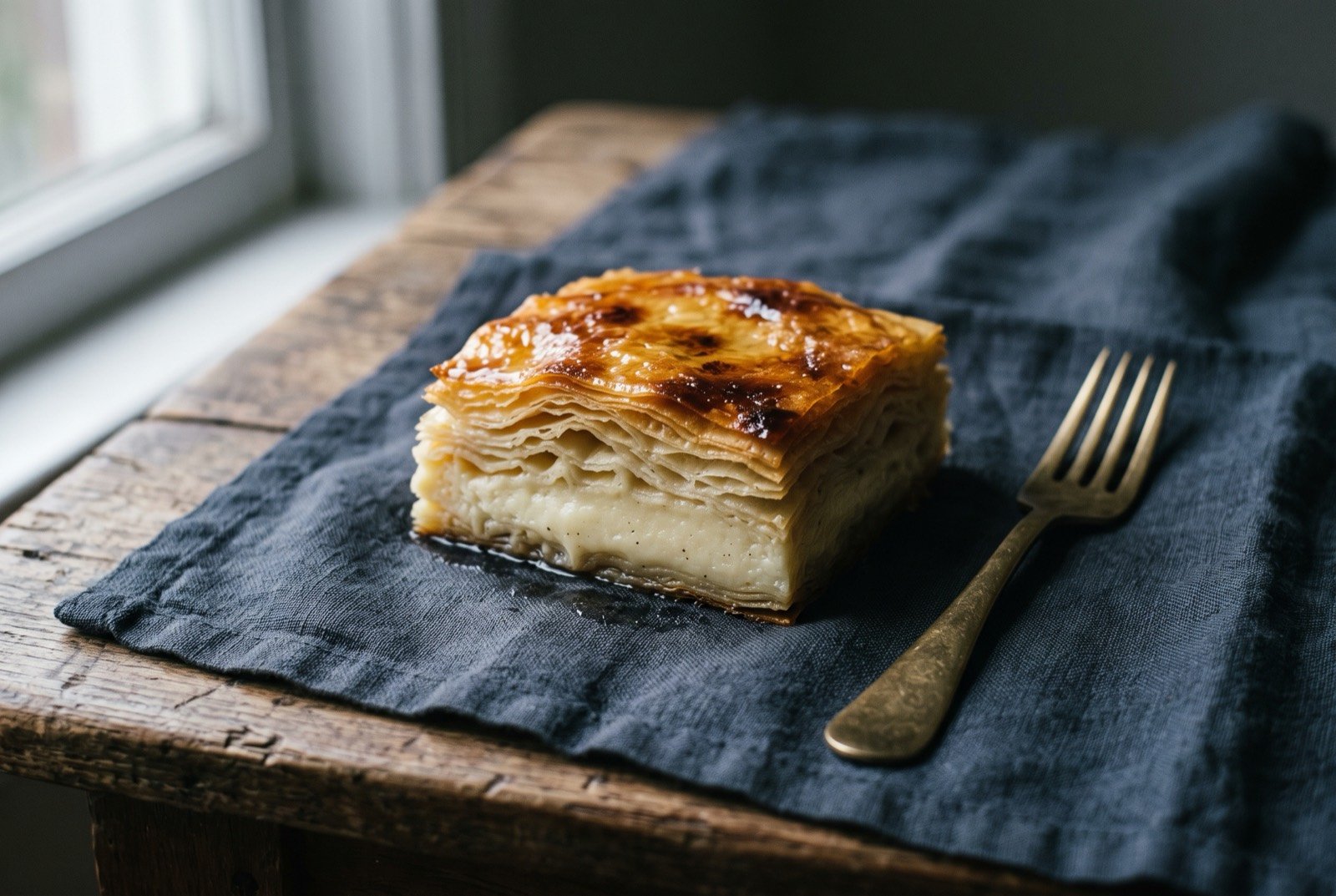
A sweet, custard-filled pastry, and this chapter's clearest example of a dish shared honestly across a modern border rather than owned by either side of it.
Not a savoury börek, despite the name; see the history section above for its Greek-named sibling, galaktoboureko, and this chapter's deliberate refusal to adjudicate which came first.
As tradition built it
Serves 8. About 1 hour.
Ingredients
- enough to layer the dish, top and bottom yufka sheets, layered
- as needed, for brushing butter, melted
- 1 litre milk
- 200 g sugar
- 4 egg yolks
- 2 tbsp cornstarch
- 2 tbsp rice flour
- a pinch a pinch of black pepper
- as needed sugar syrup, prepared separately
Method
- Build the custard: whisk the milk, sugar, egg yolks, cornstarch and rice flour together, cook out over low heat, stirring constantly, until thick enough to hold a ribbon.
- Stir in a pinch of black pepper, the detail several sources single out as what gives the dessert its real depth rather than plain sweetness.
- Layer the yufka sheets with melted butter in a baking dish, pour in the custard, top with more buttered yufka.
- Bake at 170°C for approximately 30 minutes, until golden.
- Pour the prepared sugar syrup over the hot pastry as it comes out of the oven.
What a modern chef changes
The custard's texture and the pepper note protected, not smoothed over.
Method
- Do not skip the black pepper. It is easy to treat as an error in a sweet recipe and omit; every source describing this dish well is explicit that it is the detail that makes it, not a mistake to correct.
- Cook the custard properly to a full ribbon stage before layering, since an underset custard will weep into the pastry during baking and produce a soggy rather than a properly layered result.
- Pour the syrup while the pastry is still hot from the oven, so it is properly absorbed rather than sitting on the surface.