The Levant and Anatolia · Volume 01, The Oil Coast, the Anchovy Coast and the Court Between Them
Kuymak (Muhlama)
The Black Sea coast, Trabzon and Gümüşhane specifically
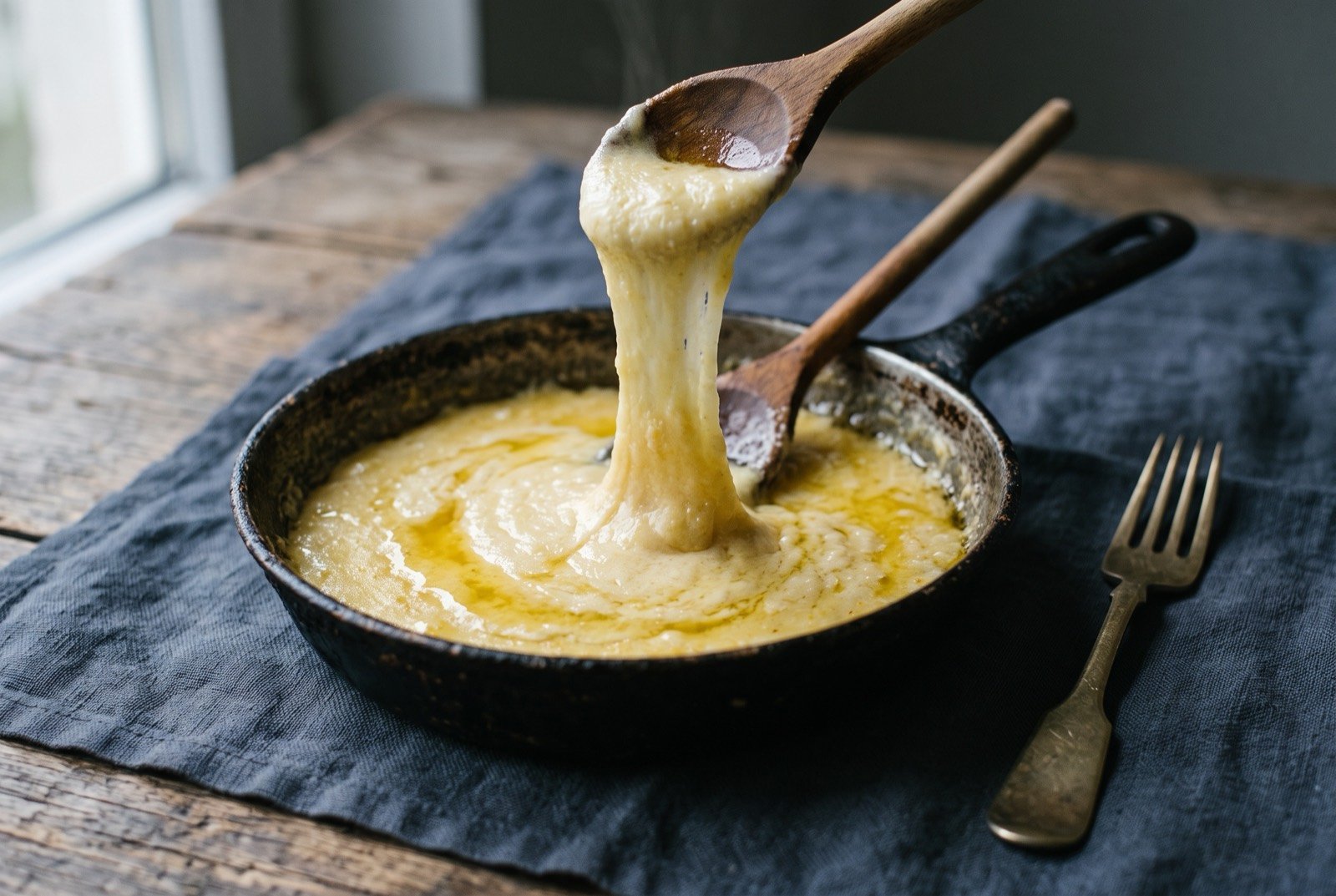
An illustration of the dish, not a photograph of it cooked.
- Time
- 15 minutes
- Researched
- 20 sources cited
- Reviewed
- Not yet reviewed from inside the tradition
- Cooked
- Not yet cooked and reported
Cornmeal and cheese worked together until molten and elastic, the region's everyday comfort dish.
Note on naming. Kuymak, muhlama and yağlaş are not simply the same dish under three names: muhlama is the general Black Sea term, cheese-forward; kuymak, specifically made with minci cheese, belongs to Trabzon and Gümüşhane; yağlaş, further west in Ordu and Giresun, uses no cheese at all. This chapter gives the Trabzon kuymak version.
As tradition built it
Serves 2. About 15 minutes.
Ingredients
- 1 heaped tbsp butter
- 1 heaped tbsp cornmeal
- 100 ml water
- ½ small bowl minci cheese, or substitute (see Sourcing)
- 50 ml boiling water
- 1 dessertspoon salt
Method
- Melt the butter in a pan.
- Add the cornmeal and toast until its colour visibly deepens. This is a genuine technique marker; an under-toasted cornmeal stays gritty however long the dish simmers afterward.
- Stir in the water and salt.
- Add the cheese and let it melt through fully.
- Finish with the boiling water, stirred through.
- The dish is done when the fat rises to the surface as a distinct glossy layer, not at a fixed time.
What a modern chef changes
The toasting and doneness discipline made explicit.
Rung 5
Method
- Toast the cornmeal longer than instinct suggests, watching for the colour change rather than counting seconds, since this is the single step most home versions rush.
- Do not stop working the mixture once the cheese goes in. A rested or interrupted mixture sets up short and grainy instead of pulling into the elastic strings this dish is built around.
- Serve the moment the fat layer separates out, directly from the pan; like hamsi tava, this is not a dish that improves with a rest.