The Slavic east and the Balkans · Volume 30, The Living Culture, the Roman Vein and the Rose Valley
Banitsa
Bulgaria
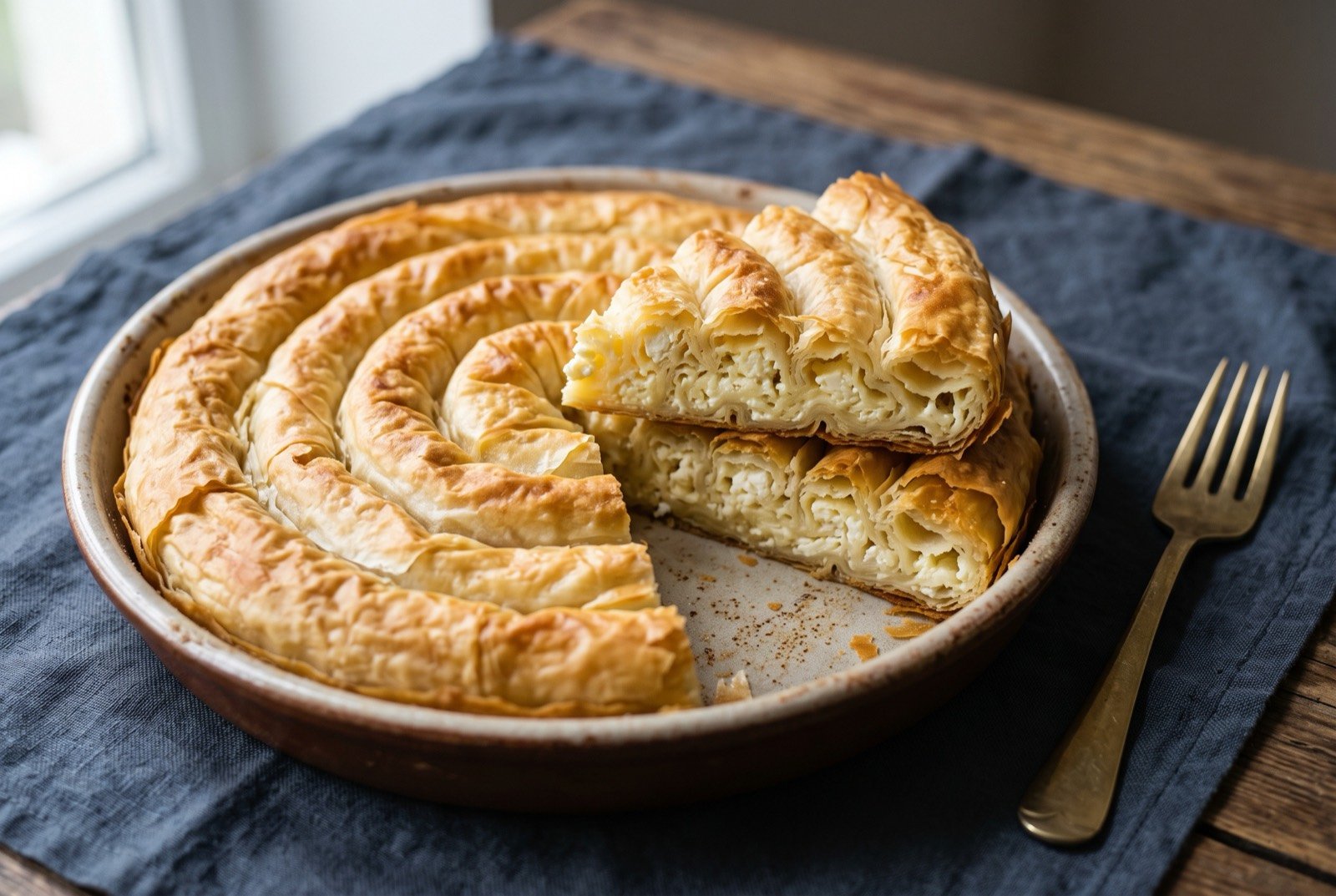
An illustration of the dish, not a photograph of it cooked.
- Time
- 1 hour
- Researched
- No outside sources linked
- Reviewed
- Not yet reviewed from inside the tradition
- Cooked
- Not yet cooked and reported
Bulgaria, the everyday and festive filo pie, and the clearest test of rung five in this whole chapter.
As tradition built it
Serves 6 to 8. About 1 hour, plus resting the dough.
Ingredients
For the dough
- 600g flour
- 300ml water
- 1 tsp salt
- 1 tsp a little vinegar
- 7 tbsp, about 100ml a little oil
For the filling
- 400g sirene
- 4 egg
- 400g kiselo mlyako
Method
- Make a cold-water dough of flour, water, salt, a little vinegar and oil, kneaded briefly.
- Rest the dough fifteen to forty minutes.
- Hand-stretch the dough into paper-thin sheets.
- Mash the sirene, egg and kiselo mlyako together roughly for the filling.
- Layer or coil the sheets into a spiral with the filling.
- Bake until deeply golden.
Notes
Eaten daily as breakfast and at every major festive occasion, New Year's banitsa traditionally hides written-paper fortunes folded into the parcels.
What a modern chef changes
Hand-stretched yufka, a blended filling and a dehydrated sirene snow
Rung 5
Method
- Use genuinely hand-stretched yufka rather than fighting homemade dough under time pressure, per rung five.
- Blend the sirene, egg and kiselo mlyako filling in a high-power blender with a spoonful of extra kiselo mlyako, giving an aerated, lighter curd rather than the traditional coarse mash.
- Bake on a pizza stone in a Big Green Egg held at a controlled indirect heat for a more evenly crisped base than a domestic oven's uneven bottom heat gives.
- Dehydrate sirene firm, then blitz to a powder, and dust the resulting "snow" over the top for concentrated saltiness without adding moisture back onto the crisp pastry.