The Slavic east and the Balkans · Volume 30, The Living Culture, the Roman Vein and the Rose Valley
Kozunak
Bulgaria
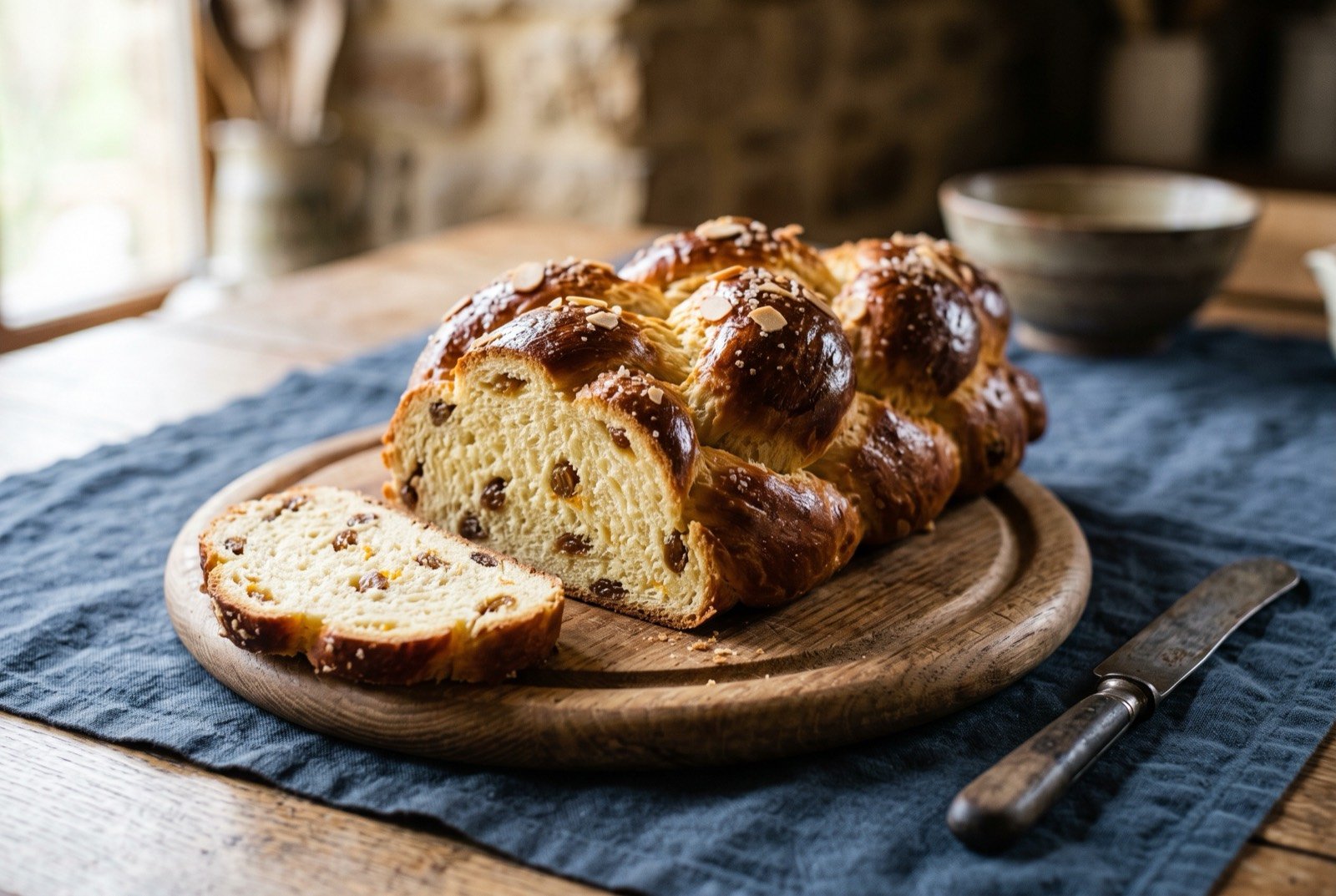
An illustration of the dish, not a photograph of it cooked.
- Time
- 4 hours
- Researched
- No outside sources linked
- Reviewed
- Not yet reviewed from inside the tradition
- Cooked
- Not yet cooked and reported
Bulgaria's sweet Easter bread, and its own honest debunk: seventeenth-century France, not ancient Bulgaria.
As tradition built it
Serves 8 to 10. About 4 hours, including proving.
Ingredients
- 1 kg flour, 5 eggs, 25g fresh yeast, 300g sugar, 125g butter, 250ml warm milk, 90ml oil enriched yeasted dough, flour, egg, yeast
- 100g, optional raisins or lokum, optional
- 1 egg, beaten egg wash
Method
- Make an enriched, plaited yeasted dough, sometimes filled with raisins or lokum.
- Prove slowly.
- Egg-wash and bake until deeply golden.
Notes
Its documented root, worth stating rather than leaving implied otherwise, is seventeenth-century France, arriving into Bulgarian festive baking rather than descending from it.
What a modern chef changes
A laminated crumb, a sous vide prove and a honey rose glaze
About 5 hours, including proving
Method
- Laminate the enriched dough with cultured butter, a technique borrowed from French viennoiserie, for extra flake within the soft, enriched crumb.
- Prove the dough in a sous vide water bath held at a precise 28°C, a more consistent proving chamber than a domestic kitchen's ambient warmth allows.
- Brush the finished loaf with a reduced honey and rose syrup glaze rather than a plain egg wash, calling back to the Rose Valley.
- Finish with dehydrated citrus zest dusted over the top in place of candied peel.