Britain and Ireland · Volume 35, The Pie, the Pluck and the Girder Drink
Stovies
Glasgow tenement kitchens
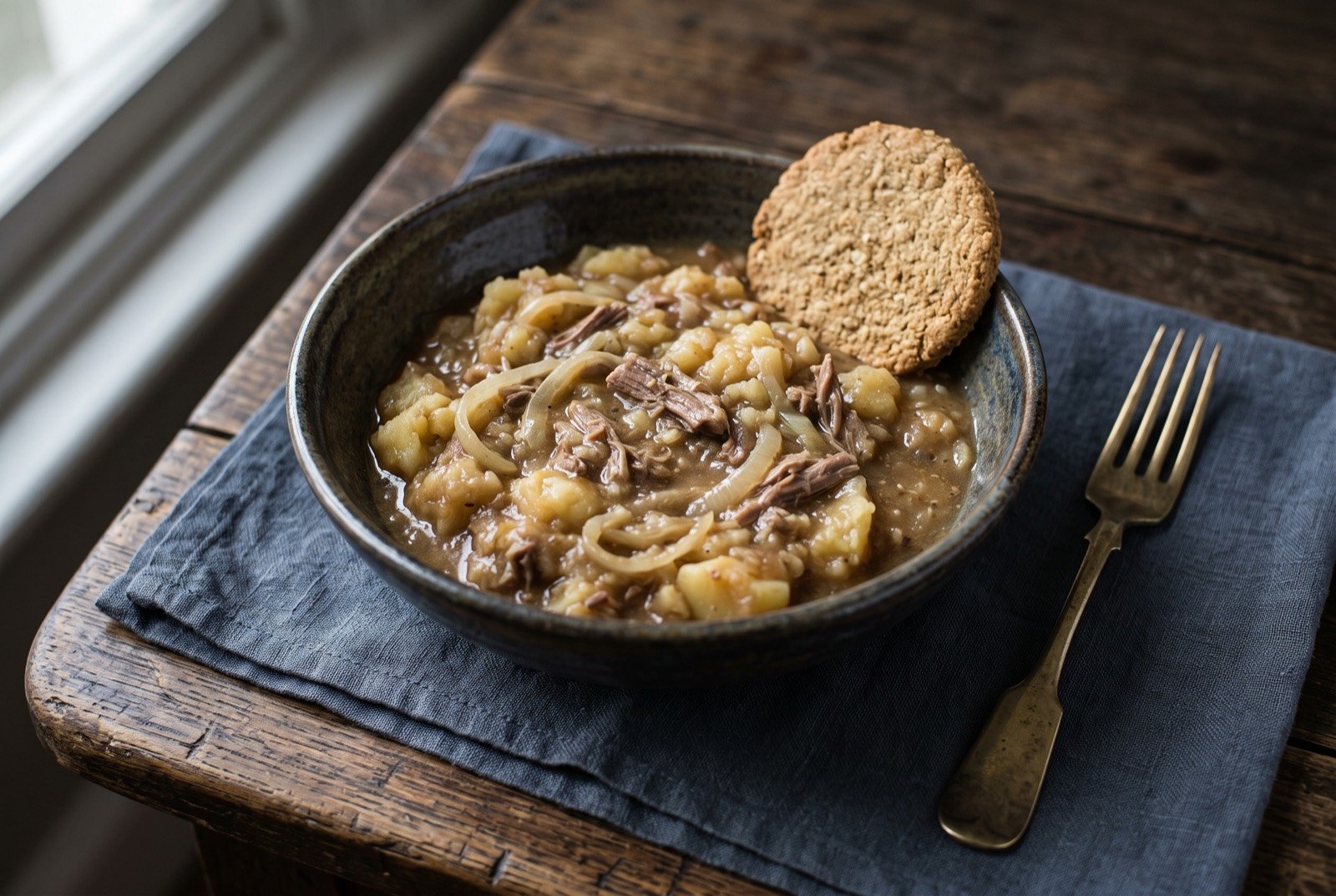
An illustration of the dish, not a photograph of it cooked.
- Time
- 1 hour 10
- Researched
- 10 sources cited
- Reviewed
- Not yet reviewed from inside the tradition
- Cooked
- Not yet cooked and reported
Leftover roast meat, potato and onion, layered and cooked low and slow in the fat and gravy left over from a Sunday joint until the potatoes break down and thicken the whole dish. Every household's version is different, and none is more correct than another.
As tradition built it
Serves 4. About 1 hour 10 minutes.
Ingredients
- 800g potatoes, peeled and cut into mixed sized chunks
- 1 large onion, sliced
- 450g leftover roast lamb, cubed
- 2 tbsp beef dripping or lard
- 250ml leftover gravy or stock, approximately
Method
- Soften the onion slowly in the dripping or lard.
- Layer the potato and lamb over the top.
- Pour in the stock so it just covers the base.
- Cover the pan and cook on a low heat for around 50 minutes, stirring occasionally, until the potatoes have broken down at the edges and thickened the whole dish.
Notes
This chapter has deliberately not asserted a single, canonical version of stovies: every credible source agrees the dish varies enormously from household to household, built as it always was from whatever a Sunday joint left behind, and no single recipe is more correct than another.
What a modern chef changes
The lamb held separately at a precise temperature, and two potato textures instead of one
Rungs 1 and 5
Method
- Cook the lamb separately and precisely, sous vide at 56°C for the leg or shoulder trim used, so it stays properly pink and tender rather than cooking further in the pot, then fold it through only at the very end.
- Build the base not from loose stock but from a properly reduced lamb jus, made from the same joint's bones.
- Finish the potatoes' texture deliberately: some cooked whole and fondant in the jus, some blitzed in a high power blender to a smooth purée and stirred back through, giving the dish a controlled range of potato textures rather than the single, softened mass the traditional slow simmer produces by accident.