The Slavic east and the Balkans · Volume 30, The Living Culture, the Roman Vein and the Rose Valley
Kürtőskalács
Transylvania, Romania
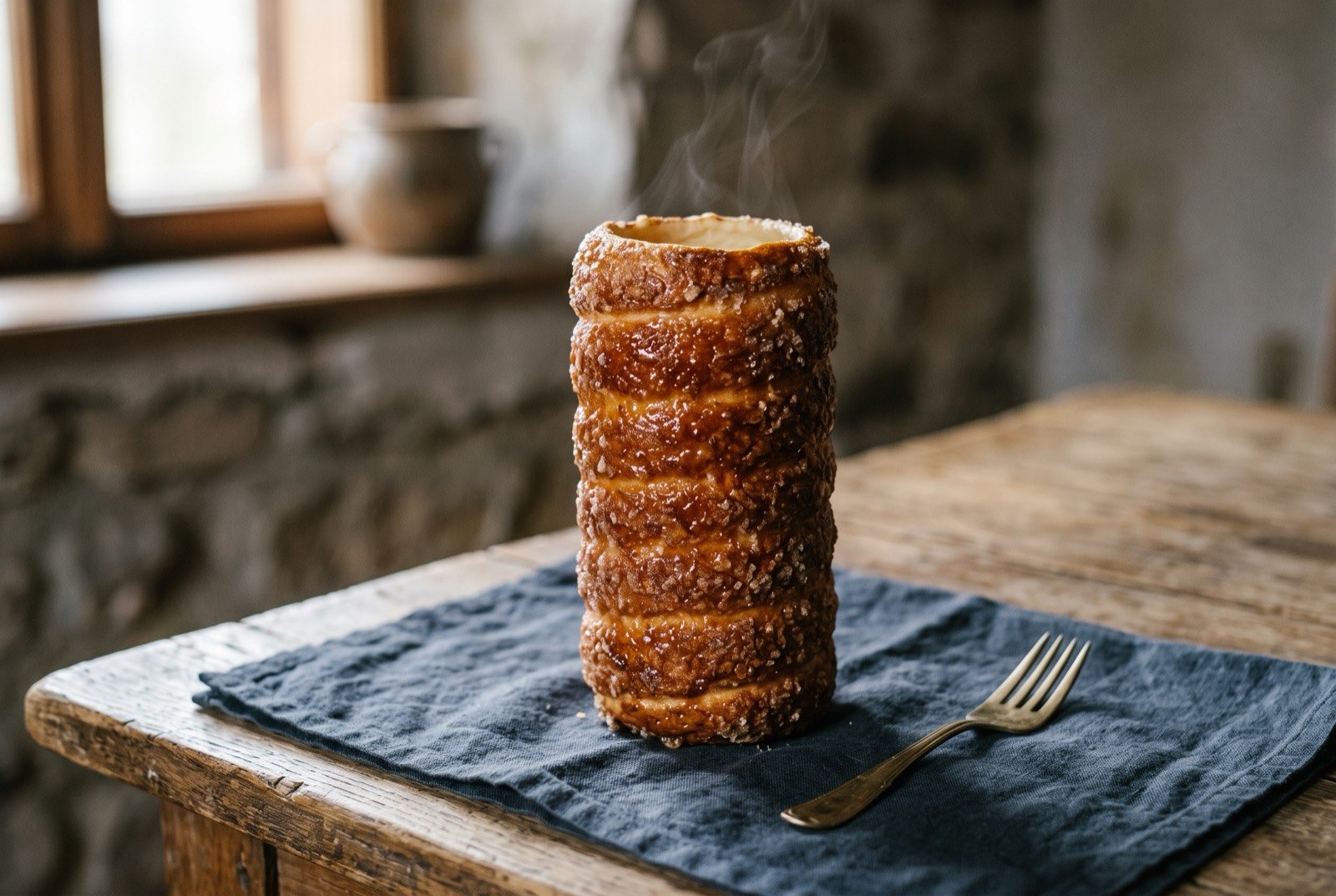
An illustration of the dish, not a photograph of it cooked.
- Time
- 1 hour 30
- Researched
- No outside sources linked
- Reviewed
- Not yet reviewed from inside the tradition
- Cooked
- Not yet cooked and reported
Transylvania, the spit-baked pastry this chapter had to correct rather than simply repeat.
As tradition built it
Makes 4 to 6. About 1.5 hours, including proving.
Ingredients
- 500g flour, 1 egg plus 2 egg yolks, 90g sugar, 50g butter, 15g fresh yeast, 250ml warm milk, pinch of salt yeasted dough
- 100g sugar, for rolling
Method
- Wrap a yeasted dough in a ribbon around a wooden spit, the kürtő.
- Roll in sugar.
- Bake slowly over embers, turning constantly, until the sugar caramelises into a crisp shell around a soft, hollow interior.
Notes
The earliest documented recipe, 1784, in the manuscript cookbook of the Székely Hungarian noblewoman Countess Mária Mikes of Zabola, contains no sugar at all, the sweet crust a later addition; the spit-roasting technique itself most likely arrived by way of German or Austrian Saxon transmission, a Transylvanian dish born of two communities together rather than the invention of either one alone.
What a modern chef changes
A rotisserie ember roast, a laminated dough and a rose petal sugar
About 1.5 hours
Method
- Roast on the Big Green Egg's rotisserie attachment, held at a genuinely low, even, controlled heat over real embers, closer to the traditional open-fire method than any electric spit.
- Laminate the dough with cold butter before winding it onto the spit, a genuine departure that gives extra flake within the traditional soft, chewy interior.
- Finish the sugar crust with a brief torch pass for an even, glass-hard shell, crème brûlée style, rather than relying on the fire alone for caramelisation.
- Dust the finished pastry with a dehydrated, ground rose petal sugar from the Kazanlak valley in place of plain crystal sugar, one small deliberate crossing of this chapter's Bulgarian and Romanian halves at its close.