Central Europe · Volume 19, The Court, the Coffeehouse and the Alps Underneath It
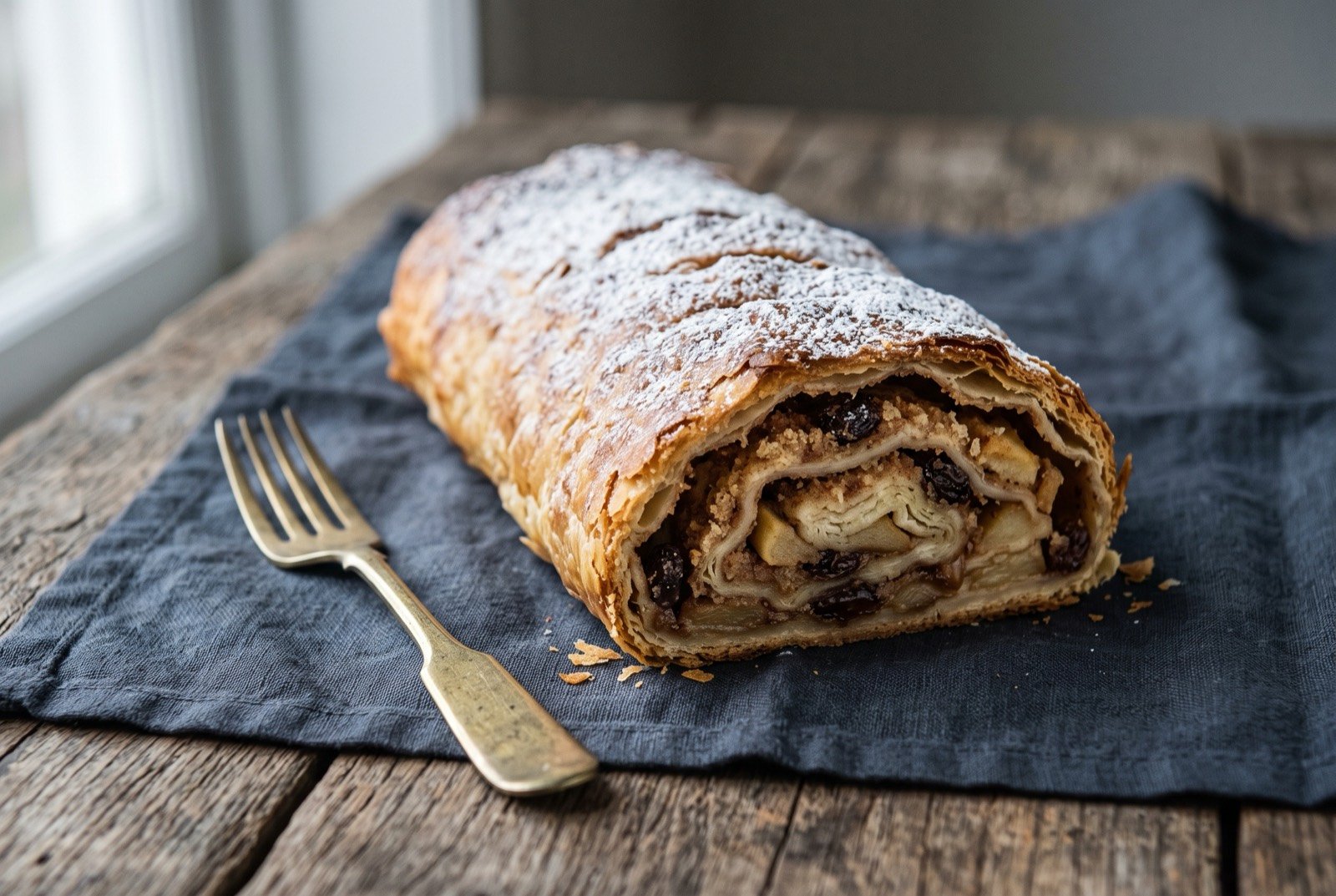
Apfelstrudel
Vienna
Illustration
- Time
- 1 hour 30
- Researched
- Researched from 86 sources in the brief
Vienna. The hand-stretched dough's technical ancestor is Ottoman and Eastern Mediterranean yufka, arriving via Hungary; the earliest written Viennese strudel recipe dates to 1669, though using rolled rather than stretched dough. The stretching technique itself came later.
As tradition built it
Serves 6 to 8. About 1.5 hours, plus resting.
Ingredients
For the dough
- 300 g strong white flour
- 150 ml, lukewarm water
- 1 tbsp a little oil
- a pinch a pinch of salt
For the filling
- 1 kg apples, peeled and thinly sliced
- 100 g sugar
- 1 to 2 tsp cinnamon
- 75 g raisins, soaked in rum
- 100 g fresh breadcrumbs, fried golden in butter
- juice of 1 lemon lemon juice
Method
- Bring the flour, water, oil and salt together into a dough, then knead hard until smooth and elastic, and rest, covered, for at least half an hour.
- On a large, well-floured cloth, roll the dough out as thin as possible with a pin, then stretch it further by hand: both hands flat beneath the dough, working from the centre outward, until it is thin enough to read newsprint through.
- Scatter the buttered breadcrumbs over two-thirds of the dough, then the apple filling, tossed with cinnamon, raisins and lemon juice, on top.
- Using the cloth to help, roll the strudel up from the filled end, and transfer, seam down, to a buttered tray.
- Brush with melted butter and bake at 200°C for around 35 to 40 minutes, until deep gold.
- Serve warm, dusted with icing sugar, with vanilla sauce or cream.
What a modern chef changes
Controlled fruit texture and a more even bake, both changes made to protect the pastry, which is the dish's real centre of gravity
Rung 3
Method
- Macerate the sliced apples in sugar and lemon juice for 20 minutes, then drain thoroughly before filling. Traditional strudel can turn soggy at the seam because raw apple continues releasing water as it bakes; pre-draining removes much of that liquid in advance, protecting the hand-stretched dough's crispness, which is the entire point of the technique described in Rung 3.
- Dry a portion of the apple in the dehydrator at 60°C until just leathery, then fold it back through the fresh filling, adding textural contrast, a chewier note against the fresh apple's softness, and further reducing the filling's overall moisture without any loss of apple flavour.
- Bake on a preheated stone or steel rather than a straight tray, giving the pastry's underside an even, immediate blast of heat that a cold metal tray cannot match, for a more consistently crisp base across the whole length of the strudel.