Central Europe · Volume 19, The Court, the Coffeehouse and the Alps Underneath It
Sachertorte
Vienna
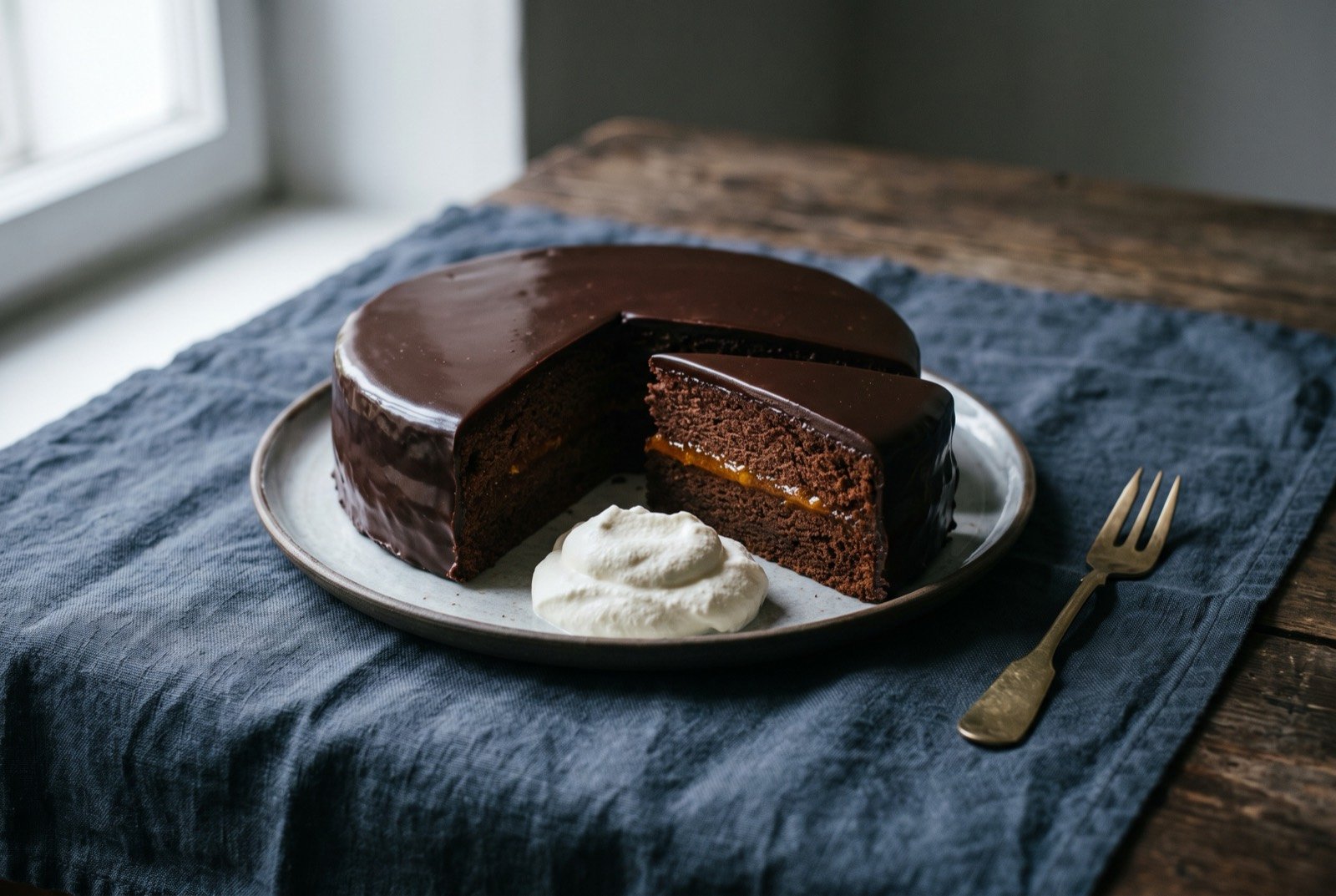
An illustration of the dish, not a photograph of it cooked.
- Time
- 2 hours
- Reviewed
- Not yet reviewed from inside the tradition
- Cooked
- Not yet cooked and reported
Vienna. Created in 1832 by the then sixteen-year-old apprentice Franz Sacher; the 1954 to 1965 lawsuit between Hotel Sacher and Demel over the "Original Sacher-Torte" name is genuinely documented, and Austria's own national consumer body has since tested both, along with eight competitors, and found the famous original itself is not automatically the best-executed version. See the History above and the Modernist brief for the full result.
As tradition built it
Makes one 24cm torte. About 2 hours, plus setting.
Ingredients
For the sponge
- 130 g butter
- 40 g icing sugar
- 6 egg yolks
- 130 g dark chocolate, melted and cooled
- 6, whipped stiff with 180 g caster sugar egg whites, whipped stiff with caster sugar
- 130 g flour
For finishing
- 350 g apricot jam, strained
- 200 g couverture, with 120 ml water or syrup dark chocolate glaze: couverture and a little water or syrup, melted to a pourable, glossy consistency
Method
- Cream the butter and icing sugar until pale, beat in the egg yolks, then fold in the melted, cooled chocolate.
- Whip the egg whites with caster sugar to stiff peaks, fold a third into the chocolate mixture to loosen it, then fold in the rest alongside the flour, in alternating batches, keeping as much air as possible.
- Bake in a lined 24cm tin at 170°C for around 50 to 60 minutes, until a skewer comes out clean. Cool completely.
- Split the sponge once horizontally. Warm and strain the apricot jam, spread a layer through the middle and a second layer over the whole cake, top and sides, allowing it to set slightly before glazing.
- Pour the glossy chocolate glaze over the cake in one continuous motion, tilting to coat evenly, and allow to set fully before slicing.
What a modern chef changes
Precision tempering for a genuinely glossy glaze, and a controlled bake to solve the dryness Austria's own consumer testing found even in the famous original
Rungs 1 and 4
Method
- Temper the couverture properly before glazing, working it through a controlled melt-and-cool cycle on a marble slab or with a probe thermometer, rather than simply melting chocolate and pouring. This is precisely the fault Austria's own Taste:Check found even in some professional Sachertortes, a dull or overly sweet glaze rather than a genuinely glossy dark couverture finish, and correct tempering is the direct fix.
- Bake the sponge at a lower temperature for longer, 150°C for around 75 minutes, checked with a probe rather than a skewer, targeting a slightly lower internal finishing temperature than the traditional higher, shorter bake. The same consumer test found dryness as a recurring, genuine fault across multiple commercial versions, including the original; a gentler bake reduces moisture loss without changing the crumb's fundamental structure.
- Strain the apricot jam twice, once before warming and once after, through the chinois, for a completely smooth layer that penetrates the sponge rather than sitting as a discrete sticky ribbon, a small refinement of the traditional straining step already in use.