Persia and the Caucasus · Volume 12, The South Caucasus and the Disputed Table
Piti
Azerbaijan
Illustration
- Time
- 8 hours
- Researched
- 8 sources cited
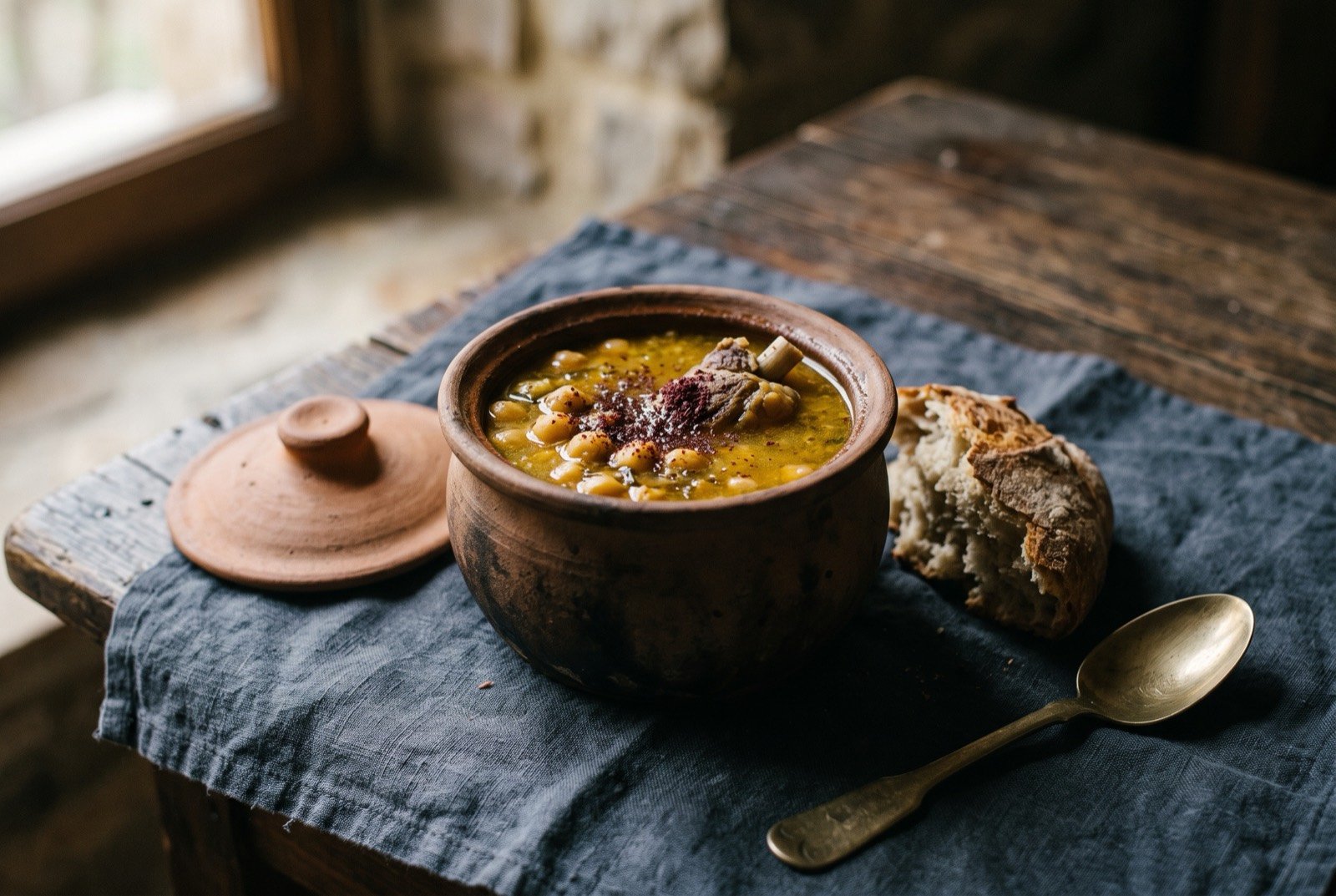
Individual clay-pot lamb and chickpea stew, where the eating ritual is the real technique.
As tradition built it
Serves 4, in individual pots. 7 to 8 hours.
Ingredients
- 4 small portions of lamb, on the bone
- 200 g dried chickpeas, soaked separately
- 200 g tail fat or butter
- 4, finely chopped onion, finely chopped
- 4, one per pot dried apricot
- 4, one per pot potato
- a pinch saffron
- to taste salt
- to taste spice
- to taste sumac, to serve
- to taste, torn into the bowl day-old bread, to serve
Method
- Soak the chickpeas in hot water for 4 to 5 hours; soak the lamb separately in cold water for 4 to 5 hours.
- Into each individual pot, layer the chickpeas first, then the chopped onion, then the meat, then a piece of tail fat on top.
- Salt, add water to cover, and simmer gently, sealed, for 7 to 8 hours.
- Roughly 15 minutes before the pots come off the heat, add dried apricot, potato and a pinch of saffron to each.
- To serve: pour the broth off first over bread crumbled into a bowl, dressed with sumac, and eat this as the first course. Mash the remaining solids together in the pot with more sumac and eat as the second course, with raw onion alongside.
What a modern chef changes
The sealed vessel and the two-course ritual both taken seriously.
Rung 7
Method
- Run the pots in a very low Big Green Egg used as an oven, a stable, gentle dome temperature over the full cooking time, rather than a domestic oven, for a closer approximation of the sealed clay vessel's slow, even heat.
- Do not combine the broth and the solids before serving. The two-course structure is the dish, not an optional presentation choice, and combining them into one bowl loses the point of the ritual entirely.
- Season each course separately with fresh sumac at the table, rather than cooking sumac into the pot, for the sharp contrast the tradition depends on.