Central Europe · Volume 19, The Court, the Coffeehouse and the Alps Underneath It
Salzburger Nockerl
Salzburg
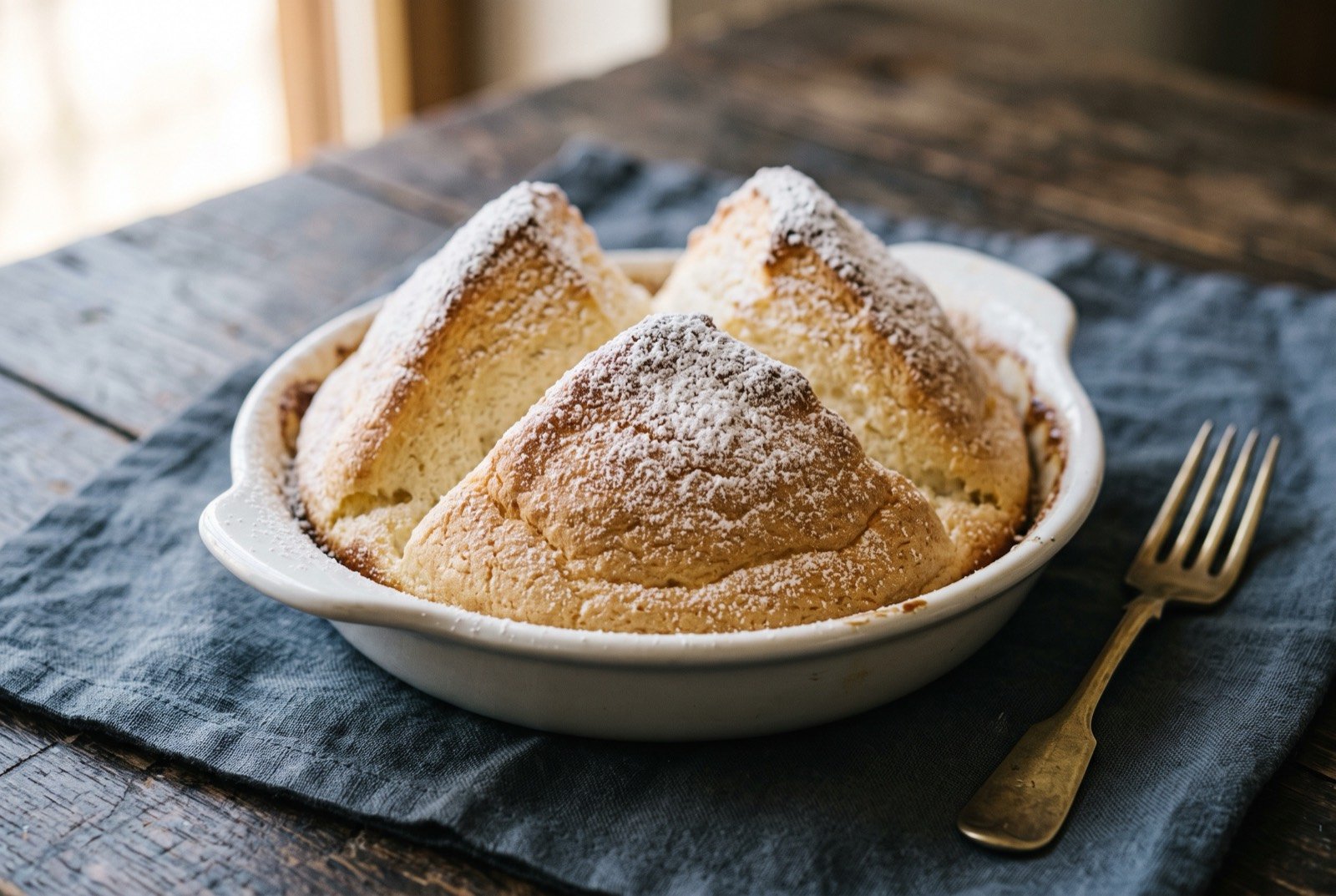
Illustration
- Time
- 25 minutes
- Researched
- Researched from 86 sources in the brief
Salzburg. Popularly credited to Salome Alt, companion of Prince-Archbishop Wolf Dietrich von Raitenau, but Austria's own federal ministry states the dish's real origin cannot be established, and notes the oven needed for its modern souffléed form was not invented until roughly two centuries after Wolf Dietrich's death. Treat the Salome Alt story as legend, and the three-mound "hills of Salzburg" symbolism as a later folk reading, not documented original intent.
As tradition built it
Serves 2 to 3 as a light main or dessert. About 25 minutes.
Ingredients
- 6 egg whites
- 4 egg yolks
- 80 g sugar
- 1 tsp vanilla sugar, a dash of rum vanilla sugar, a little rum
- 60 g flour
- a knob, for greasing the dish butter, for the dish
- a heavy dusting, to finish icing sugar, to finish
Method
- Whip the egg whites with a pinch of salt and the sugar to stiff, glossy peaks.
- Gently fold in the yolks, vanilla sugar and rum, then fold in the flour last, keeping the mixture as airy as possible.
- Spoon into a buttered, heated gratin dish as three or four tall, pointed mounds.
- Bake at 190°C for 10 to 12 minutes, until risen and golden.
- Dust heavily with icing sugar and serve immediately, straight from the oven; the dish collapses within minutes.
What a modern chef changes
The same rung as Kaiserschmarrn, applied here with more precision because the margin for error is even smaller
Rung 4
Method
- Whip the whites in a stand mixer to a measured, consistent stiffness, then fold by hand only, never mechanically, since the folding stage is where volume is genuinely lost or kept, and a machine cannot judge the point at which enough flour has been incorporated without deflating the foam.
- Preheat the gratin dish itself, not just the oven, so the mixture begins setting from contact the instant it is spooned in, giving a firmer initial structure before the interior has fully cooked through, which helps the tall mounds hold their shape rather than slumping in the first minute of baking.
- Serve directly from the oven to the table with no plating step at all, treating the very short window before collapse as part of the dish's presentation rather than a problem to solve, which is honestly how a good Kaffeehaus already serves it.