Melanesia, Micronesia and Polynesia · Volume 11, The Imu, the Camp and the Plate Lunch
Malasada
Plantation-era Hawaii, Portuguese, Azorean and Madeiran
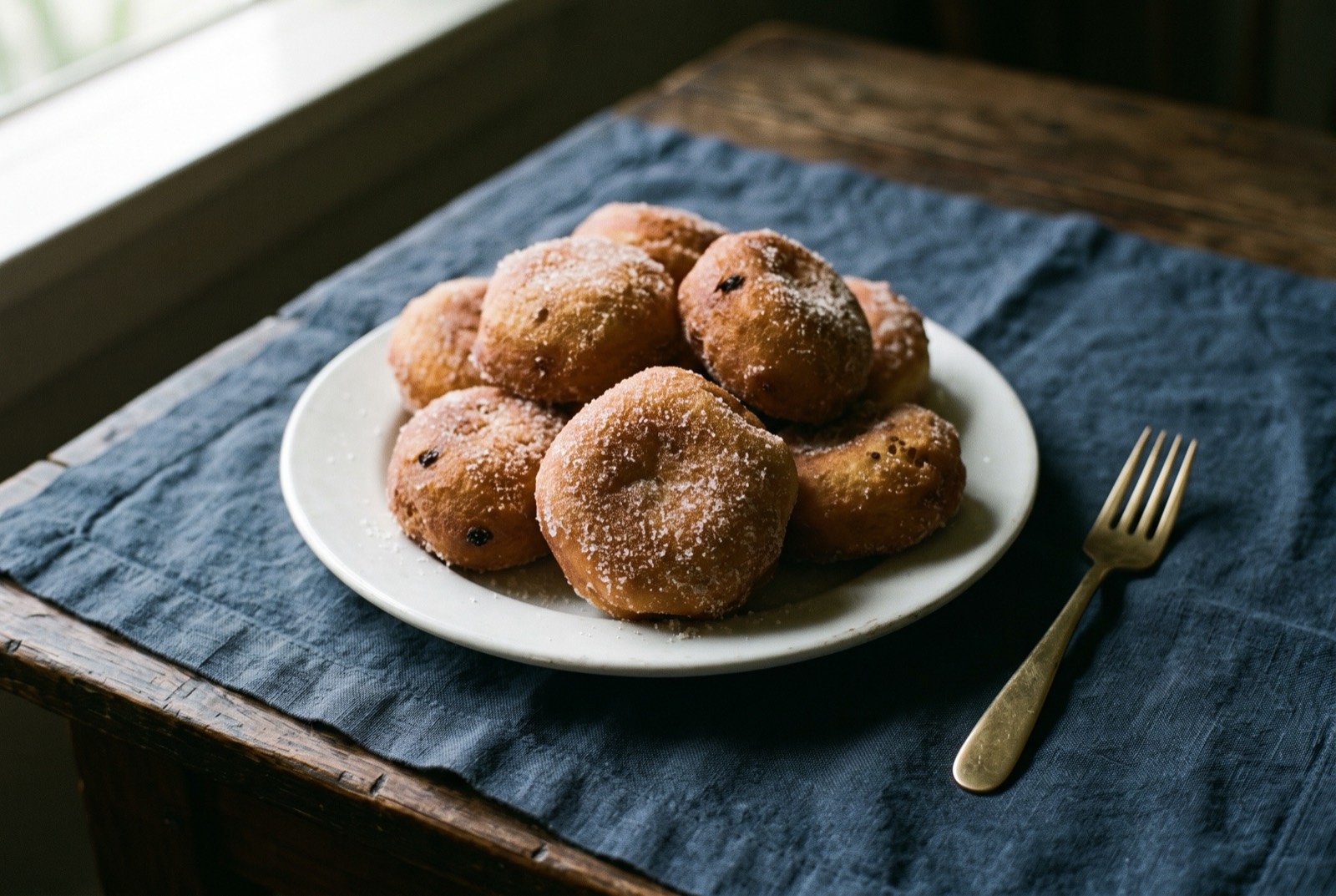
An illustration of the dish, not a photograph of it cooked.
- Time
- 3 hours
- Reviewed
- Not yet reviewed from inside the tradition
- Cooked
- Not yet cooked and reported
Yeasted, egg-rich dough, fried until crisp outside and fluffy within, tossed hot in sugar, no hole and no filling. Brought by the 1878 wave of Portuguese labourers and tied to Shrove Tuesday, the last indulgence before Lent for the largely Catholic Portuguese plantation community. Leonard Rego opened Leonard's Bakery on Oahu in 1952, selling malasadas from his grandmother's recipe against his own bakers' scepticism, "No one had heard of this malasada thing. But we did it anyway," and made the previously home-baked treat an islandwide, daily institution rather than an annual one.
As tradition built it
Makes about 20. About 3 hours including proving.
Ingredients
- 500 g strong white flour
- 80 g sugar, plus extra for coating
- 7 g fast-action dried yeast
- ½ tsp salt
- 250 ml whole milk, scalded and cooled to warm
- 2 eggs
- 50 g butter, softened
- enough for deep-frying oil, for deep-frying
Method
- Combine the flour, sugar, yeast and salt.
- Work in the warm scalded milk, eggs and softened butter to a soft, sticky dough.
- Knead 8 to 10 minutes until smooth and elastic, then prove, covered, 1 hour, until doubled.
- Knock back, divide into small balls, flatten slightly with a thumbed indentation in the centre, and prove again 20 to 30 minutes.
- Deep-fry in oil at 175°C, 2 to 3 minutes a side, until deep golden.
- Toss immediately, while still hot, in sugar.
Notes
Flagged honestly: no source found gives Leonard's Bakery's own exact method; the technique below is standard Portuguese-doughnut practice, presented as such rather than claimed as a confirmed house recipe.
What a modern chef changes
The dough's hydration and the fry temperature given real precision, since a Portuguese-doughnut recipe is unforgiving of both.
Kit note, not tied to a numbered rung.
Method
- Scald the milk properly, to just below boiling, then cool before adding, a step that genuinely changes the crumb's fluffiness by denaturing whey proteins that would otherwise toughen the gluten structure, not a cosmetic instruction.
- Fry at a monitored, held 175°C using a dedicated thermometer rather than judging by eye, since malasada dough's high sugar and egg content burns the outside well before the centre cooks through if the oil runs even slightly too hot.
- State this plainly: this recipe is standard technique, not a confirmed Leonard's Bakery method; readers wanting the specific commercial recipe should treat this as a close, honest approximation rather than the real thing.