Melanesia, Micronesia and Polynesia · Volume 11, The Imu, the Camp and the Plate Lunch
Manapua
Plantation-era Hawaii, Chinese origin
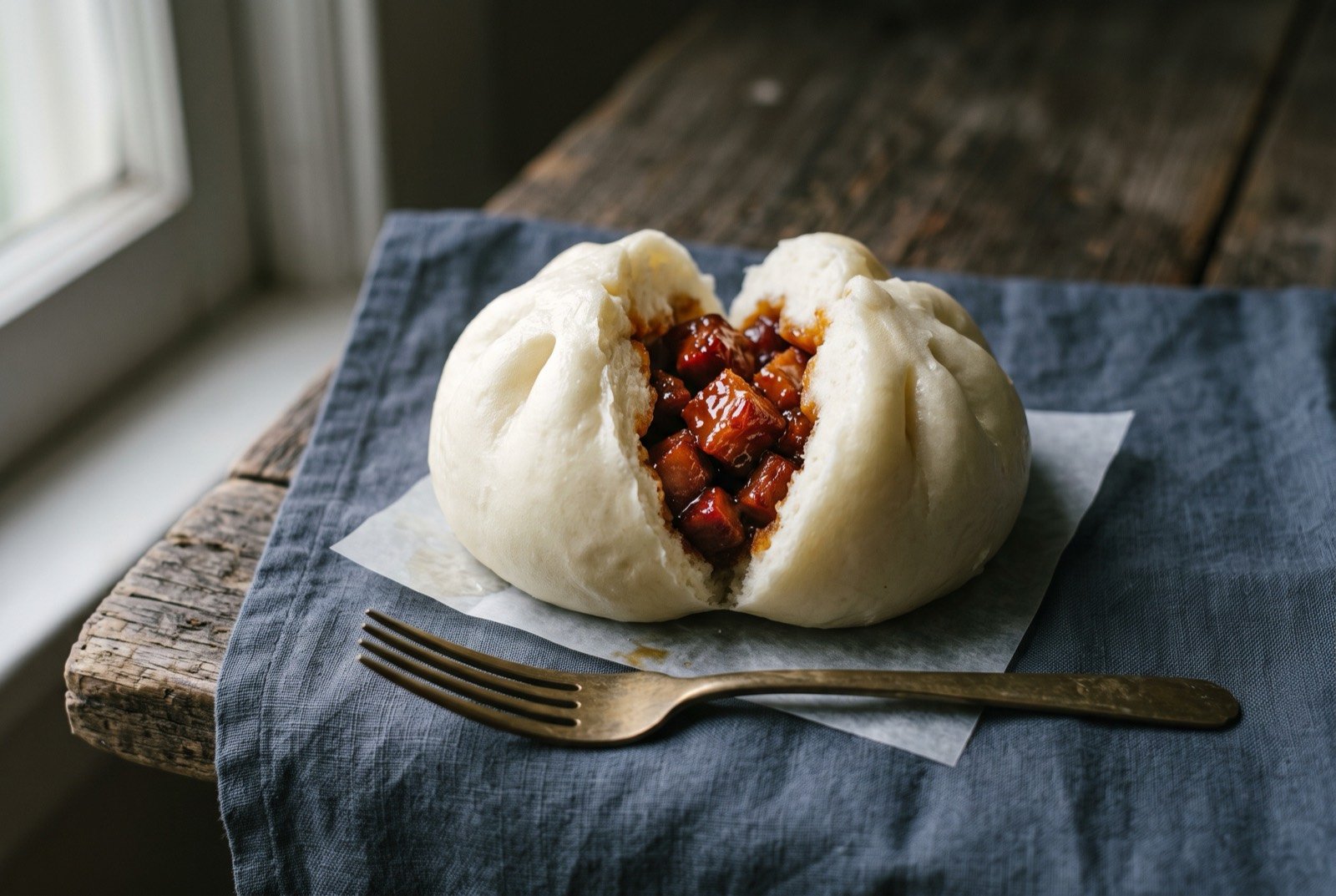
An illustration of the dish, not a photograph of it cooked.
- Time
- 3 hours
- Reviewed
- Not yet reviewed from inside the tradition
- Cooked
- Not yet cooked and reported
Char siu-filled steamed bun, sold across early twentieth-century Honolulu by "manapua men" carrying buns in aluminium cans slung from bamboo poles, calling "manapua, pepeiao, manapua pepeiao!" The name is a Hawaiian Pidgin contraction of "mea ʻono puaʻa," delicious pork thing.
As tradition built it
Makes 12. About 3 hours including proving.
Ingredients
- 500 g plain flour
- 7 g fast-action dried yeast
- 60 g sugar
- 1 tsp salt
- 250 ml warm water
- 30 ml vegetable oil
- 400 g for the filling: 400 g char siu pork, diced, 2 tbsp oyster sauce, 1 tbsp soy sauce, 1 tsp sugar, 1 tsp cornflour slaked in a little water
Method
- Combine flour, yeast, sugar and salt; work in the warm water and oil to a smooth, soft dough.
- Knead 8 to 10 minutes, until elastic, then prove, covered, 1 hour, until doubled.
- For the filling, combine the char siu with oyster sauce, soy sauce and sugar in a small pan over low heat; thicken with the cornflour slurry until glossy, then cool completely.
- Divide the dough into 12 pieces, flatten each into a disc, fill with a generous spoonful of the cooled filling, and pleat closed.
- Prove a further 20 to 30 minutes, then steam 12 to 15 minutes, until well risen and glossy.
What a modern chef changes
The filling's glaze built with real reduction rather than a quick thickening, and the bun given room-temperature control.
Kit note, not tied to a numbered rung.
Method
- Reduce the char siu sauce separately in a small pan until it visibly coats a spoon before folding through the meat, rather than thickening the whole mixture with cornflour in one step, for a filling with real depth rather than a flat, starchy glaze.
- Prove the dough slowly overnight in the fridge rather than in a warm kitchen, for a more developed flavour and a finer, less airy crumb.
- Char siu is genuinely and easily bought in Britain (see Sourcing in Britain); no substitution is needed here.