Melanesia, Micronesia and Polynesia · Volume 11, The Imu, the Camp and the Plate Lunch
Poke
Native Hawaiian, later layered with Asian-contact seasoning
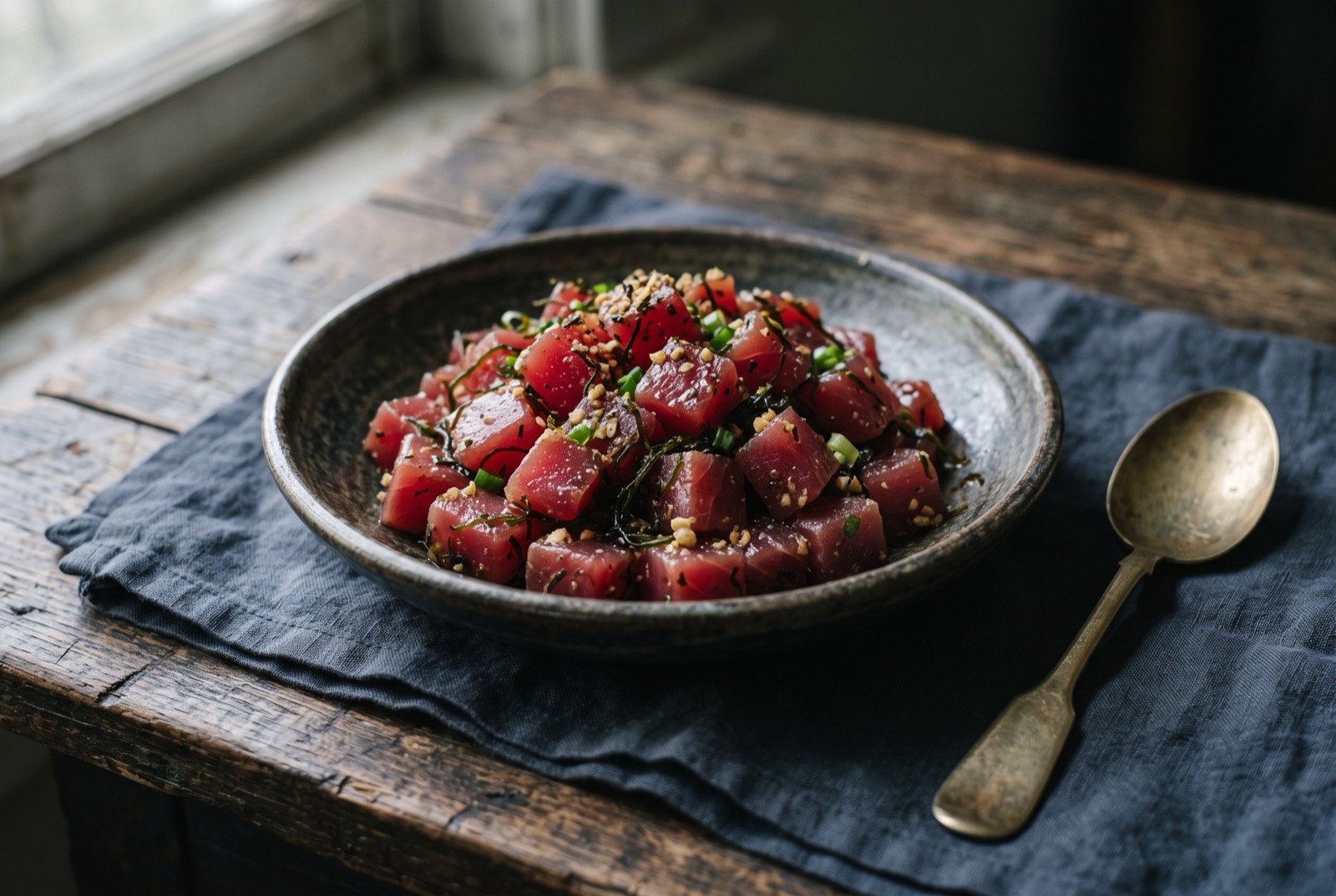
An illustration of the dish, not a photograph of it cooked.
- Time
- 15 minutes
- Reviewed
- Not yet reviewed from inside the tradition
- Cooked
- Not yet cooked and reported
Reef fish, most often ʻahi, cut into cubes and seasoned with paʻakai, ʻinamona and limu, no citrus, no soy, in its pre-contact and early-contact form. The now-familiar soy-sesame-scallion version is a later, Asian-contact layering on top of that base, not a corruption of it. Genuinely contested and stated plainly rather than smoothed over: some secondary press coverage of the 2010s mainland poke boom suggests "poke" as a fixed, named dish may not appear in Hawaiian dictionaries until the 1970s, which would complicate a simple unbroken-tradition story; this chapter could not verify that claim against a primary dictionary source, and flags it as unresolved rather than asserting it.
As tradition built it
Serves 4 as a starter. 15 minutes.
Ingredients
- 500 g sashimi-grade ʻahi (yellowfin tuna), cut into 1.5 cm cubes
- 2 tbsp ʻinamona (or substitute: toasted macadamia nuts, pounded with salt)
- 2 tbsp dried or fresh limu (ogo), rinsed if fresh
- 1 tsp alaea salt, or to taste
- 2 tbsp for the modern layer, if you want it: 2 tbsp soy sauce, 1 tsp sesame oil, 1 spring onion, finely sliced
Method
- Cut the ʻahi cleanly, keeping the pieces uniform.
- Toss with ʻinamona, limu and alaea salt, tasting and adjusting salt as you go, the seasoning should be assertive but not overwhelm the fish.
- Serve at once, at room temperature rather than fridge-cold, which mutes the fish's own flavour.
- For the familiar soy-based version, fold through the soy sauce, sesame oil and spring onion alongside the salt-and-seaweed base, an addition rather than a replacement.
What a modern chef changes
The seasoning built as three distinct textural layers rather than one bowl tossed together, and the fish sourced with real precision.
Rung 1
Method
- Toast and pound your own ʻinamona rather than buying a ready relish: dry-toast macadamia nuts (a genuine, sourced substitute where kukui is unavailable) until deeply coloured, then pound coarse with alaea salt in a mortar, for a relish with real textural bite against the smooth fish.
- Treat the limu as a separate crunch element folded in last, not seasoning stirred through from the start, so its specific iodine snap survives rather than wilting into the fish's own moisture.
- On sourcing, state this plainly: "sashimi grade" is not a regulated term in Britain, buy from a named specialist (see Sourcing in Britain) and order for the date you need it, rather than trusting a supermarket fish counter to sell you the right thing.