Aotearoa and Australia · Volume 02, The Ration, the Milk Bar and the Bush Table
Wattleseed pavlova
Hornsby, Sydney
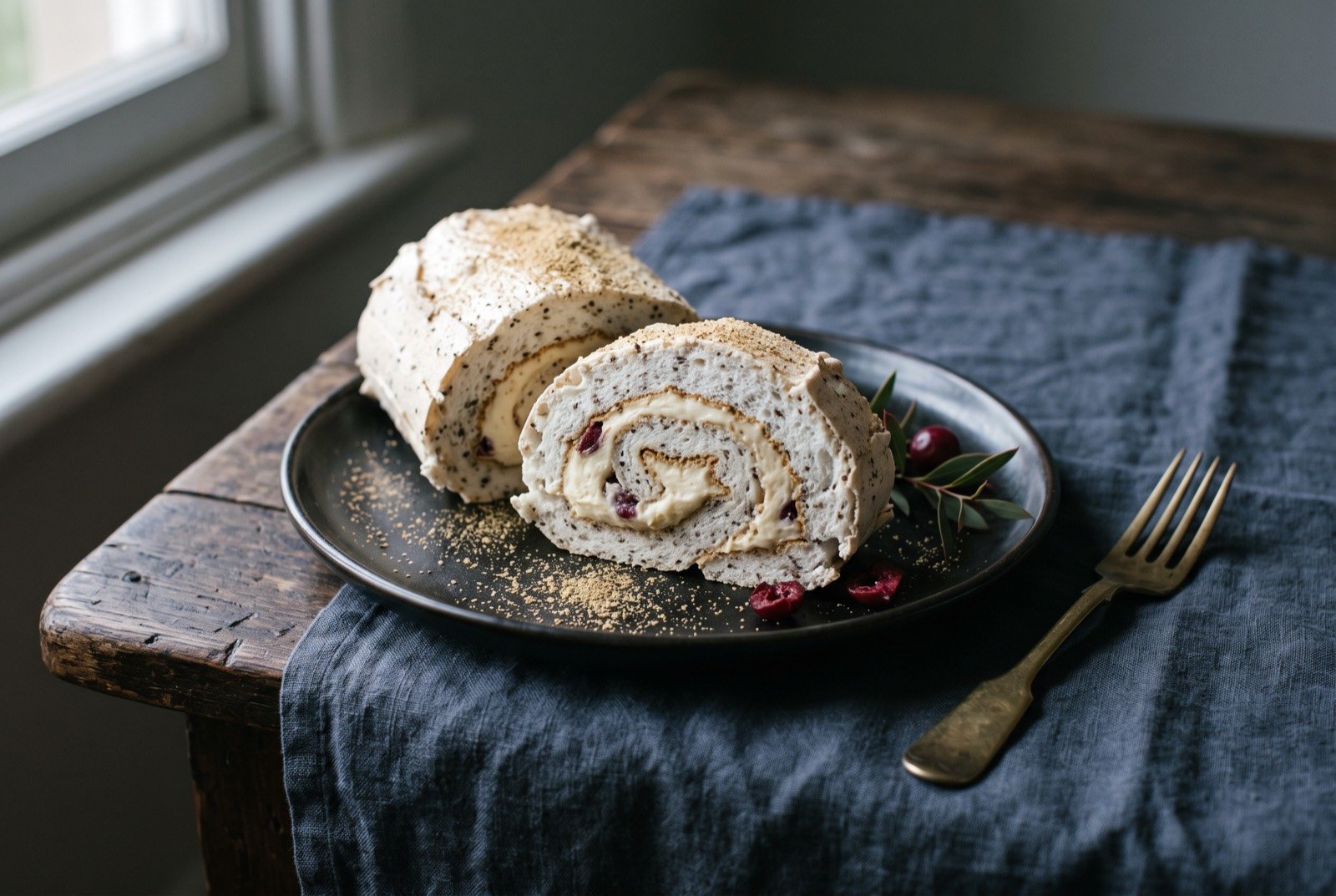
An illustration of the dish, not a photograph of it cooked.
- Time
- Not statedNo source states a time and the atlas has too few comparable dishes to estimate one.
- Reviewed
- Not yet reviewed from inside the tradition
- Cooked
- Not yet cooked and reported
This dish sits precisely at this chapter's most careful junction. The plain egg-white pavlova's own contested British-versus-New-Zealand origin belongs to this atlas's OC-04 (Pākehā and General New Zealand Food) and is not re-litigated here. What belongs here is narrower and better documented: Jean-Paul Bruneteau, at his Rowntrees restaurant in Hornsby, Sydney, won a gold medal for "Most Original Cuisine" at Tokyo's Second International Cooking Festival in 1988 for a rolled wattleseed pavlova, folding roasted, ground acacia seed, Aboriginal food knowledge this chapter credits plainly rather than presenting as his own invention, into a European meringue technique. That composed dish, the pairing of ingredient and format, is Bruneteau's own 1988 invention; the seed and its knowledge are not, and the deeper, dated account of wattleseed's own use and history belongs to OC-01.
As tradition built it
No source located in this research gives exact quantities for Bruneteau's own 1988 recipe; reported here as a documented mechanism rather than invented precision.
Method
- Whisk egg whites and sugar to a stiff, glossy meringue; fold through roasted, ground wattleseed.
- Spread thin on a lined tray and bake low and slow until set but still pliable.
- Roll around a whipped cream filling while still warm enough to hold the shape without cracking.
What a modern chef changes
After the specialty native-ingredient producer scene now supplying Firedoor's wattleseed flatbread and similar contemporary use.
Rung 5
Method
- Roast and grind the wattleseed fresh in a spice grinder, holding the roast at a steady temperature in a low oven or dehydrator first, for a more consistent, controllable depth than a pre-ground shop bag gives.
- Set the meringue in a dehydrator at a low, steady temperature rather than an oven, for a more even, crack-resistant roll.
- Fill with a chinois-strained quandong or Illawarra plum coulis alongside the cream, a native fruit pairing offered here as this chapter's own extension of the pairing logic, not a claim that any named chef plates this exact filling.